
REVIEW · WORKSHOPS
Spanish Group Course in Buenos Aires, Argentina: 20 Lessons
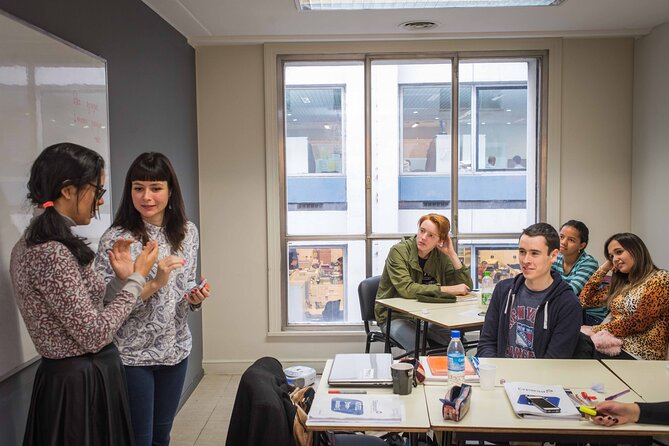
Buenos Aires teaches Spanish in a very practical way. This 5-day group course is built around interactive lessons in Spanish, so you spend less time translating in your head and more time forming sentences. The class size stays small, with up to 12 students, which helps you get more attention than the usual big-course chaos.
I especially like the mix of language practice and structure. You get a welcome pack, first-day orientation, free Wi-Fi, a course certificate at the end, and even a student benefits card, so the week feels official rather than hit-or-miss. Plus, there are social activities after class that push you to speak without turning it into a stressful classroom drill.
One thing to consider is timing and consistency. Your schedule may not be fully clear until day one, and if plans shift for holidays, you can get changes on short notice. Also, if you move between levels or teachers, there is a chance you might repeat some material instead of building forward every day.
Key things to know before you go

- Up to 12 students per group for more speaking time and less waiting
- 20 lessons in about 5 days, with a structured learning pace
- 9:30 am start, so plan a relaxed morning (and you can store luggage)
- Welcome pack, free Wi-Fi, orientation, and a course certificate
- After-class social activities that help you use Spanish around real people
- Food, drinks, and the book are not included, so budget for those separately
More hands-on afternoons in Buenos Aires
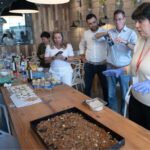
- Buenos Aires: Empanadas and Alfajores Guided Cooking Class★ 4.8 · 486 reviews
- Buenos Aires: Private Tango Lesson★ 4.9 · 244 reviews
- Buenos Aires: Empanada & Alfajor Cooking Lesson in Palermo★ 4.6 · 186 reviews
- Tango Porteño Show with Optional Dinner and Tango Lesson★ 4.0 · 97 reviews
Buenos Aires Spanish Classes: Who This 5-Day Group Course Is For
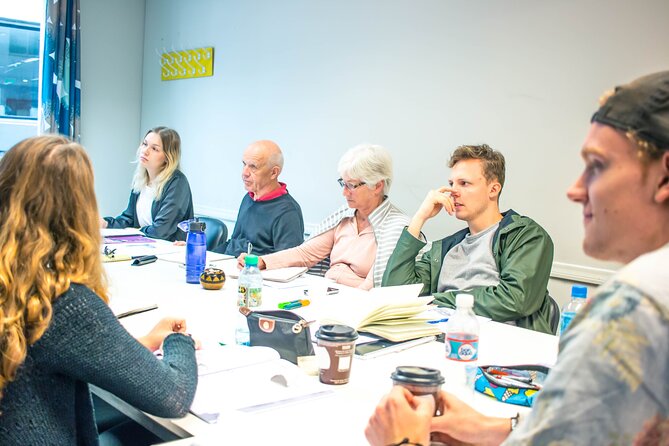
This course is made for people who want Spanish progress fast, without needing private lessons. It’s suitable for all ages and skill levels, which matters because beginners and intermediate students can share the same experience without it turning into either a total beginner crash course or an advanced lecture.
If you’re the type who learns best by doing, you’ll likely feel at home here. The format is an interactive group class where students practice in the language rather than only studying rules. And with a maximum of 12 travelers, you usually get enough turns and feedback to keep your confidence moving in the right direction.
You might especially like it if you’re visiting Buenos Aires for the city, but you also want your trip to produce more than photos and restaurant plans. The included social activities are a big clue that this school wants you to speak Spanish in day-to-day situations, not only while taking notes.
Finding Your Way to Federico Lacroze and Using Luggage Storage Smartly
The meeting point is Federico Lacroze 2315 (C1426CPI) in Buenos Aires. Classes start at 9:30 am, and the activity ends back at the same meeting point, so your week has a clear home base.
You also get the practical bonus of luggage storage during class time. That’s not just convenient. In Buenos Aires, it helps you arrive, explore for a bit, and then come back for class without dragging bags around. If you’re staying in a nearby neighborhood or flying in from another city, that alone can save you hours.
The location is near public transportation, and some students note it’s close to a SUBE station. If you plan to do any solo sightseeing between lessons or after the social events, having a transit connection nearby can turn a good week into a smooth one.
Practical tip: since you start at 9:30 am, set yourself up the night before with your basics packed. Think water, notebook or folder, and anything you need to study lightly after class.
The 20 Lessons Method: Small Groups, Spanish Practice, and Real Feedback
The headline promise is simple: group students build Spanish skills together in an interactive setting. What makes it work for most people is the balance between small classes and personalized attention from the professor. In other words, you’re not stuck only waiting your turn in a large room.
You can also expect a relaxed environment where students are encouraged to use Spanish more directly. The goal is for you to feel comfortable speaking, not just recognizing words. That’s why the classes focus on interaction, and why you’ll probably hear Spanish a lot in the room even if you’re a beginner.
Here’s how this helps you as a traveler. When your Spanish is tied to your actions, you stop treating the language like homework. You begin to use it to ask questions, understand instructions, and respond in the moment. That’s exactly what you want for buses, shops, and casual conversations during your stay.
One thing to watch: if your group level changes during the course, you might feel some repetition. One review specifically raised this issue, saying a curriculum mismatch between teachers sometimes meant covering material again. It doesn’t mean the course is bad, but it does mean your job is to stay flexible and ready to review, then push ahead once the group moves on.


Day One Orientation and the Welcome Pack: Getting Organized Fast
On the first day, you’ll have an orientation, plus a welcome pack. This matters more than it sounds. For language courses, confusion kills motivation. Orientation helps you understand how class works, what to expect from the teacher, and how the week flows.
You also get free Wi-Fi, which is a small thing that can have a big effect if you’re studying or trying to keep your notes organized. If you like reviewing vocabulary on your phone, you’ll be able to do it right after class without hunting for cafés or public hotspots.
Another highlight is the school offers a student benefits card and you receive a course certificate upon completion. For many learners, that piece of structure is motivating. It gives your effort a clear endpoint, and it can be a useful reminder of progress when you’re tempted to quit after day three.
Practical tip: use day one to set your learning rhythm. If you can, take a few minutes after orientation to note what topics you’re working on and decide how you’ll review lightly at night.
Social Activities After Class: Speaking Spanish in Buenos Aires, Not Just in Class
The course includes social activities, designed to help you speak faster and with less self-consciousness. This is where many short courses either win or fail, because speaking practice outside the classroom is what turns textbook Spanish into trip Spanish.
These activities are also a social accelerant. In Buenos Aires, it can be easy to feel like you’re either working alone on your trip, or talking only with people who share your native language. The school’s after-class plan creates a bridge: you get to meet fellow students, and you get low-key chances to use Spanish in real conversations.
From the reviews, one consistent theme is that the school helps students get closer to local life through these kinds of activities. That doesn’t mean you’ll be thrown into advanced debates. It usually means you’ll practice in a way that fits your level and keeps things friendly.
What should you do if you want the most speaking time? Treat these activities like class, even though they’re social. Show up, speak early, and don’t wait until you feel fully confident. Confidence in language learning often comes after you start, not before.
Price and Value: What $275 Buys in a Short Buenos Aires Course
At $275 per person, this 20-lesson course is aimed at a very specific kind of traveler: someone who wants real instruction over a short window and doesn’t want to spend a small fortune on private tutoring.
Here’s what you’re getting for the price:
- Welcome pack
- Free Wi-Fi
- Social activities
- First-day orientation
- Course certificate
And here’s what’s not included:
- Food and drinks
- Book
That split is important for value. If you already eat from a normal travel budget and plan to buy your own book or materials as needed, the package can feel like a smart deal. But if you’re hoping the course fee covers meals and study materials, you’ll want to adjust your expectations.
Practical budget tip: assume you’ll need money for at least a couple of meals and drinks during the week. Also plan for a book purchase if it’s required for your level. Since the book is not included, check what your class will use and whether you can buy it locally or need it in advance.
Group Course Logistics: Timing, Schedule Shifts, and Teacher Coordination
The class begins at 9:30 am, and it runs over about 5 days. With a tight schedule like this, details matter. One review raised a heads-up: the course schedule wasn’t fully communicated until the first day. Another mentioned that if there was a public holiday or a shift to an afternoon session, students only found out a day before.
That doesn’t mean you should avoid the course. It just means you should protect your planning. If you have tight commitments in Buenos Aires, don’t schedule them too close to class start times for those first days. Keep your mornings flexible during the week.
Another consideration is teacher coordination across a short intensive. One review noted that curriculum alignment between teachers wasn’t perfect, which sometimes led to covering the same material again after switching. If you’re prone to feeling restless when things repeat, you might want to ask at orientation how level placement works and how course content is tracked.
How to reduce the risk of disappointment:
- Come ready for a bit of review at the start
- Stay open to your level being adjusted if needed
- Ask what topics you’ll cover during your week so you can study in a targeted way
Best Ways to Use This Course for Maximum Spanish Growth

This course gives you structure, but you still control effort level. If you want your Spanish to move quickly, treat each class day like a building block.
Here are the habits that usually make short courses pay off:
- Speak as early as you can during class. If you wait, the window closes.
- Take quick notes after class, not long ones during class. Keep it simple.
- Use the social activities as practice, not as optional extras.
- If you get stuck on a grammar point, ask for a real example you can use in Buenos Aires situations.
Also, because food, drinks, and the book aren’t included, plan your own study and recovery time. A language course goes faster if you don’t burn out. You’ll improve more if you sleep well, eat something decent, and keep your evenings calm enough to review vocabulary.
If you’re planning to stay in Buenos Aires longer than the course, this is a solid way to kick-start confidence. The social activities help you start speaking right away, and the certificate and structured lessons help you feel like you actually completed something tangible.
Should You Book This Buenos Aires 20-Lesson Group Course?
Yes, you should consider booking if you want a friendly, structured Spanish week with real speaking time and support. The strong marks here are the high recommendation rate, the small group size up to 12, the interactive classes, and the built-in chance to practice Spanish through after-class social activities.
You might want to think twice if your schedule is extremely fixed, since the course schedule may not be fully communicated until the first day and can shift around public holidays. Also, if you hate any chance of repeating material, know that some students have reported curriculum overlap when moving between teachers or levels.
My take: for $275, this course looks like a good value if you show up ready to talk, and if you budget separately for food and the book. It’s the kind of short, focused experience that fits a travel plan well, and it gives you a certificate you can point to when you realize your Spanish actually improved.
FAQ
Where is the meeting point for this Spanish course?
The meeting point is Federico Lacroze 2315, C1426CPI Cdad. Autónoma de Buenos Aires, Argentina. The experience also ends back at this same meeting point.
What time does the course start?
Classes start at 9:30 am.
How long is the course and how many lessons are included?
The course runs for about 5 days and includes 20 lessons.
How large are the groups?
This activity has a maximum of 12 travelers.
What is included and what is not included in the price?
Included: Welcome Pack, free Wi-Fi, social activities, first-day orientation, and a course certificate. Not included: food and drinks, and the book.
Is free cancellation available?
Yes. You can cancel for a full refund up to 24 hours in advance of the experience start time. If you cancel less than 24 hours before start time, you are not refunded.
More Hands-On Hours in Buenos Aires


Tour Reviews Around Buenos Aires




Just added in Buenos Aires
- Buenos Aires Tango Show and Dinner in El Querandi
★ 4.6 · 10 reviews - Buenos Aires: Classic Private City Tour
★ 4.7 · 11 reviews - Buenos Aires: Intimate Tango Experience
★ 5.0 · 11 reviews - Walking Tour: Buenos Aires bookstores
★ 4.3 · 12 reviews - 5hs Small Group City Tour of Buenos Aires with Street Food
★ 4.2 · 12 reviews
Workshops, compared.
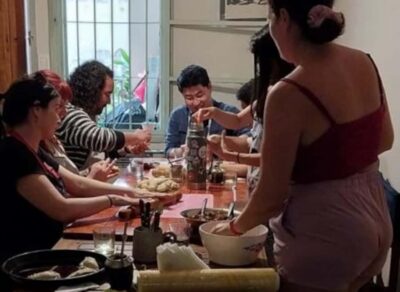 ★ 4.8Empanadas and Alfajores Guided Cooking ClassFrom $37486 reviews
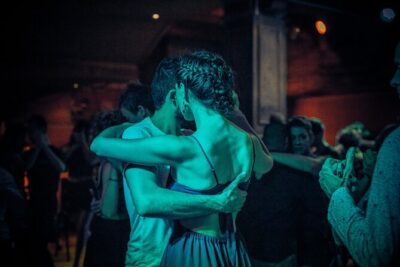 ★ 4.9Private Tango LessonFrom $39244 reviews
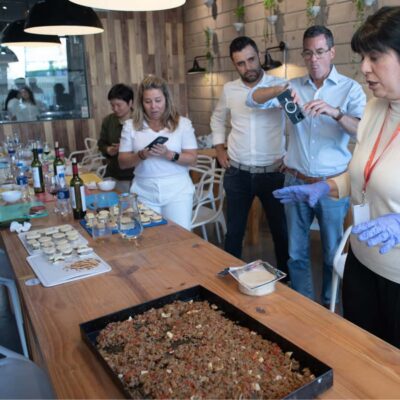 ★ 4.6Empanada & Alfajor Cooking Lesson in PalermoFrom $49186 reviews
 ★ 4.0Tango Porteño Show with Optional Dinner and Tango LessonFrom $3597 reviews
★ 5.0Buenos Aires – Private Tango lessonFrom $3996 reviews
★ 4.0Tango Porteño Show with Optional Dinner and Tango LessonFrom $3597 reviews
★ 5.0Buenos Aires – Private Tango lessonFrom $3996 reviews
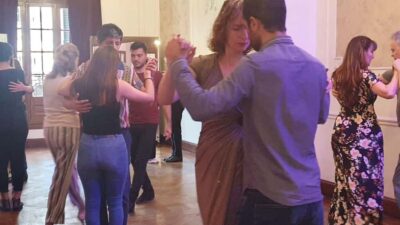 ★ 4.4Group tango class with mate and snacksFrom $2544 reviews
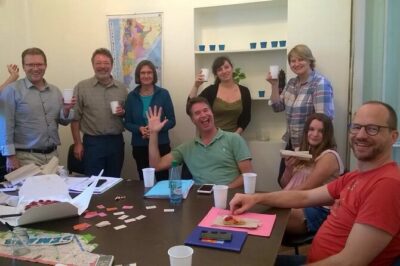 ★ 5.0English Classes with Native TeachersFrom $2037 reviews
 ★ 5.0Private Argentine Cooking Class and Tango Lesson in Buenos AiresFrom $18237 reviews
Where this tour also appears