
REVIEW · PORTEñO PALACES AND THEATRES
From Colonialism to Eclecticism, Buenos Aires arquitectonica
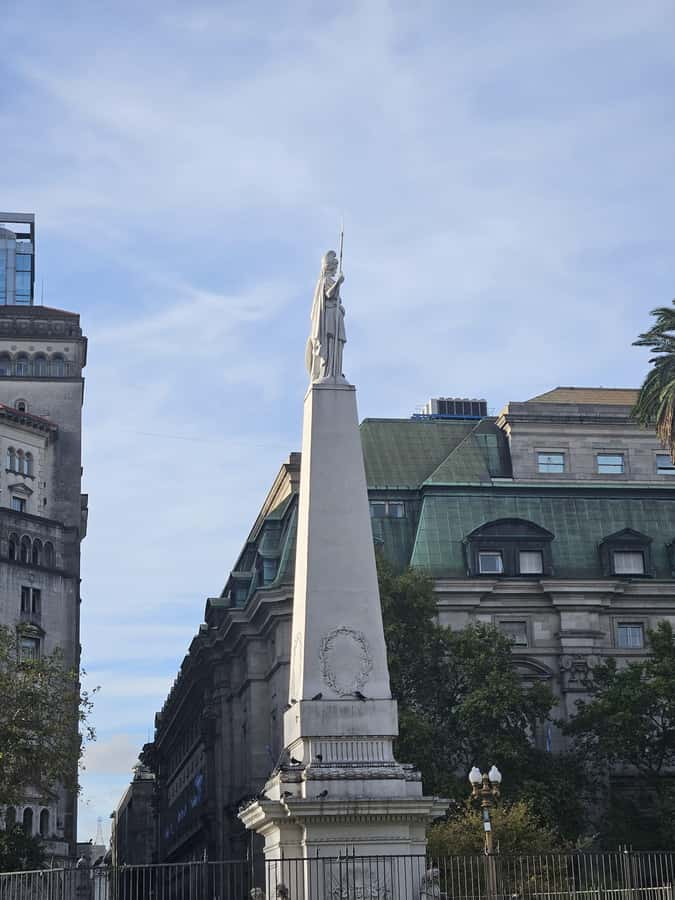
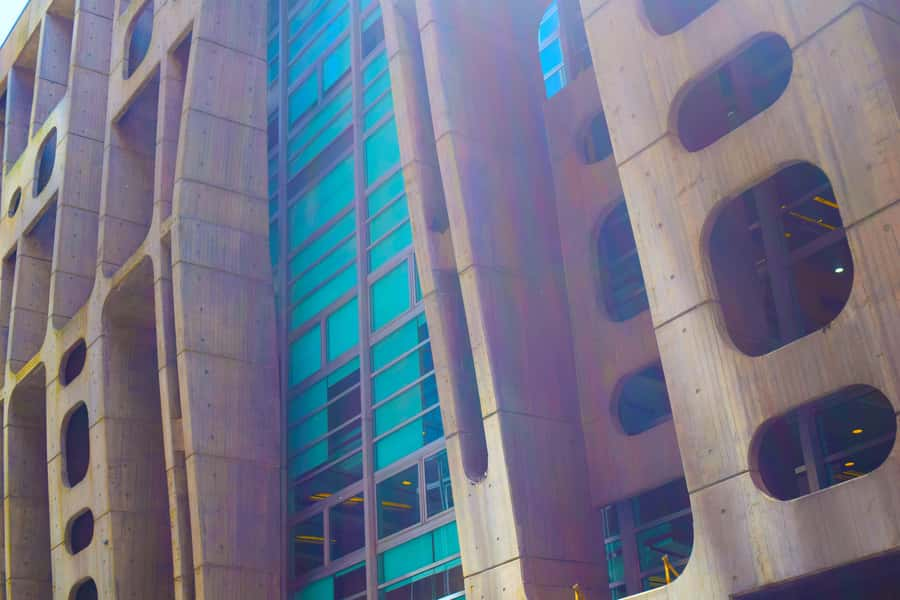
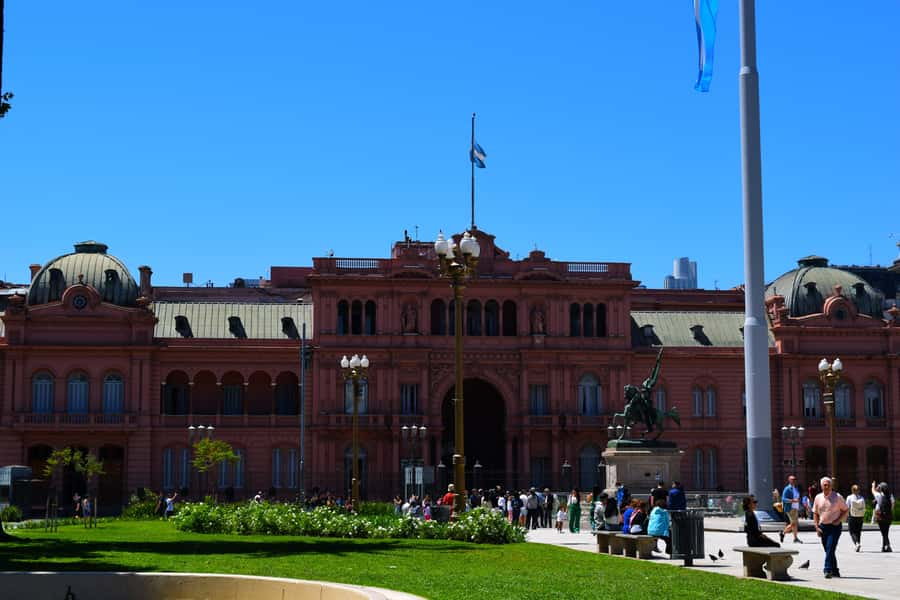
Architecture nerd heaven starts at Plaza de Mayo. I liked how the walk threads Buenos Aires from colonial-era landmarks like the Cabildo and Casa Rosada to later surprises, including the Brutalist facade at Banco Hipotecario, and I also loved the relaxed mate tasting with a traditional snack. One heads-up, the option to go inside Teatro Colón is not included in the price.
You’ll cover a lot of ground for a 3-hour outing, starting at Bolívar 65 near the Plaza de Mayo intersection of Bolívar and Avenida de Mayo, and finishing around Teatro Colón. I also like that this tour stays flexible, with a small group limited to 4 and a guide team (like Juan Ignacio and Loli) that can steer the focus toward what you care about.
Key things you’ll notice on this Buenos Aires architecture walk
- Plaza de Mayo landmarks connected to later building eras, not treated as isolated postcard stops
- Banco Hipotecario’s Brutalist facade as a mid-walk culture shock you can actually see up close
- Reconquista Street to Microcentro as a real lesson in how many styles can share the same block
- Corrientes Avenue icons like the Gran Rex and the Opera, still doing their job as show-and-nightlife magnets
- Obelisk and Diagonal Norte viewpoints where you get quick, useful sightlines over major intersections
- Mate tasting timed into the route, so it feels like a pause, not a checkbox
Behind a few more velvet ropes in Buenos Aires
- Buenos Aires: Teatro Colon Guided Tour★ 4.3 · 571 reviews
- Classic City Tour of Buenos Aires: Neighborhoods and Emblems★ 3.8 · 282 reviews
- Teatro Colon Guided Tour Admission Ticket★ 4.0 · 208 reviews
- Buenos Aires: Palacio Barolo Entry Ticket and Guided Tour★ 4.3 · 193 reviews
Why this tour works when you want Buenos Aires beyond the usual sights
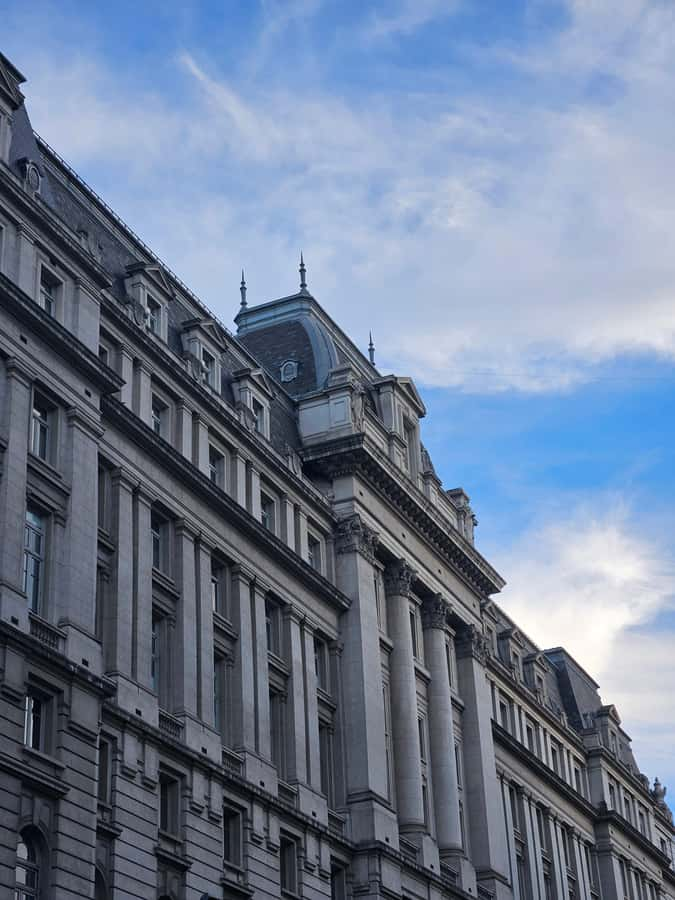
This is a city-walk built around how buildings tell stories. You start at the big political heart of Buenos Aires and then move outward through neighborhoods where styles mix like they were never meant to match. That approach helps you read the city the way locals do, by looking at facades, materials, and street placement together.
I like that you’re not stuck staring at one era. You get the classic must-sees, then you shift into places that many people skip, including a stop focused on Banco Hipotecario and its Brutalist presence. And since the group is tiny, you can ask questions without feeling like you’re fighting the noise.
Plaza de Mayo: Cabildo, Cathedral, Casa Rosada, and Banco Nación
The walk begins in Plaza de Mayo, right at the corner of Bolívar and Avenida de Mayo. This is where Buenos Aires shows its official face, with a cluster of landmark buildings that set the tone for the rest of the route.
From here, you’ll see the Cabildo and the Metropolitan Cathedral, plus Casa Rosada and Banco Nación. What makes these stops valuable is that your guide ties the buildings to the way Argentina’s political and social life has moved over time. You’re not just collecting photos, you’re building context for why these sites matter.
Practical note: this first stretch can feel dense because Plaza de Mayo is busy and the landmarks are close. Wear comfortable shoes and keep your water handy, because even though the tour is only 3 hours, the walking adds up.
North on Reconquista Street, Microcentro, and Banco Hipotecario’s Brutalist contrast
After Plaza de Mayo, you head north through Reconquista Street, right into Microcentro, the area where you can watch different architectural personalities coexist. The tour’s focus here is useful: you learn curious facts about buildings that do not show up as often on the classic circuits.
Then comes the Banco Hipotecario stop, including a close look at its Brutalist facade. This is one of the best “why does it look like that?” moments on the tour. You’ll have time to look up, compare details, and understand how the building fits the larger story of Buenos Aires adapting architectural ideas across decades.
A good thing to know: the tour is designed so you can travel through different styles at a walking pace. You get explanations, then you get a chance to pause and absorb what you just heard.
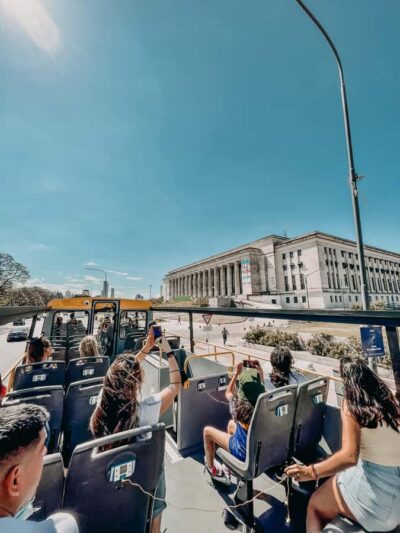
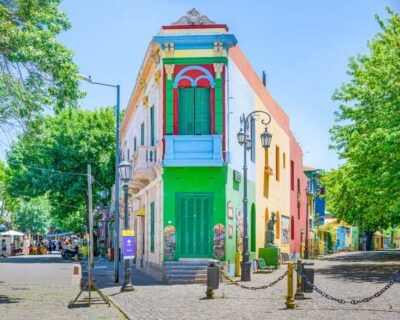
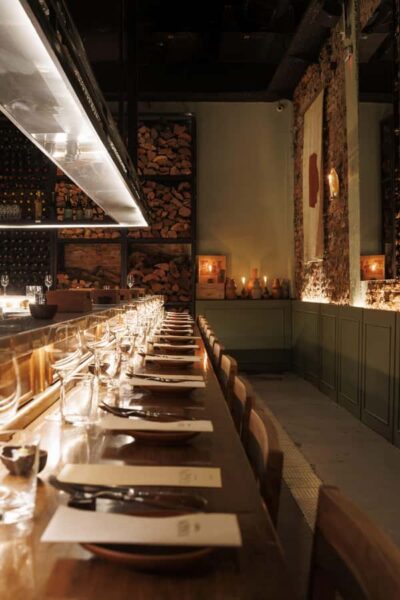
Centro Cultural Kirchner and the old Post and Telegraph Palace facade
Next you’ll continue toward the Centro Cultural Kirchner and the former Palacio de Correos y Telégrafos, the Post and Telegraph Palace. You’ll focus on the building’s facade and its history, which is a smart pairing because it trains your eye to look for clues on the outside.
This part of the route is where the tour starts to feel less like a checklist and more like a visual education. Even if you don’t know architecture terminology, you can still learn how to notice style shifts and what changes signal about a city’s priorities.
If you like design details, bring a phone camera with enough battery, because you’ll want to capture comparisons between facades, not just single landmark shots.
Corrientes Avenue: Gran Rex and the Opera still pulling crowds
Once you hit Corrientes Avenue, you’re stepping into the street that feels like Buenos Aires’ public stage. The tour passes two icons tied to culture and nightlife: the Gran Rex and the Opera.
What I like about these stops is that they are not treated as museum objects. You get the sense of their heyday, and then you also see how they still function today as places where people gather for shows. That past-to-present connection makes the architecture feel alive, not frozen.
You’ll get the benefit of being on foot here, because Corrientes is best understood by walking its rhythm. You can glance up, keep moving, and still read the buildings as part of the street scene.
Obelisk and Plaza de la República, plus a Diagonal Norte sightline break
The first big arc of the route ends at the Obelisk and Plaza de la República. The Obelisk isn’t just a photo spot on this walk, it’s explained for its history and its importance in political and social life. That context changes how you see the monument, from “cool landmark” to “marker of public moments.”
Then you continue along Diagonal Norte for a brief pause at the Obelisk staircase. This stop matters because it gives you a panoramic point to take in views over one of the busiest intersections, including Av. 9 de Julio and Corrientes. It’s not a long rest, but it’s a well-timed one, and it helps you map the city so the final stretch makes more sense.
Tip: take a moment to step to a safer spot for photos. Sidewalk space can be tight around the intersection areas.
Plaza Lavalle: Courts Palace, Julio Argentino Roca School, and the mate pause
As you shift into the last portion of the tour, you reach Plaza Lavalle, where you’ll see two prominent buildings: the Courts Palace and the Julio Argentino Roca School. This is a nice change from the show-and-political vibe of earlier stops, because legal and educational architecture says a lot about how a society organizes itself.
Then you get the mate tasting. This is built into the route, with time to learn a little about mate’s tradition in Argentine culture. I like that it’s not rushed and not treated as a novelty. The guide brings it into the flow of the walk, so it feels like part of the experience of the city rather than an add-on.
You also get water and a traditional Argentine snack during the tour, which helps keep your energy steady for the final segment.
Teatro Colón finish: should you add the guided interior visit?
The tour finishes at Teatro Colón. There’s an option to stay for a guided visit inside the theater, but entrance is not included.
So if you love theater architecture or you’re curious about what the interior looks like after focusing on the exterior cityscape, consider budgeting extra for that visit. If you would rather keep the tour as-is, you can still enjoy Teatro Colón as a final architectural landmark and call it a day.
Either way, I like ending here because it ties back to the earlier cultural stops on Corrientes Avenue. You get “public life” on the street, then you end with a major performance space.
Price and value: what $25 buys in real walking-tour terms
At $25 per person for about 3 hours, this is strong value for three reasons.
First, you’re paying for an English-speaking guide throughout the route, not just a self-guided walk. The guide focus matters on this type of tour because the goal is learning to read buildings, not just spotting them.
Second, the included basics, water plus a traditional Argentine snack and the mate tasting, keep the experience practical. It means you spend less time thinking about snacks and more time paying attention to details.
Third, the group is limited to 4 participants, which makes questions easier. In the experience I’m describing, guides like Juan Ignacio and Loli are the kind who will answer questions about architects and time periods, not just point at facades. That personalization is hard to replicate in bigger tours.
The only value trade-off is the Teatro Colón interior option, since entrance is not included. If you know you want to go inside, factor that into your planning.
Who this tour fits best, and who should think twice
This tour is a great fit if you:
- Want a walking route that mixes big-name landmarks with lesser-seen architectural moments
- Like cultural context, not just architecture as decoration
- Enjoy a small-group pace where you can ask questions
- Want a genuine taste of Argentine culture through mate during the walk
You might think twice if you:
- Have trouble with moderate walking for a 3-hour city loop
- Expect every major stop to include ticketed entry, because Teatro Colón interior access is optional and not included
Quick planning checklist so you enjoy the full 3 hours
Bring comfortable shoes, and plan on being outside. The tour guidance also recommends sunglasses, a hat, and sunscreen, which is especially smart if you go on a bright day.
If you like photos, bring a phone or camera you’re comfortable using while walking. You’ll have photo stops, including at the Obelisk, plus a panoramic pause at the Obelisk staircase.
Should you book this Buenos Aires architecture walk?
If you want a smart way to see Buenos Aires through buildings, not just neighborhoods, I’d book it. The route gives you the classic anchors of Plaza de Mayo, then pays attention to the contrast moments like Banco Hipotecario’s Brutalist facade, and it ends with cultural architecture at Teatro Colón.
I’d especially choose this tour if you like learning the “why” behind what you see. The guide approach, with people like Juan Ignacio and Loli sharing architectural details and cultural connections, is exactly what makes the walking tour feel more memorable than a simple photo run.
If you’re mainly in Buenos Aires for a quick highlights sweep with zero flexibility, you might prefer a shorter landmark-only option. But for most people, this is a very reasonable, small-group way to get under the city’s skin.
FAQ
How long is the tour?
The tour lasts about 3 hours.
Where does the tour start?
It starts in Plaza de Mayo at the intersection of Bolívar and Avenida de Mayo, with the meeting point at Bolívar 65.
What is the group size?
The tour is a small group limited to 4 participants.
What is included in the price?
An English-speaking tour guide, water, a traditional Argentine snack, and mate tasting are included.
Is Teatro Colón interior entry included?
No. Entrance to the Teatro Colón interior is not included, but there is an option to take a guided visit inside.
What buildings and streets are included along the route?
You’ll see sites including the Cabildo, Metropolitan Cathedral, Casa Rosada, Banco Nación, Banco Hipotecario (with a Brutalist facade), the Centro Cultural Kirchner and the former Palacio de Correos y Telégrafos facade, and you pass by Corrientes Avenue icons like Gran Rex and the Opera. You’ll also visit the Obelisk and Plaza de la República, plus Plaza Lavalle with the Courts Palace and the Julio Argentino Roca School, and finish at Teatro Colón.
What should I bring?
Bring comfortable shoes, sunglasses, a hat, sunscreen, and comfortable clothes.
Can I cancel for a full refund?
Yes. You can cancel up to 24 hours in advance for a full refund.
Tour Reviews Around Buenos Aires

Buenos Aires in Marble

Just added in Buenos Aires
- Velez Sarsfield Football Match
★ 5.0 · 3 reviews - Tango Show at El Querandi with optional Dinner
★ 4.2 · 3 reviews - Guided tour Boca Juniors Museum & Stadium + Caminito
★ 3.3 · 3 reviews - Tango Show at: MichelAngelo
★ 4.5 · 3 reviews - Buenos Aires: Rojo Tango Show with Optional Dinner
★ 3.4 · 3 reviews
Porteño Palaces and Theatres, compared.
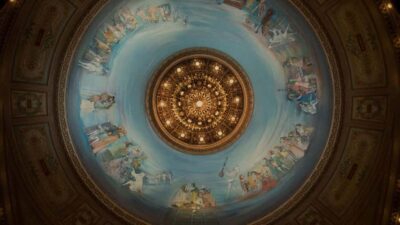 ★ 4.3Teatro Colon Guided TourFrom $49571 reviews
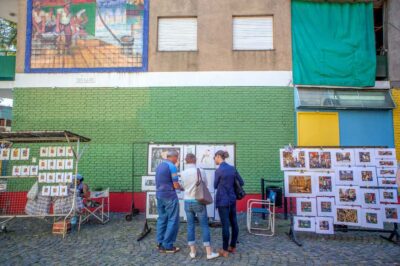 ★ 3.8Classic City Tour of Buenos Aires: Neighborhoods and EmblemsFrom $45282 reviews
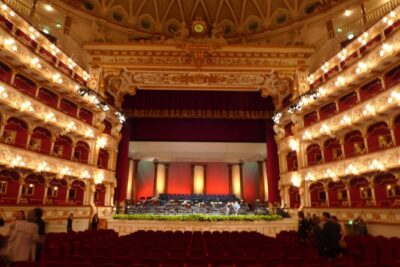 ★ 4.0Teatro Colon Guided Tour Admission TicketFrom $46208 reviews
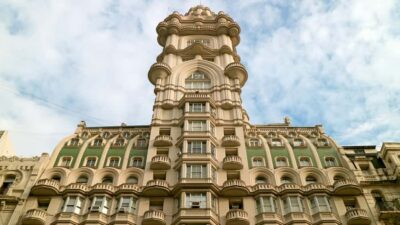 ★ 4.3Palacio Barolo Entry Ticket and Guided TourFrom $67193 reviews
 ★ 4.2Experience Teatro Colon : Secure your Tour today!!!From $4866 reviews
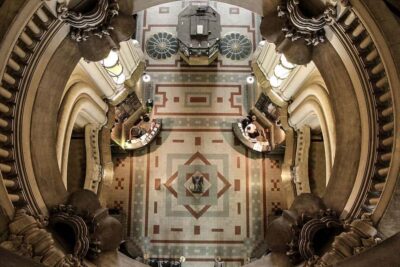 ★ 4.4Palacio Barolo Guided Night Tour with WineFrom $9054 reviews
 ★ 4.9Historic Buenos Aires Landmarks & Icons TourFrom $2037 reviews
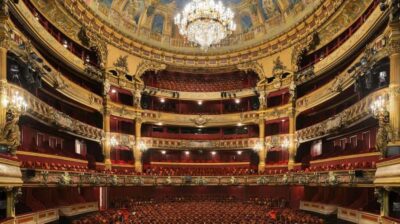 ★ 4.9Walking City Tour with Colón Theater & MuseumsFrom $5814 reviews
Where this tour also appears