
REVIEW · PORTEñO PALACES AND THEATRES
Classic City Tour of Buenos Aires: Neighborhoods and Emblems
Buenos Aires can be hard to place on day one, but this tour gives you fast bearings. I like that it strings together the city’s key districts, from Recoleta-style grandeur to gritty street color in La Boca. You’ll also hit major landmarks people come for, like the Obelisk and Plaza de Mayo, with enough stops to understand how neighborhoods connect.
The only real watch-out is timing. Pickup can run late, and the day moves quickly, so if you hate logistical uncertainty, plan your schedule loosely and keep expectations flexible.
Key Points You Should Know Before You Go
- Six-neighborhood overview: Recoleta, Retiro, San Nicolás, Montserrat, San Telmo, and La Boca in one half day plan
- Two built-in photo stops: Plaza de Mayo and Caminito, each around 20 minutes
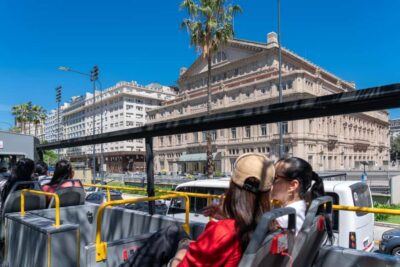
- Landmarks on a panoramic route: from Teatro Colón to Casa Rosada and the Cabildo area
- Central, not door-to-door: hotel pickup is included, but drop-off can be at major city points
- Guide quality is a big part of the value: guides like Macarena, Mercedes, Elba, and Sophia are repeatedly praised for making the commentary click
Behind a few more velvet ropes in Buenos Aires
- Classic City Tour of Buenos Aires: Neighborhoods and Emblems★ 3.8 · 282 reviews
- Teatro Colon Guided Tour Admission Ticket★ 4.0 · 208 reviews
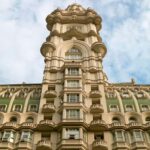
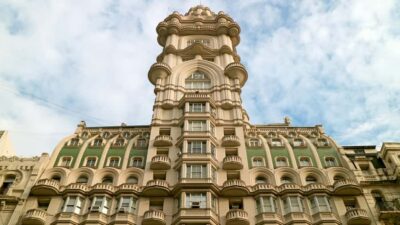
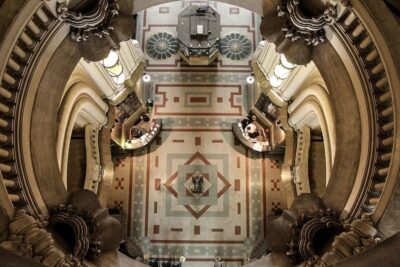
- Buenos Aires: Palacio Barolo Entry Ticket and Guided Tour★ 4.3 · 193 reviews
- Experience Teatro Colon : Secure your Tour today!!!★ 4.2 · 66 reviews
A Four-Hour Buenos Aires Snapshot Through Six Neighborhoods
This is a classic “get your bearings” tour, built for people who want the city’s biggest hits without spending half a day figuring out buses and walking routes. At $45 for a 4-hour format, you’re paying for guided context plus transportation, not for museum entry or meals.
You’ll travel by bus with a live guide in Spanish, then break out at a couple of key moments for photos and short on-your-own time. That mix matters, because Buenos Aires is a city where one good street corner can teach you more than a pile of facts.
What I like most is that the neighborhoods aren’t just names on a map. The route is designed to show contrast, between old civic Buenos Aires around Plaza de Mayo and the street-energy vibe of San Telmo and La Boca.
Recoleta, Retiro, San Nicolás, and Montserrat: Where the City Shows Its Fancy Side
Recoleta is often where first-time visitors go to see Buenos Aires’ elegant face. On this tour, you pass through that area as part of the broader sweep, so you can connect what you see later with what you learned on the bus.
Retiro and San Nicolás help you understand the city’s “connector zones,” where wide avenues, institutions, and transport hubs shape how people move. Montserrat adds another layer, because it sits closer to the older civic core. Even when you are mainly looking out the window, these areas help you read the city’s layout.
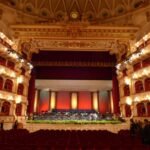
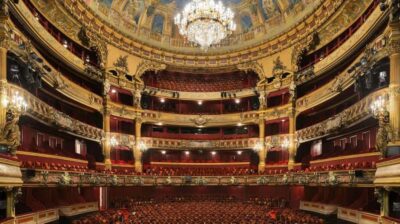
You’ll also encounter some of Buenos Aires’ landmark names along the way. Teatro Colón shows up as a major cultural marker, and it’s worth taking a second look because it’s one of those buildings you see in photos, then suddenly feel smaller in real life.
If you’re the type who likes to memorize streets and then come back later, this section is your mental warm-up. You’re not committing to a long guided walk, but you are learning the city’s structure.
Plaza de Mayo and the Civic Core: Obelisk, Casa Rosada, Cathedral, Cabildo
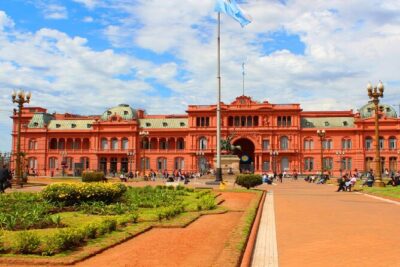
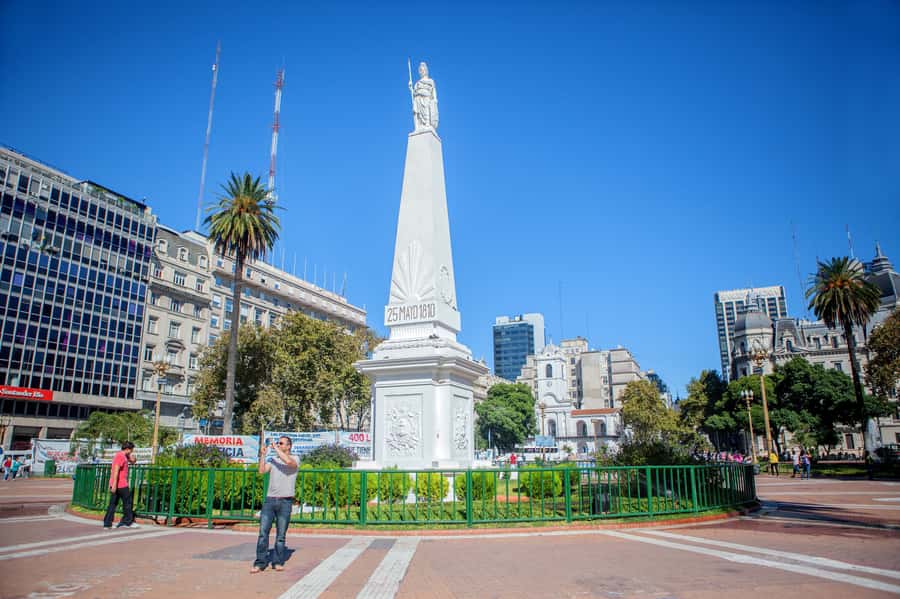
Plaza de Mayo is the emotional center of Buenos Aires’ political and religious imagery. This tour includes a photo stop of about 20 minutes in Plaza de Mayo, which is short, but useful. You get the scale of the square, the key façades, and the overall geography so you can orient yourself for a return visit.
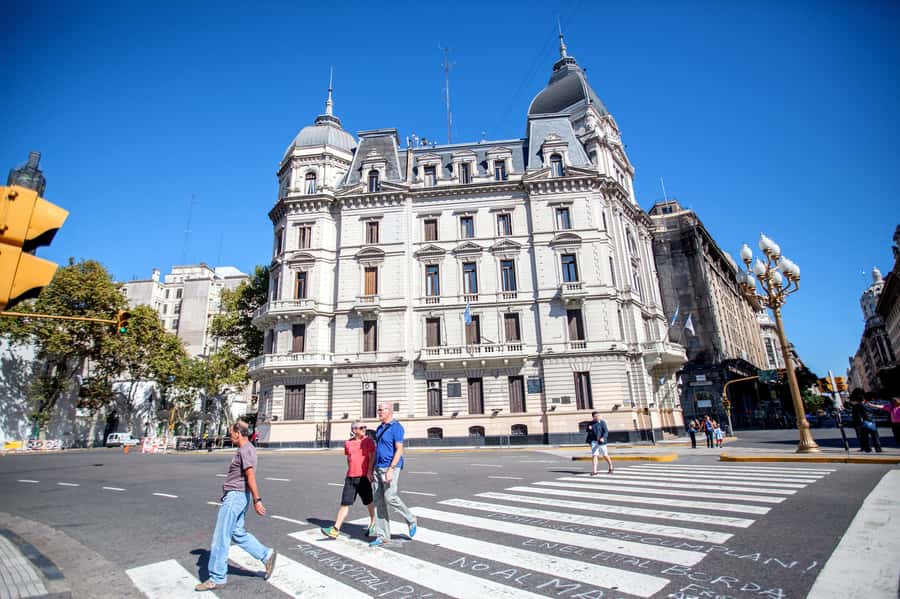
Around this core, you’ll see the Obelisk, Casa Rosada (the National Government seat), the Metropolitan Cathedral, and the Cabildo. These aren’t random stops. They’re all part of one story, how the country’s authority and identity have been staged in stone, marble, and central public space.
Here’s the practical value: when you later wander around this area on your own, you will already know what you’re looking at. You’ll understand why people gather where they gather and why certain buildings dominate photos.
One more thing. Some guides also incorporate nearby landmarks like the Evita monument area during walk time at the civic square. If you’re hoping to see that part clearly, it helps to ask your guide to point out the best angles as you’re there.
Other ways to get the shape of Buenos Aires
La Boca and Caminito: Colorful Street Energy With a Built-In Photo Window
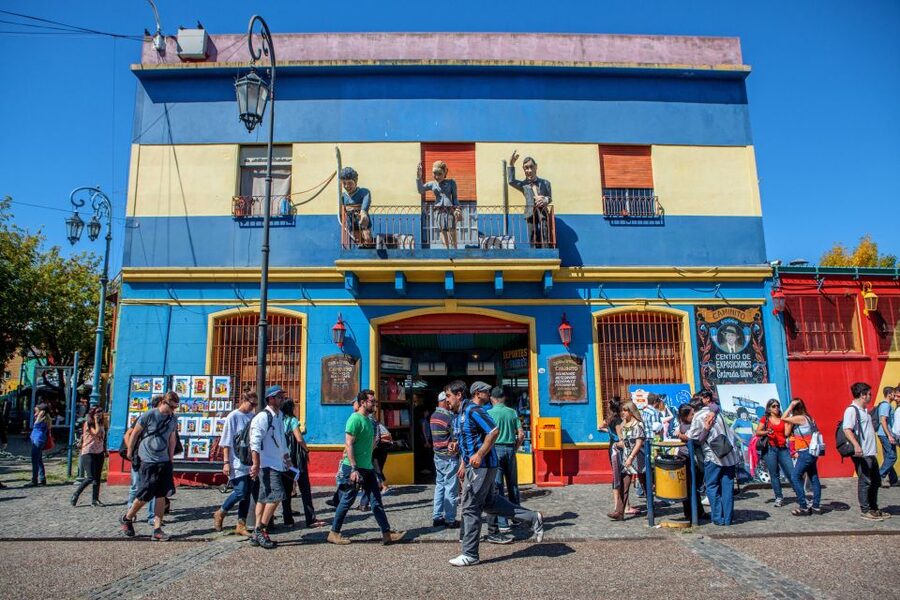
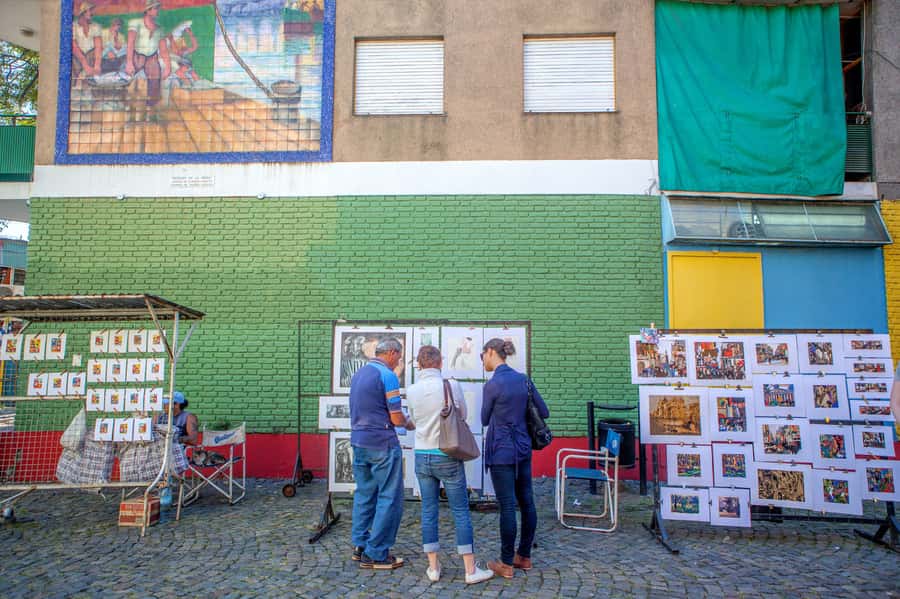
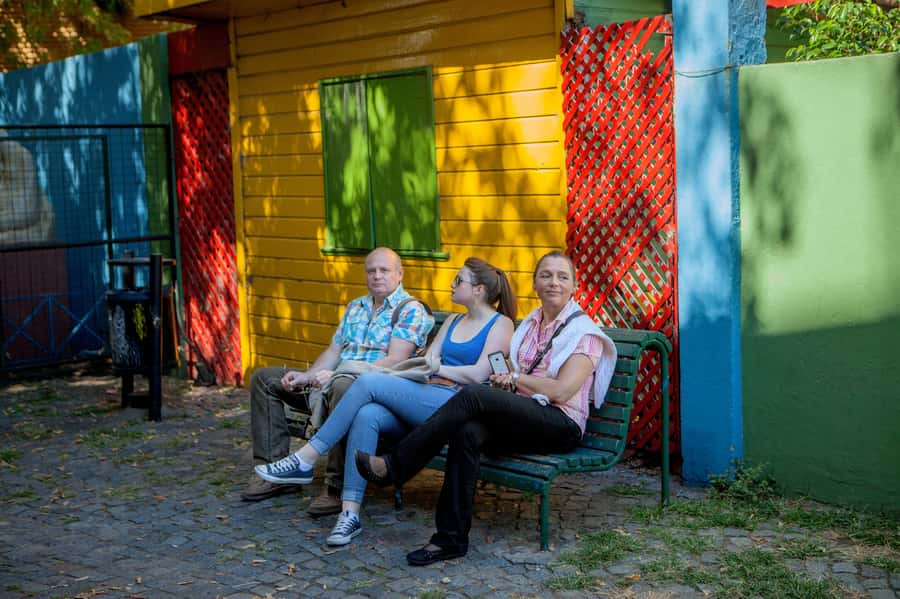
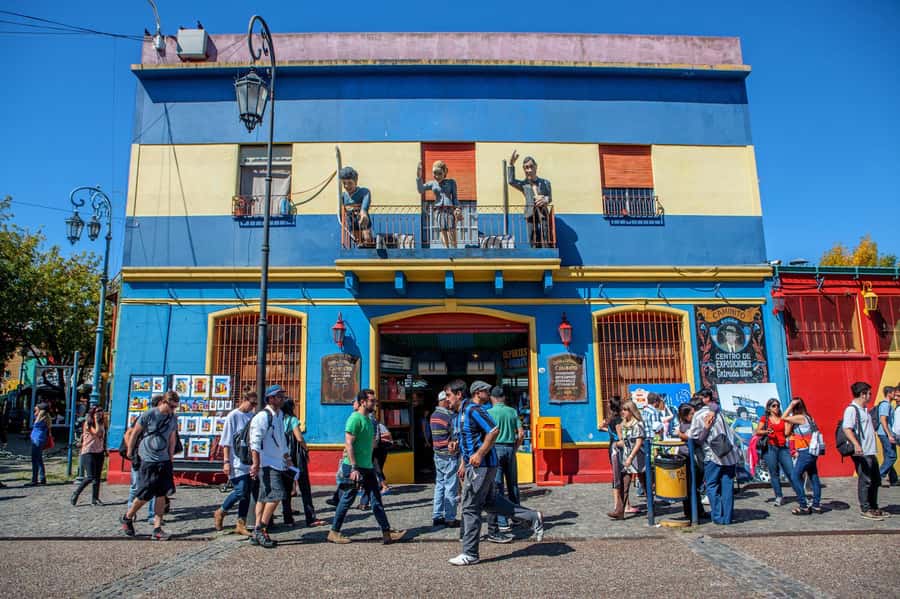
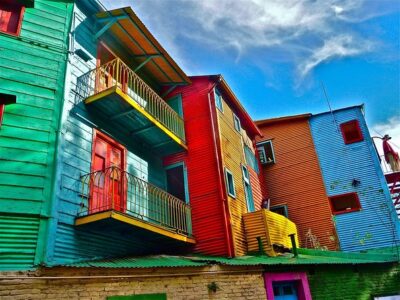
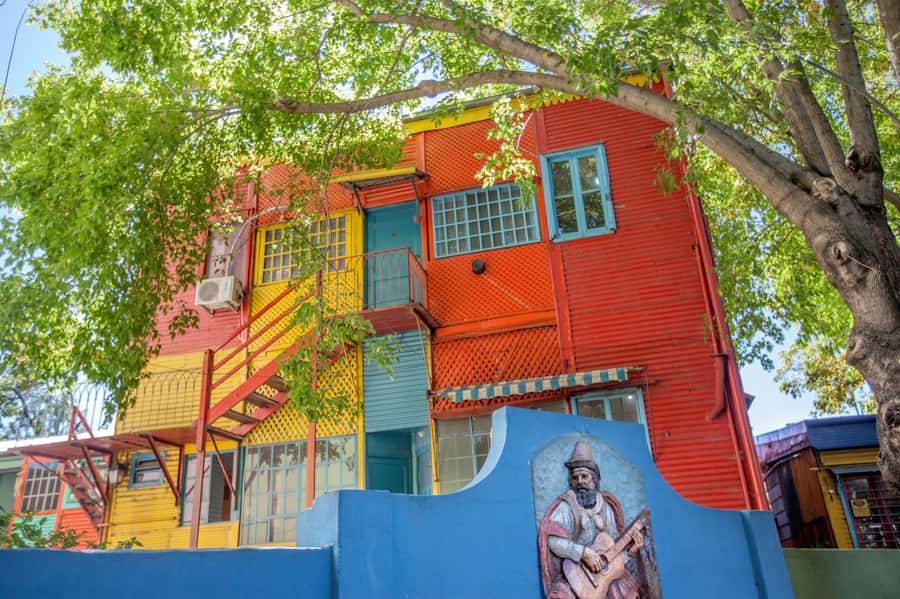
La Boca is where Buenos Aires turns from formal to colorful. You’ll make a dedicated stop in Caminito, with about 20 minutes for photos. That is enough time to get your shots, read the mood of the street, and decide if you want more time later.
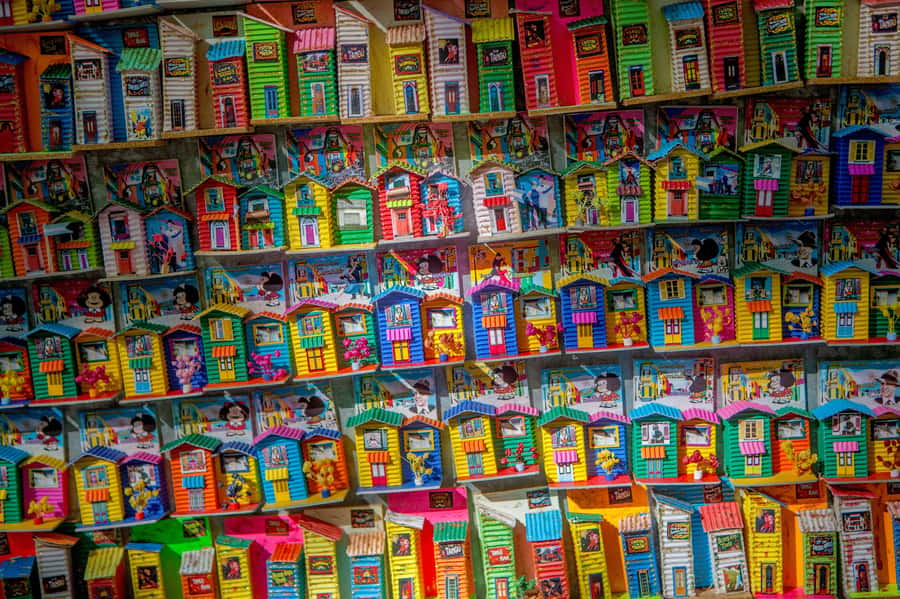
Caminito is memorable because it’s visually loud in the best way. Bright façades, tango associations, and a strong street-market vibe blend together fast. The best strategy is simple: move with purpose during those 20 minutes, then slow down after.
Some routes also take you past other La Boca highlights, and one guide plan included the Boca Juniors stadium area. You should treat that as a possibility rather than a guarantee, but it’s a good example of how the bus portion can still add value.
If you want the most authentic feeling, don’t just chase photos. When your bus stops, take a moment to look at how people actually behave there. That’s where you’ll feel the neighborhood’s real personality.
San Telmo: Narrow Streets, Old Corners, and a Slower Pace
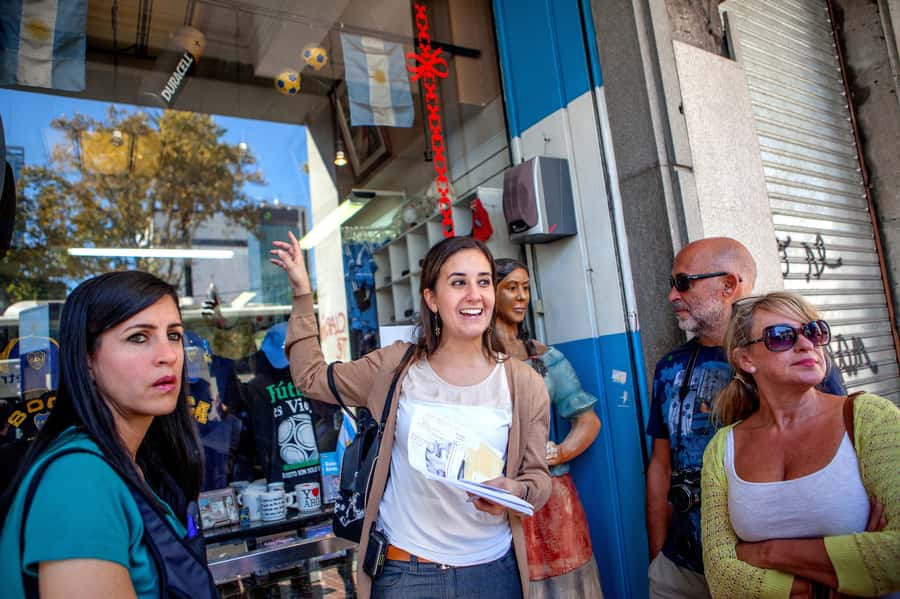
San Telmo is the part of the route that helps you see Buenos Aires as a lived-in city, not a set of attractions. You’ll pass through the area characterized by narrow streets and older textures, and you get the sense of why people love to meander here.
On a tight half day, you’re not turning San Telmo into a deep neighborhood study. Still, even a short look can help you make good decisions later. You can spot the kinds of streets you’ll want to revisit and the types of markets or plazas that match your taste.
One practical takeaway: when you finish La Boca, you’ll probably want to compare. Does San Telmo feel more walkable and relaxed, while La Boca feels more themed and photo-driven? That contrast will help you plan where to spend your real time.
Puerto Madero: A Modern Waterfront Contrast That Makes the City Make Sense
Puerto Madero shows Buenos Aires in a totally different mode: modern, clean-lined, and tied to a redeveloped waterfront identity. This tour includes it as a modern contrast while you’re still in “overview mode.”
This is one of those stops that works even if you don’t have time for long exploring. Seeing Puerto Madero after the older civic and neighborhood scenes helps you understand how Buenos Aires keeps rewriting itself without losing its older layers.
If you like architecture and urban design, you’ll enjoy the visual shift. If you prefer local culture over polished redevelopment, you’ll still appreciate it as contrast. Either way, it gives your day a satisfying end note.
Getting Around: Pickup Delays and Drop-Off Reality
This is where the tour can surprise you, and it matters more than people think. Pickup is included from centrally located hotels, but it is not door-to-door from every property. The operator notes that some hotels are not included in the pickup itinerary, and Palermo hotels are one example of where pickup might not be available.
If your hotel is not on the list, you’ll be contacted with the nearest hotel to use, and you must wait in the lobby at the indicated time. That means you should double-check your exact pickup point the day before.
Also, some real-world timing issues show up in the experiences people share. Pickups can run late, and in at least one case the actual pickup timing was much later than expected. I’d plan your day with a buffer, not a strict appointment schedule.
Drop-off is also not at your hotel. You’ll be dropped at Florida Street, Galerías Pacífico, or at the Obelisco. Those are convenient and central, but you should assume you might walk to get home or to your next stop.
Price and Value: Why $45 Works for Some People
At $45 per person for 4 hours, you’re basically buying three things: a Spanish live guide, transportation between neighborhoods, and two short timed photo windows. You are not buying meals, and you are not buying guided entry into museums or long guided walking tours.
The value hits best when you use the tour correctly. Take notes on what you want to revisit, then spend your remaining days there. Many people like this exact setup because the tour gives them context and then turns the rest of their stay into smart follow-up sightseeing.
Guide quality is a big factor in whether the day feels worth it. Names like Macarena, Mercedes, Elba, and Sophia show up repeatedly, and that’s a sign that the best version of this experience depends on your guide’s ability to connect landmarks to real stories in plain language.
If you hate rushing, or if you want a guided walking tour with longer time at each site, the price might not feel like a bargain. The structure is designed for overview, not immersion.
What You’ll Like Most, Based on How Buenos Aires Works
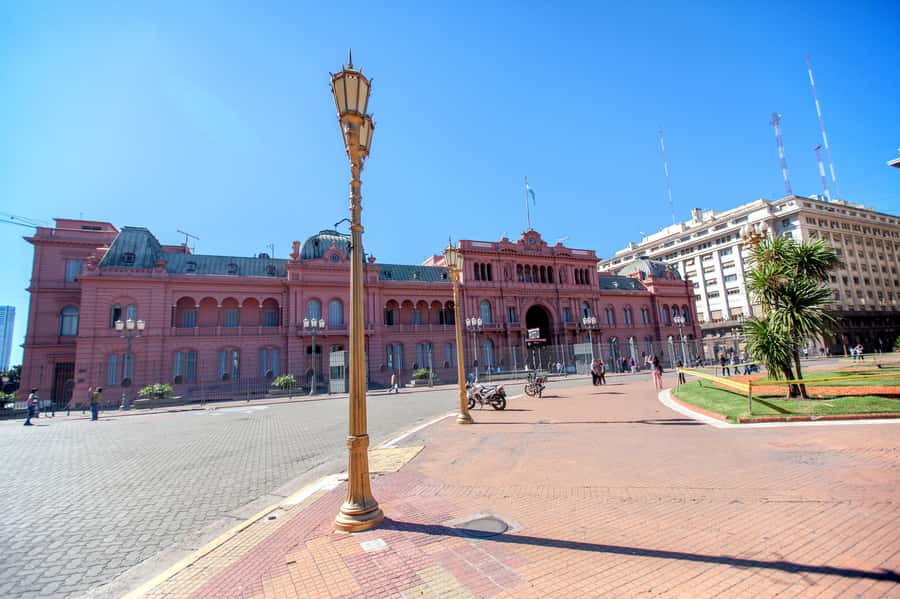
Buenos Aires rewards pattern recognition. Once you understand that Plaza de Mayo anchors the civic story, that La Boca delivers the street-energy story, and that Puerto Madero shows the redevelopment story, you’ll navigate your own time much better.
This tour also teaches you something subtle: neighborhoods are not separate worlds. They connect through avenues, landmarks, and the city’s rhythm of movement. That’s why a panoramic route plus a couple of strategic stops works.
One more plus: there is built-in time to explore around certain areas on foot, and that helps you break the bus routine. A short stretch of walking can make your photos look better too, because you can find angles rather than just shooting from the curb.
Who This Tour Fits Best (And Who Should Rethink It)
This works well if:
- You are in Buenos Aires for a short time and need orientation fast
- You want a structured route through Recoleta, San Telmo, and La Boca
- You like a guide who can explain what you’re seeing and help you choose where to return
You might want a different plan if:
- You need long guided time at each stop
- You are booking around tight appointment schedules, due to pickup variability
- You expect drop-off at your exact hotel door
Language is another filter. The guide is listed as Spanish. Some guides appear to accommodate English-speaking guests, but the safe assumption is that Spanish is the main working language, so it helps if you can follow along or at least tolerate partial understanding.
Should You Book This Buenos Aires Classic City Tour?
If you want a smart first step, I think it’s a solid booking. The tour hits the biggest visual anchors, gives you two focused photo stops, and helps you decide what deserves your next hours. For $45, the combination of transportation and guided context can save you time and confusion.
Book it with one mindset: you’re collecting ideas, not finishing every site. If you do that, you’ll get real value. If you hate delays or you need very precise timing, add buffer time to your day and confirm your exact pickup location before you head out.
FAQ
How long is the tour?
The tour duration is 4 hours.
What is the price per person?
The price is $45 per person.
Is the tour guide in Spanish?
Yes. The tour includes a live guide in Spanish.
Where is pickup included, and where do you get dropped off?
Pickup is included from centrally located hotels. Drop-off options are Florida Street, Galerías Pacífico, or the Obelisco. If your hotel is not included, you will be told the nearest hotel meeting point and you must wait in that hotel lobby.
What stops include photo time?
There are two photo stops of approximately 20 minutes each, one in Plaza de Mayo and one in Caminito.
Which neighborhoods and sights does the tour cover?
The tour takes you through emblematic neighborhoods including Recoleta, Retiro, San Nicolás, Montserrat, San Telmo, and La Boca. Along the route, you will encounter sights such as the Obelisk, Teatro Colón, Plaza de Mayo, Casa Rosada, the Metropolitan Cathedral, the Cabildo, and Caminito, plus the palaces area on Alvear Avenue and the modern recycled area of Puerto Madero.
Is food or drinks included?
No. Food, beverages, and other services not specified are not included.
Can I cancel for a full refund?
Yes. Free cancellation is available up to 24 hours in advance for a full refund.
Can I reserve and pay later?
Yes. You can reserve now and pay later, with no payment required today.
Tour Reviews Around Buenos Aires

Buenos Aires in Marble


Just added in Buenos Aires
- Buenos Aires Tango Show and Dinner in El Querandi
★ 4.6 · 10 reviews - Buenos Aires: Classic Private City Tour
★ 4.7 · 11 reviews - Buenos Aires: Intimate Tango Experience
★ 5.0 · 11 reviews - Walking Tour: Buenos Aires bookstores
★ 4.3 · 12 reviews - 5hs Small Group City Tour of Buenos Aires with Street Food
★ 4.2 · 12 reviews
Porteño Palaces and Theatres, compared.
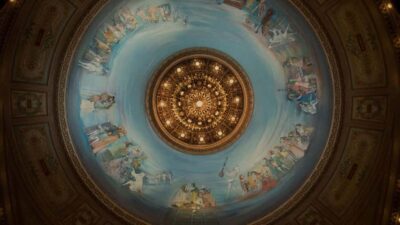 ★ 4.3Teatro Colon Guided TourFrom $49571 reviews
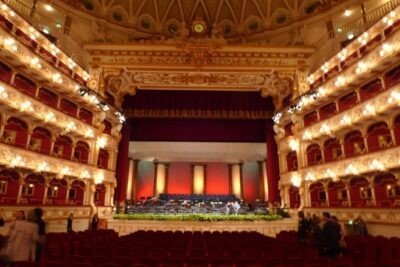 ★ 4.0Teatro Colon Guided Tour Admission TicketFrom $46208 reviews
 ★ 4.3Palacio Barolo Entry Ticket and Guided TourFrom $67193 reviews
 ★ 4.2Experience Teatro Colon : Secure your Tour today!!!From $4866 reviews
 ★ 4.4Palacio Barolo Guided Night Tour with WineFrom $9054 reviews
 ★ 4.9Historic Buenos Aires Landmarks & Icons TourFrom $2037 reviews
 ★ 4.9Walking City Tour with Colón Theater & MuseumsFrom $5814 reviews
Where this tour also appears