
REVIEW · PALERMO GRAFFITI AND MURAL WALKS
Private Off the Beaten Path: Hidden Urban Art Bike Tour
You’ll see Buenos Aires like a mural map. This private street art bike tour rides you through working neighborhoods south of the center, with stops for major walls, collectives, and design spaces that most visitors miss. I love that the route mixes La Boca history with Barracas scale, so street art becomes a way to understand how people live. I also like the pace: about eight stops, plenty of time to park the bike and walk in close. One thing to consider is that this is not a casual stroll, you need real comfort biking in an urban setting and into less-touristy areas.
In practice, this tour feels like a guided city reset. Your guide helps you interpret what you’re seeing, from art collectives to big community murals, and you get little breaks built into the ride, including snacks and a yerba mate (and coffee/tea) stop. If your idea of street art is only graffiti tags, this is the kind of tour that can change your mind fast.
Key things to know before you pedal
- San Telmo meeting first, then a southbound ride that keeps you off the usual tourist loop
- Calle Lanín, a once-dim street reborn by art and recognized as a UNESCO cultural interest site
- Barracas murals and Pasaje Lanín mosaics, including Alfredo Segatori’s El Regreso de Quinquela
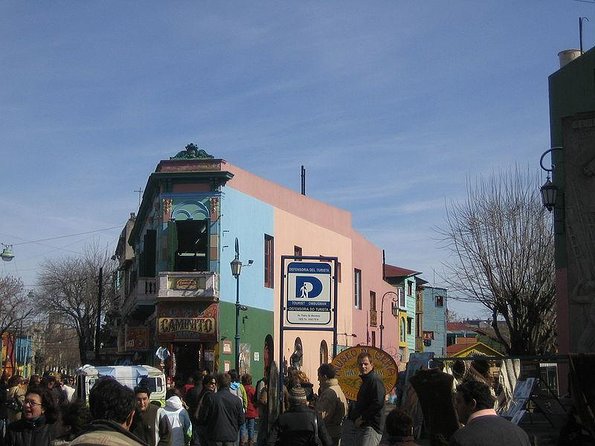
- La Boca street art stops tied to the neighborhood’s working-class Italian roots and event energy
- Design district visits, like the Metropolitan Design Center and the Cooperativa Vieytes collective
- Eight stops in about four hours, with walk time, photos, and a mate break to reset
Deeper into the Palermo murals
- Palermo: Graffiti and Street Art Guided Tour in English★ 4.8 · 684 reviews
- BA: Empanadas and Alfajores Cooking Experience in Palermo★ 5.0 · 112 reviews
- Buenos Aires Bike Tour: North Districts, Recoleta and Palermo★ 4.5 · 91 reviews
- Private Off the Beaten Path: Hidden Urban Art Bike Tour★ 5.0 · 62 reviews
Street art by bike: why this route works in Buenos Aires
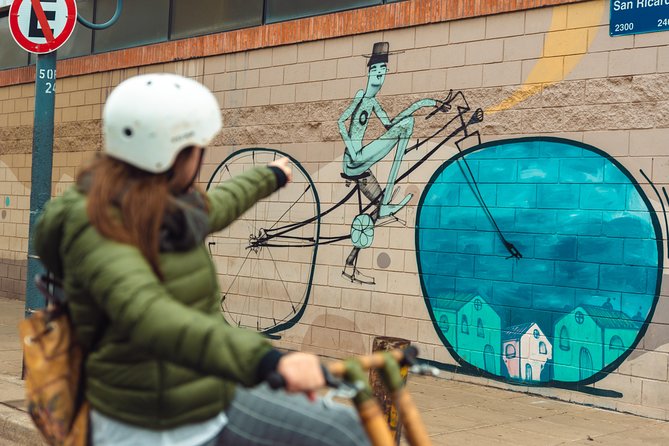
Buenos Aires street art is everywhere, but most people see it from the wrong angle, too far away, or only along the most photographed streets. This tour fixes that by turning the city into a moving gallery. You pedal between neighborhoods, so each mural lands with context instead of feeling like random color on a wall.
What I like most is how the experience is framed as culture, not just visuals. The ride includes art and design collectives, plus big public works you can actually understand in the streetscape. You get a sense of why certain walls are there, who they represent, and why people care enough to make them visible.
It also helps that the tour is private. You’re not competing with a crowd at each stop, and you can ask questions as you go. That matters a lot when street art is tied to local identity, sports, politics, and community life.
San Telmo start: getting oriented, then riding like you belong
Your afternoon starts in San Telmo, meeting at Balcarce 1016. You’ll get bike orientation plus urban riding tips before you head out, and that prep is more important than it sounds. Buenos Aires can be lively on the road, so learning how to handle the ride, where to expect turns, and how stops work is what makes the rest feel relaxed.
There’s also a broader angle on the company behind the tour. One of the early stops is about how they connect visitors to the city through people and culture, including a constitutional agreement with Holocary. Translation: the goal is not only to see walls, it’s to perceive the city differently.
This first segment matters because it sets expectations. The ride is designed to keep you moving through real neighborhoods, not just drifting past famous façades.
Bikes, helmets, and the “private” feel
Included are a bicycle and a helmet, plus bottled water. The tour is run in all weather conditions, so you’ll want to dress for rain or wind if needed. You’ll also get snacks and a coffee and/or tea mate stop, which is great if you’re biking and not trying to hunt for food later.
One practical note based on feedback: bike maintenance can vary a bit. The bikes generally do the job, but if you’re picky about ride quality, it’s worth being aware that some bikes could use a check-in.
Two more wheels: other routes through Buenos Aires
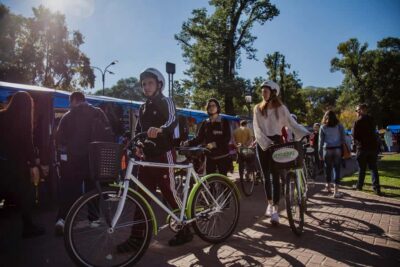
Calle Lanín and the comeback of a once-nearly-forgotten street
Your first real art stop is Calle Lanín, where the street story matters as much as the walls. This was once a grey, darker kind of street. Then artists brought it back to life, and it was recognized by UNESCO as a site of cultural interest.
This is the moment where the tour starts doing something smart. Instead of treating street art as decoration, you see how it can change a place’s identity. A street name that hints at being almost dead makes the transformation feel extra human. And because you get to experience it on foot after arriving by bike, the scale and details read better.
If you’re the type who loves tracing how neighborhoods evolve, this stop is a strong start.
Barracas mosaics and Alfredo Segatori’s world-scale mural
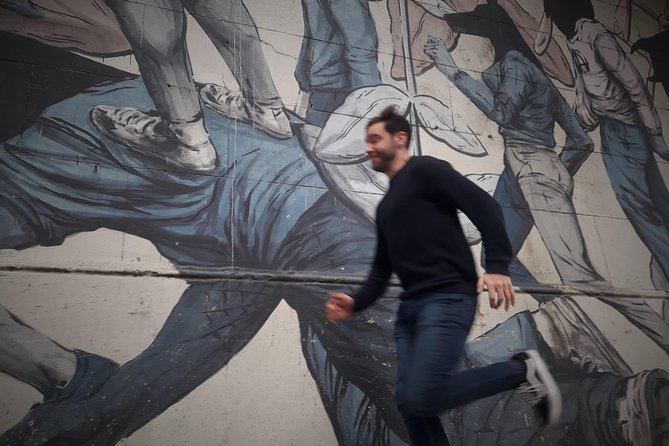
From there the tour shifts into Barracas, a neighborhood where the art feels bigger and more layered. The route includes stops for mosaics and long mural work, including Pasaje Lanín, which you’ll explore for its detailed tiled visuals.
Then you reach one of the big icons: the mural El Regreso de Quinquela by Alfredo Segatori, also known as Pelado. This mural is described as the longest mural painted by one person, and it’s now the longest in Argentina. Even if you think you already know what murals look like, seeing a wall that stretches across multiple buildings changes how you read the street.
This is also where the “community mural” theme gets real. You’ll see collaborative work tied to the Styles Street Art Convention, plus pieces by artists such as Pum Pum, Mart, Pol Corona, and Martin Ron. The takeaway is that street art here isn’t just individual ego. It’s often collective storytelling and public presence.
Why Barracas feels different from the tourist streets
In many cities, the art scene concentrates in the center. In Buenos Aires, the city’s edges can be where the strongest walls are. Riding into Barracas helps you understand how art can grow from everyday neighborhoods, with community members as the audience.
It’s also visually rewarding. Expect detailed surfaces, long sightlines, and lots of chances to stop and take photos because you’re not constantly forced back onto the bike for a single quick look.
La Boca side streets, Caminito context, and the stealth stencil moment
After Barracas, you head toward La Boca, known for its Italian working-class roots and brightly painted buildings. The goal here is not just to look at famous areas, it’s to understand how the art fits the neighborhood’s identity.
Along the route you’ll stop for murals by groups and collectives like Red Sudakas and Triangulo Dorado, and you’ll get the inside scoop on how Argentine street art works in real life. That includes how different pieces can carry different messages, from identity and community pride to social commentary.
The tour then includes time around Caminito. You’ll learn how it became one of the most visited and colorful parts of La Boca, and you’ll experience a Stealth Stencil stop. This is the kind of hands-on style pause that helps you connect the look of the art to the process, instead of just snapping pictures and moving on.
You’ll also get a chance to sample a local beverage, and there’s already a built-in drinks break elsewhere too. Either way, it helps you keep energy up for the rest of the ride.
Practical tip for La Boca stops
Because you’re mixing bikes with foot exploration, plan for short bursts of walking. Bring your camera ready, but also slow down long enough to stand close to walls. Street art reads differently up close, especially when details are part of the message.
Design district detours: Metropolitan Design Center and Cooperativa Vieytes
One reason I like this tour is that it doesn’t treat street art as the only creative doorway. The ride includes contemporary design district stops, so the visuals broaden from murals into spaces that shape how creative work gets made.
You’ll visit the Metropolitan Design Center, and then Cooperativa Vieytes, a collective housed in a former ice cream factory. It’s decorated with a symbolic mural, and that matters because it shows how art lives inside community infrastructure, not only outside on random walls.
This is a smart pairing with the murals you saw earlier. Big murals can be loud and public. Design collectives are about craft, structure, and the everyday ecosystem behind the scenes. Together, they help you see street art as part of a bigger creative landscape.
The art itself: collectives, conventions, and political street messages
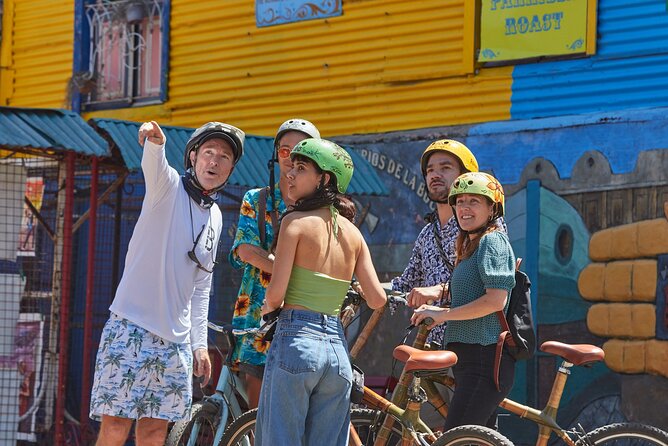
Street art in Buenos Aires can hit a lot of themes at once. On this tour, you see different kinds of work: large-scale murals, collaborative pieces tied to events, and works by identifiable artists and groups.
You’ll notice the tour keeps returning to the idea that street art communicates. Sometimes it’s about pride and sports culture. Sometimes it connects to politics and public life. Sometimes it’s simply about who gets to make the city visible.
The best part is that your guide helps connect what you see to why it’s there. That kind of interpretation is what turns “cool wall” into “I understand the point.”
If you’re the type who thinks graffiti is always vandalism, this is a good reality check. Here, the art is treated as a legitimate cultural language, and the scale of the murals in Barracas makes that argument hard to ignore.
Pace, stops, snacks, and how the 4 hours fit together
This is a four-hour experience with about eight stops. The stops are spaced so you can ride, dismount, wander by foot, and take photos without feeling rushed. The rhythm matters: you’re not biking for an hour, then sprinting between points.
There’s also a steady food and drink rhythm. You’ll have snacks and bottled water, plus a coffee and/or tea mate stop. That break keeps you comfortable, especially if you’re sensitive to heat or wind.
The route also builds in enough time at key mural moments that you can actually look. For street art, quick glances often miss what makes a wall interesting. Here, the design gives you time to stand close and read details.
Price and value: what you get for $115 in a private half day
At $115 per person, you’re paying for more than a bike and a list of stops. You’re paying for:
- a private guide in English/Spanish
- bike, helmet, water, and snacks
- multiple neighborhood shifts in a single half day
- access to art and design spaces you’d be unlikely to find on your own
The fact that it’s private is key. In a city like Buenos Aires, where distance between neighborhoods is real, a small-group or private setup saves time and reduces friction at each stop. That’s part of the value.
It also helps that there’s an optional e-bike upgrade for an extra fee. If your cycling comfort is good but not great, an e-bike can turn the tour into a smoother experience without changing the route focus.
One more value note: the tour is commonly booked about 20 days in advance on average. If your travel dates are fixed, I’d treat it like a must-do, not a last-minute idea.
Who should book this bike tour, and the one big caution
This tour is best for you if:
- you like street art and want more than surface-level photo spots
- you want to see La Boca and Barracas from the inside, not through a single main street
- you enjoy walking around murals for a few minutes at a time
- you like learning how art ties to sports, community life, and public identity
It may not be the right fit if:
- you are not comfortable biking in traffic or on urban routes
- you feel uneasy riding into non-touristy areas
- you prefer only major, fully tourist-managed sights
The company also lists moderate physical fitness as the baseline. This is not extreme, but it is active enough that you should show up ready to pedal and dismount.
Should you book? My practical take
Book it if you want a half day that feels like Buenos Aires has more layers than the typical highlights. The combination of mural scale (including Alfredo Segatori’s long work), neighborhood context (La Boca and Barracas), and creative stops (like the design collectives) is a strong use of time.
Skip it if biking in the city makes you nervous or you want purely iconic landmarks with minimal road exposure. This tour rewards people who enjoy streets, not only squares.
If you do book, I’d plan to take it earlier in your trip. The best role this tour plays is setting your lens. Once you understand how street art connects to community life here, you’ll notice the city’s visual language everywhere after that.
FAQ
Is this a private tour?
Yes. It’s a private tour/activity, so only your group participates.
How long is the tour, and when does it run?
It lasts about 4 hours. You’ll meet in the early afternoon in the San Telmo neighborhood.
What does the tour cost?
The price is $115.00 per person.
What is included in the price?
You get use of a bicycle and helmet, an English/Spanish speaking guide, bottled water, snacks, and a coffee and/or yerba mate stop. Local taxes are included too.
Can I use an e-bike?
Yes. An e-bike is optional for an extra fee.
What should I wear?
The tour operates in all weather conditions, so dress appropriately for rain or wind. You’ll be biking and also walking at stops.
What is the cancellation policy?
You can cancel for free up to 24 hours in advance for a full refund. If you cancel less than 24 hours before the start time, the amount paid is not refunded.
More Rides Through Buenos Aires
Palermo by the Wall
Just added in Buenos Aires
- Buenos Aires Tango Show and Dinner in El Querandi
★ 4.6 · 10 reviews - Buenos Aires: Classic Private City Tour
★ 4.7 · 11 reviews - Buenos Aires: Intimate Tango Experience
★ 5.0 · 11 reviews - Walking Tour: Buenos Aires bookstores
★ 4.3 · 12 reviews - 5hs Small Group City Tour of Buenos Aires with Street Food
★ 4.2 · 12 reviews
Palermo Graffiti and Mural Walks, compared.
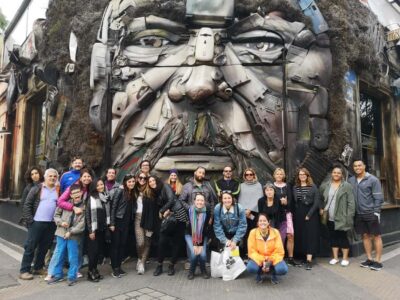 ★ 4.8Palermo: Graffiti and Street Art Guided Tour in EnglishFrom $13684 reviews
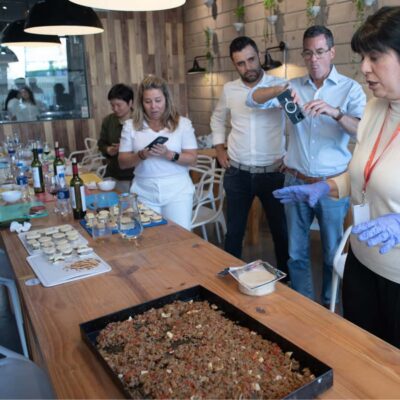 ★ 4.6Empanada & Alfajor Cooking Lesson in PalermoFrom $49186 reviews
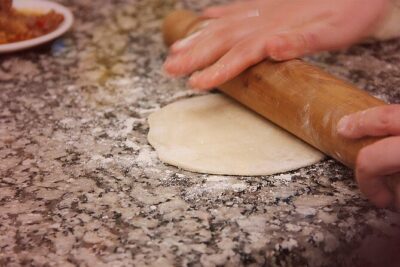 ★ 5.0BA: Empanadas and Alfajores Cooking Experience in PalermoFrom $49112 reviews
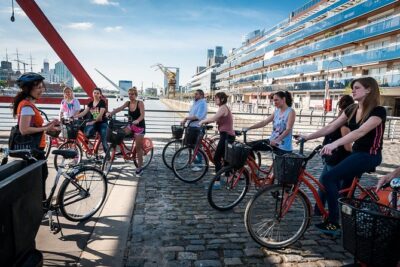 ★ 4.5Buenos Aires Bike Tour: North Districts, Recoleta and PalermoFrom $4591 reviews
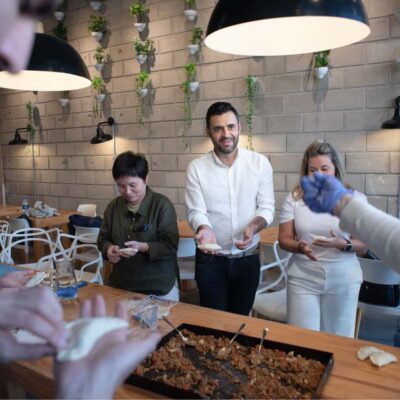 ★ 4.8Argentinian Empanadas Cooking Experience in Palermo, Bs AsFrom $4650 reviews
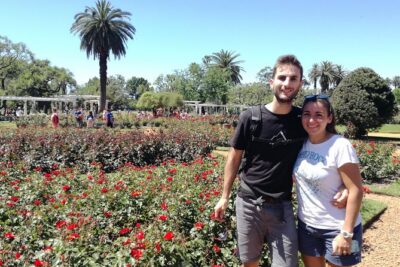 ★ 5.0Cultural Experience by Bike around Palermo and Recoleta Max 6 pplFrom $5444 reviews
 ★ 4.0Premium Argentinian Wine and Malbec Tasting & Urban Art TourFrom $6516 reviews
Where this tour also appears