
REVIEW · BUENOS AIRES TOURS
Buenos Aires for curious people
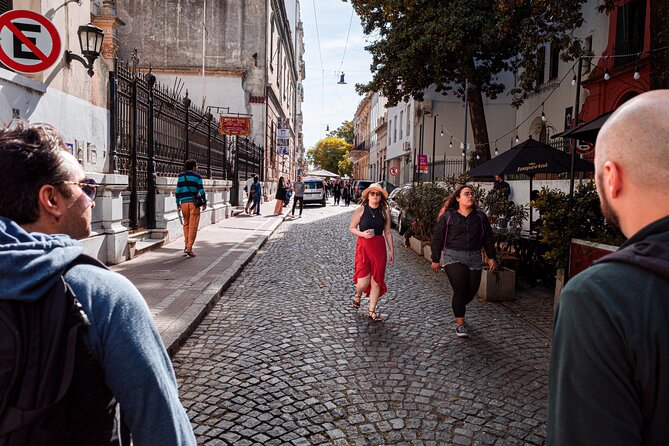
Buenos Aires can feel complicated fast. This walking tour helps you read the city like a story, from colonial churches to modern bridges, with sharp context for what you’re seeing. I especially like the small group size, and I love how the route connects neighborhoods to the politics and people behind them.
Two things really stand out for me. The first is the guide quality, with names like Nico, Ignacio, Sophia, and Santiago showing up in recent tours, and all of them are praised for clear explanations and answering questions. The second is the mix of famous sights and lesser-known stops, including San Telmo market life and a somber memory site.
One possible drawback: it is a walking tour, and some parts are emotionally heavy, especially the stop connected to the 1976 to 1979 dictatorship-era crimes. If you need a very light, photo-only stroll, this may feel like more than you want.
Key highlights at a glance
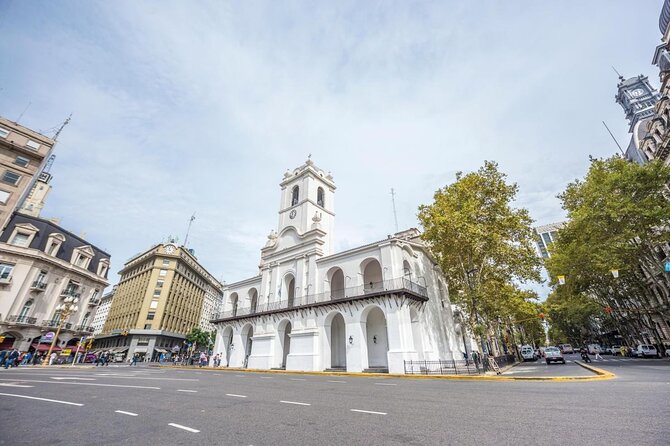
- Max 8 people, so you get real conversation time and not a lecture from far away
- San Telmo focus, with time in Plaza Dorrego and Mercado San Telmo
- Memory Walk stop, for an honest look at the clandestine detention, torture, and extermination system (1976 to 1979)
- Architecture variety, from a colonial church to Santiago Calatrava’s Puente de la Mujer
- Iconic ending area, with time around Casa Rosada and the Plaza de Mayo zone
- Most admissions are free, with the main exception being Casa Rosada inside entry
While you weigh this one up, here is what else Buenos Aires has going on.
- Buenos Aires Hop-On Hop-Off Bus, Free Walking Tours & Discounts★ 4.5 · 2,218 reviews
- Buenos Aires: Piazzolla Tango Show with Optional Dinner★ 4.4 · 2,122 reviews
- Buenos Aires: City Highlights Guided Tour with Transfer★ 4.7 · 1,946 reviews
- Buenos Aires: Hop-On Hop-Off City Bus Tour★ 4.2 · 1,855 reviews
A small-group Buenos Aires walk that makes the city make sense
Buenos Aires looks like a postcard, but it’s also a place where history sits in the corners. This tour is built for people who want meaning, not just monuments. You get a compact route that moves from old-town roots into San Telmo’s atmosphere, then finishes in the government-sight orbit near Plaza de Mayo and Casa Rosada.
What makes it work is the pacing and the guide style. In recent groups, hosts like Nico and Ignacio are praised for being clear, for holding a conversation, and for bringing history and politics into everyday street-level details. Another guide named Sophia also appears in feedback, and Santiago shows up as well. Even with different hosts, the common theme is the same: you’re not just shown places, you’re given the “why” behind them.
And yes, there is some humor in the tone, but it never dodges the hard parts. One reviewer summed it up well: this is more like a history class plus walking, not a generic photo tour.
The value: a low-cost tour with mostly free entries
At $33 per person for roughly 2 to 3 hours, this is a good deal if you like guided context. It’s not the kind of tour where you’re paying extra for every stop. Most stops list free entry, which keeps your costs down.
The one notable exception is Casa Rosada, where the tour time is included but admission is not included. So if you want to go inside, budget separately and plan ahead. The good news is you’ll still see the building as part of the walk, even if your choice is to just view it from outside.
If you’re the type who’s spent money on entry tickets only to end up standing in front of a wall without context, this tour’s structure is the opposite. You’re walking between points that connect to each other, and the guide fills in the missing pieces.
Meeting and route feel: easy start, focused finish near Casa Rosada
The tour starts at Bar Britanico, address Brasil 399, C1154AAC, and it ends at Casa Rosada, address Balcarce 78, C1064AAC. That end point matters. Ending near the center of national politics is a strong way to cap a walk that starts with early defenses and immigrant-era neighborhoods.
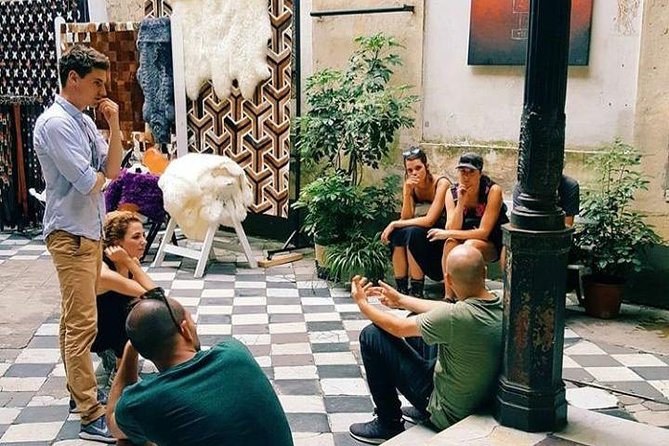
Because it’s a maximum of 8 travelers, you don’t get the “everyone stays silent” vibe. You can ask questions, and you can get follow-ups. Recent comments also mention that guides plan time for practical needs, including snack and bathroom breaks, which makes a big difference when you’re out for a couple hours.
The itinerary is designed for good weather. If conditions are poor, the tour may be canceled, and you’ll be offered a different date or a full refund. That matters in Buenos Aires, where walking comfort can change quickly.
Stop 1: Bar Britanico, the old-town starting line
You begin at Bar Britanico, a fitting warm-up before the walk proper. Starting at a well-known local spot gives you a real sense of “you’re in town,” not “you’re arriving at a sight.” It’s also a natural place for the guide to set expectations and help you get oriented before the route shifts into history mode.
Practical upside: because it’s the meeting point, you can treat it like your anchor. If you’re arriving from elsewhere, aim to find the place first, then relax. This is one of those tours where being on time is worth it because the group stays small.
Stop 2: Parque Lezama, where Buenos Aires began
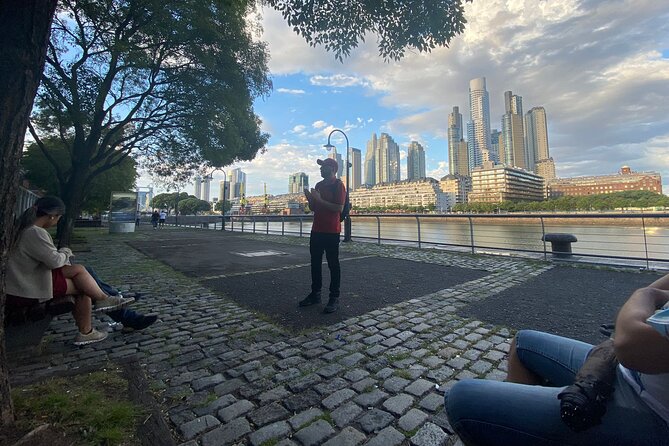
Next comes Parque Lezama, described as the spot where the first fort was established in 1536. That’s a big deal. It reframes the city right away. Buenos Aires isn’t just “a place with pretty buildings.” It started as defense, control, and settlement pressure.
In a short span, the guide ties early colonial planning to what you see now. Even if you don’t know a lot of Spanish history, you’ll understand the basic logic: older cities leave traces in the terrain, and parks are often sitting on older layers of meaning.
Why this stop is valuable: it gives you a timeline anchor before you move into San Telmo’s architecture and squares. You’ll know what era you’re looking at and why that matters.
Stop 3: Club Sueco Restaurante, a Swedish church in Buenos Aires
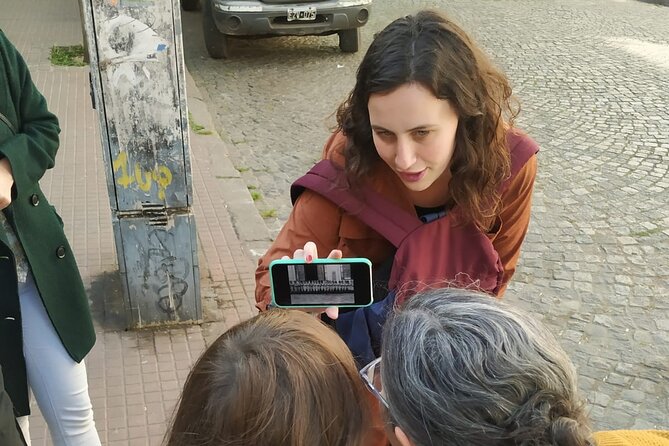
Then you get a turn that most standard tours skip: Club Sueco Restaurante, home to a Swedish church from 1944. That detail is a reminder that Buenos Aires wasn’t shaped only by Spanish and Italian influences.
This stop helps you see immigration beyond stereotypes. It’s not just about eating Italian food or hearing Italian surnames. It’s about how immigrant communities built institutions that reflected their faith and identity, then left physical marks in the neighborhoods.
What to watch for: the contrast between this kind of cultural marker and the rest of the old-town feel. The route intentionally plays with contrasts, so you’re less likely to treat the city as one uniform style.
Stop 4: Memory Walk, the human-rights reality check
Now comes the moment that changes the tone. Memory Walk marks a former clandestine center for detention, torture, and extermination from 1976 to 1979.
This is where you should slow your brain down and pay attention to how the guide frames what happened. The value here isn’t just the factual label. It’s the act of learning in place, on the street level, where “history” is not a book chapter but a physical footprint.
Possible drawback: this stop can be distressing. It also means the tour is not for people who want a carefree walking afternoon. If you’re emotionally sensitive or prone to shutdown when confronted with atrocity stories, plan for it.
Tip for your comfort: if you need a break, the tour does include breaks for practical needs during the overall walk. You can also ask the guide if there’s a moment to pause and reset.
Stop 5: Parroquia de San Pedro Gonzalez Telmo, colonial faith and names
After that, you step into Parroquia de San Pedro Gonzalez Telmo, a colonial Catholic church. The stop is short on paper, but it’s rich in what it represents: naming, devotion, and the kind of social structure that churches often signaled in colonial cities.
If you care about architecture, you’ll likely enjoy how the guide explains why churches survive and how their presence shapes street geometry and neighborhood identity. If you don’t care about architecture, you’ll still get a sense of how public life worked historically, and why religion mattered in community organization.
Stop 6: Plaza Dorrego, the old-town square energy
Next is Plaza Dorrego, the old town’s main square. In many cities, squares are where people come to breathe and gather. Here, the guide connects the square to the neighborhood’s identity and to the long-running role of public space in Buenos Aires.
This is also where you can feel the living city. Even if you keep your time mostly for walking and understanding, plazas tend to bring street rhythm into focus, and your brain starts grouping facts into a map.
If you’re planning photos: this is a better spot than most for quick snapshots because the square layout gives you frames without feeling forced.
Stop 7: Mercado San Telmo, immigrant-built daily life
Then it’s into Mercado San Telmo, a local market built up by Italian immigrants. This stop is one of the best examples of how the tour mixes human stories with places you can smell and see.
Markets are where history shows up in behavior. You learn how communities fed themselves, traded, and built routines. Even if you skip shopping, you’ll understand why a market is more than a tourist snack stop. It’s a social system.
Practical tip: if you want to sample something, this is the moment to do it. Since the tour includes planned time for breaks, you can time a snack without derailing the pace.
Stop 8: Puente de la Mujer, Calatrava’s modern signature
After the old-town and immigrant-era stops, you get a modern architectural hit: Puente de la Mujer, designed by Spanish architect and structural engineer Santiago Calatrava.
This is a smart placement. It stops you from turning Buenos Aires into a museum. The city is still being designed, still being rebuilt, still making political and economic choices that show up in public works.
What makes this bridge interesting on a walking tour is the perspective shift. You’re not just seeing a landmark. You’re moving from older neighborhoods into the idea of modern Buenos Aires infrastructure.
Stop 9: Casa Rosada and the Plaza de Mayo orbit
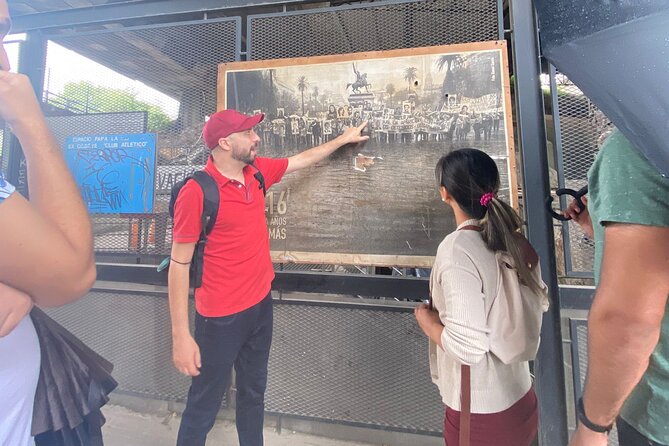
You finish at Casa Rosada, the president’s office. This is a strong ending because it ties back to the political thread the guide has been building through the earlier stops.
Even if the tour doesn’t include entry inside, you’ll still connect the dots. You’ve walked from early fort logic, through immigration institutions, through dictatorship-era memory, into colonial churches and civic squares. By the time you reach Casa Rosada, the city’s political center doesn’t feel random.
Reminder: Casa Rosada admission is not included, so if you want to go inside, plan and pay separately. If you’re not going in, you can still get the impact by spending your time on what the building represents and how the surrounding area frames national identity.
Who this tour fits best
This is a good match if:
- you want history with context, especially politics and social change tied to real places
- you like small-group conversation and question time
- you’re curious about San Telmo beyond the usual stroll
- you want a route that includes both famous landmarks and fewer-people-stopping spots
It’s less ideal if:
- you want a light, photo-only walk with minimal serious content
- you have very limited mobility or stamina for a continuous walking format
- you prefer a rigid agenda with zero flexibility, since guides may adapt timing based on questions and group needs
Tips to get the most out of your walk
A few practical moves will help you enjoy the tour more, even if you’re not a history nerd.
Wear comfortable shoes. This is walking through multiple neighborhoods, not a bus-and-photo script. Bring water and something small to snack on, since planned breaks exist and it’s smart to be ready.
If you care about Casa Rosada interior access, decide early whether you’re paying for entry. The tour gives you the landmark time, but inside access is on your own.
Also, be ready to ask questions. Guides like Nico and Ignacio are specifically praised for clear communication and for being willing to answer. The small group size is what makes that work.
Finally, mentally prepare for the Memory Walk stop. You don’t need to feel anything you don’t want to feel, but you should give it your full attention for a respectful, meaningful experience.
Should you book this walking tour or skip it?
Book it if you want the fastest way to understand Buenos Aires as a real place with layers. The combination of San Telmo atmosphere, a memory site that tells the dictatorship story in physical space, and an ending near Casa Rosada and the Plaza de Mayo zone creates a strong overview you can build on for the rest of your trip.
Skip it if your ideal day is mostly casual sights with no heavy content, or if you need a very slow paced itinerary. Also skip if you know you don’t want to pay separate costs if you decide to enter Casa Rosada.
For most curious travelers who like walking, asking questions, and connecting neighborhoods to history, this is one of the better ways to spend a couple hours in Buenos Aires.
FAQ
How long is the tour?
The tour lasts about 2 to 3 hours.
What does it cost?
The price is $33.00 per person.
Where does the tour start and end?
It starts at Bar Britanico, Brasil 399, and ends at Casa Rosada, Balcarce 78.
How big is the group?
This tour has a maximum of 8 travelers.
Is admission included for Casa Rosada?
No. Casa Rosada admission is not included, though the tour includes time at the site.
Are the other stops ticketed?
Most stops list free admission, including Bar Britanico, Parque Lezama, and Mercado San Telmo.
What is the weather policy?
The experience requires good weather. If it’s canceled due to poor weather, you’ll be offered a different date or a full refund.
When do I need to book?
On average, it’s booked about 35 days in advance.
Is confirmation provided after booking?
Yes. Confirmation is received at the time of booking.
Is the tour accessible and animal-friendly?
Service animals are allowed, and the tour is near public transportation. It also says most travelers can participate.
Tour Reviews Around Buenos Aires
Just added in Buenos Aires
- Buenos Aires Tango Show and Dinner in El Querandi
★ 4.6 · 10 reviews - Buenos Aires: Classic Private City Tour
★ 4.7 · 11 reviews - Buenos Aires: Intimate Tango Experience
★ 5.0 · 11 reviews - Walking Tour: Buenos Aires bookstores
★ 4.3 · 12 reviews - 5hs Small Group City Tour of Buenos Aires with Street Food
★ 4.2 · 12 reviews
Buenos Aires Tours, compared.
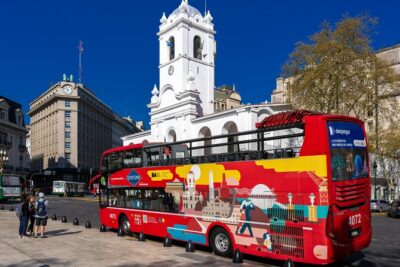 ★ 4.5Buenos Aires Hop-On Hop-Off Bus, Free Walking Tours & DiscountsFrom $392,218 reviews
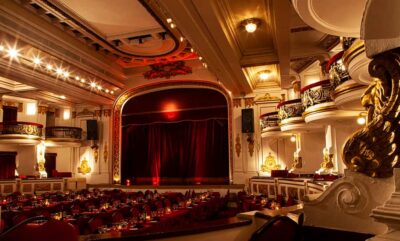 ★ 4.4Piazzolla Tango Show with Optional DinnerFrom $482,122 reviews
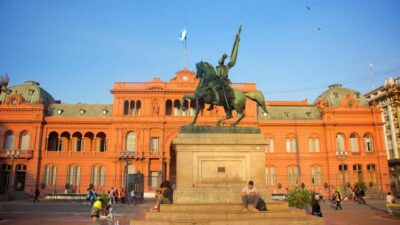 ★ 4.7City Highlights Guided Tour with TransferFrom $381,946 reviews
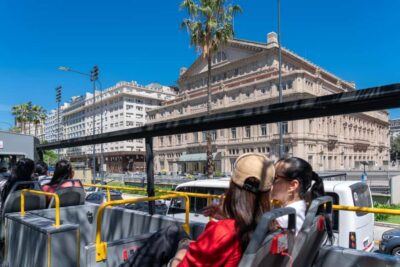 ★ 4.2Hop-On Hop-Off City Bus TourFrom $351,855 reviews
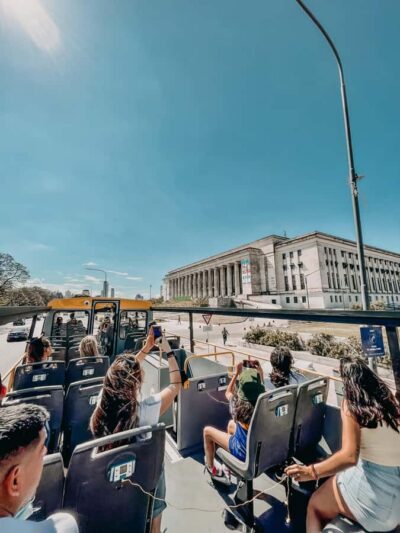 ★ 4.4Buenos Aires Hop-On Hop-Off Bus and Exclusive BenefitsFrom $351,714 reviews
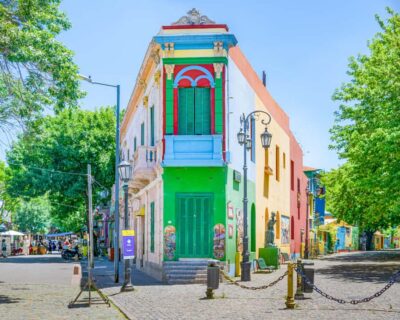 ★ 4.8La Boca Guided Walking Tour in EnglishFrom $131,587 reviews
 ★ 4.99-Course Argentine Meat Tasting at Fogón AsadoFrom $93826 reviews
 ★ 4.7From Buenos Aires: Gaucho and Ranch Day TourFrom $168809 reviews