
REVIEW · WORKSHOPS
Buenos Aires: Private Tango Lesson
Tango starts fast when you have a coach beside you. This private lesson in Buenos Aires is a focused 60-minute studio session where you learn the building blocks of real Argentinian tango, then put them together to music. The big win is private pacing plus a choice of Palermo or Downtown areas, depending on availability.
What I like most is how many first-time students can actually leave feeling like they can dance, not just pose. You’ll work on the embrace and the walk, plus the basic step and the “ocho,” with instructors described as patient and clear, like Martin, Tina, Joshua, Gabriela, and Luciano.
One possible snag is logistics. Lessons do not take place at the Obelisc, and Palermo can be limited on weekends or when booked with less than 36 hours notice, so you’ll want to plan around the studio address they email you.
Key Takeaways Before You Book
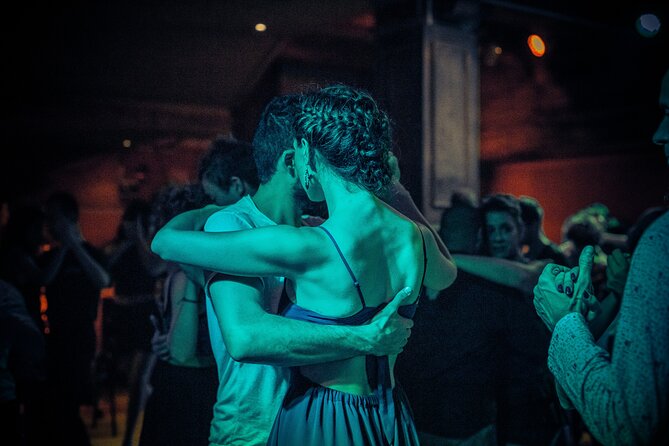
- It’s a true beginner-friendly private lesson, taught step-by-step even if you’ve never danced tango before.
- You learn practical basics: embrace, walking technique, the basic step, and the “ocho.”
- Location flexibility is real, with studios in Palermo, Downtown, or other neighborhoods based on availability.
- Communication seems strong, including clear meeting details and reconfirmation on the day in some cases.
- Instructors often add tango context, like music influences and tango history, not just choreography.
Other floors to learn the eight-count on
- Buenos Aires: Private Tango Lesson★ 4.9 · 244 reviews
- Tango Porteño Show with Optional Dinner and Tango Lesson★ 4.0 · 97 reviews
- Buenos Aires – Private Tango lesson★ 5.0 · 96 reviews
- Buenos Aires: Group tango class with mate and snacks★ 4.4 · 44 reviews
Why a Private Tango Hour Beats the Usual BA Tango Shuffle
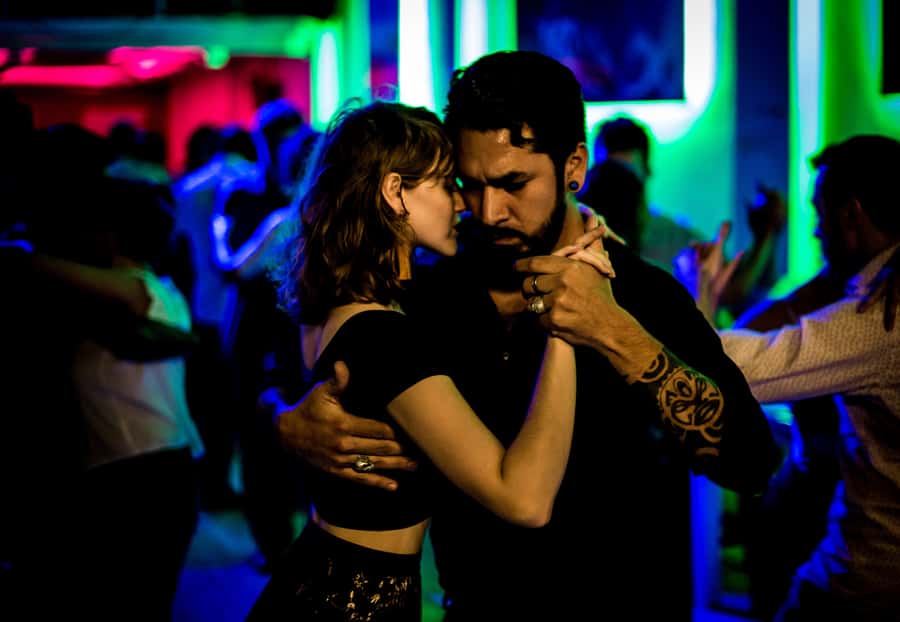
Buenos Aires is famous for tango, but the tricky part is how you meet it. If you only do a show, you watch the magic happen at arm’s length. If you only do a group class, you may spend part of the hour waiting your turn or copying steps you do not fully understand.
This private lesson is designed for the middle ground: you get coached in a studio for a full hour, at a pace that fits your level. That matters because tango is less about memorizing a sequence and more about learning how your body connects to the music, and to your partner (even in beginner form).
Also, the private format tends to make nervous beginners relax. In the feedback, the instructors repeatedly come across as patient and encouraging, especially with people who had never danced tango before. That’s the sort of experience you want in a city where tango is taken seriously.
Where the Lesson Happens, and Why the Obelisc Mix-Up Matters
Here’s the practical thing you must get right: the lesson does not happen at the Obelisc. The Obelisc address is just a generic placeholder that an online system might show. You should wait for the message that gives you the actual studio location.
Your confirmation email will include the studio address, and the lesson can be scheduled in Palermo, Downtown, or other neighborhoods based on availability. Palermo is a popular area for visitors, so it gets booked quickly.
This is worth planning for because it affects your timing. If you accidentally head to the Obelisc, you can lose the whole momentum of the session, and your instructor also only has the studio hour booked. Instead, treat the email location as your single source of truth, and plan to arrive with a little buffer.
Inside the Studio: Your 60-Minute Tango Lesson Flow
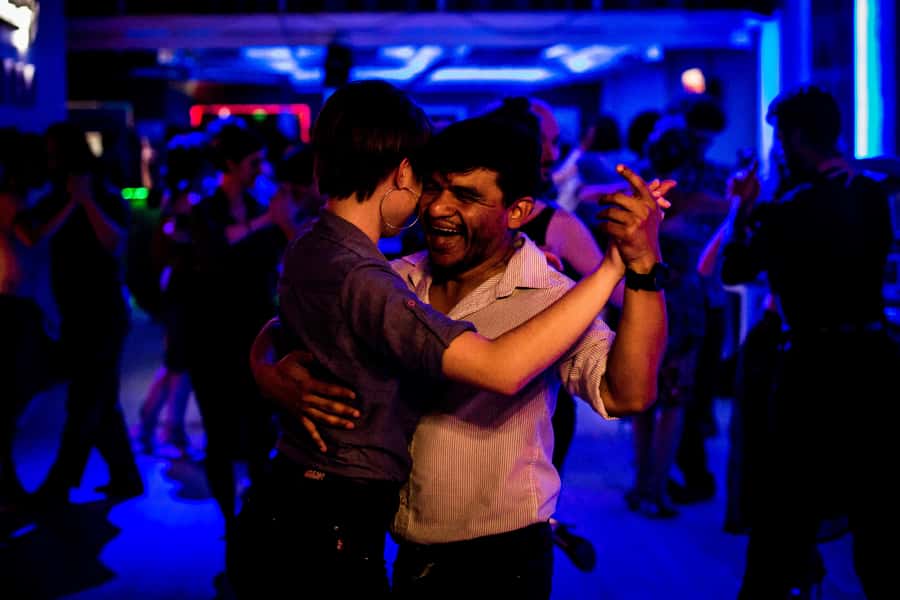
The lesson is one hour in a comfortable studio with a professional instructor. The private setup means the class usually moves in the order that helps you get results fastest.
Even though every teacher may shape the hour slightly, the core topics are consistently the same:
Other private days in Buenos Aires



1) Set-Up: embrace, posture, and comfort
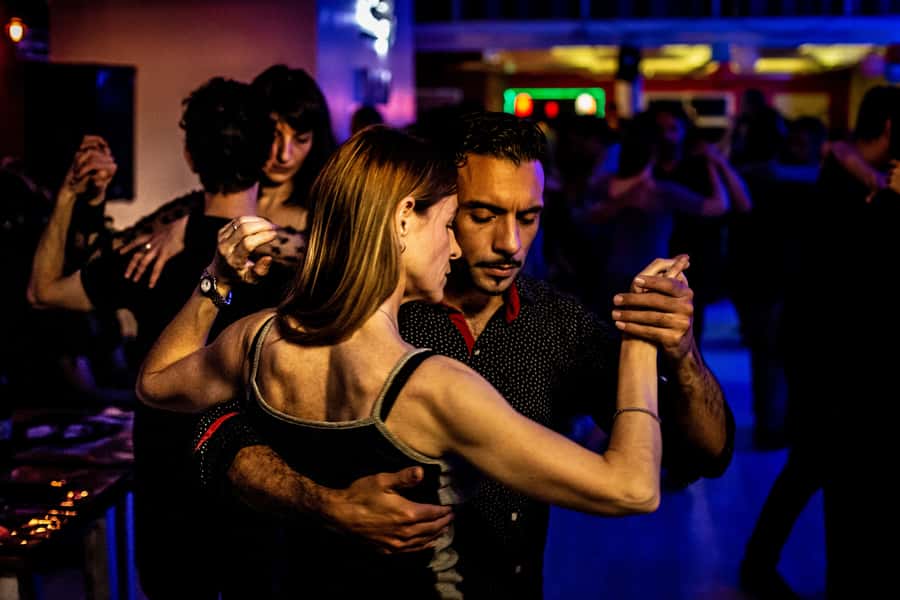
You start with the basics of how partners hold and how you stand. That includes the embrace concept and how to stay balanced so the rest of tango doesn’t fall apart. For beginners, posture can feel awkward at first, so a good instructor’s job is to make it simple and repeatable.
A lot of the praised feedback points to step-by-step explanations and corrections. That’s important because tango has tiny details that make the big difference between clunky and convincing.
2) The tango walk: turning technique into motion
Then you move into walking mechanics. In tango, walking is not casual strolling. It’s the controlled, weighted step that tells your partner and the music you’re in sync.
The walk is where many beginners get their first real confidence, because it’s less about fancy footwork and more about feeling grounded and rhythmic.
3) The basic step: building a repeatable foundation
After the walk, you learn the basic step you can use as a starting point for dancing on the floor. The goal is not perfection in one hour. The goal is clarity: what your feet do, what your body leads, and how you know you’re doing it right.
If you’re coming from other dance styles, you might also notice how tango changes the way you interpret timing and weight.
4) The “ocho”: the signature move that makes you look like you know
Next is the “ocho.” This is the tango figure that often makes beginners grin, because once you get the shape, you can feel how tango creates flow. You learn how to execute it and how to connect it into the movement sequence you started building.
In the feedback, people repeatedly highlight that they learned the basic elements within the hour, not just watched the instructor demonstrate. That’s the advantage of private pacing.
5) More moves, plus freestyle practice (depending on your level)
The description also notes that you’ll learn additional moves beyond those headline basics, and the class often ends with you putting the steps to music. Several feedback comments mention being able to freestyle or combine multiple tango moves by the end.
That end moment is where the lesson stops being theory and becomes a memory you can take home. One reason private lessons can feel so worth it is that final practice time, because you are not leaving with only muscle confusion. You leave with something usable.
What’s Actually Included (and What You Should Plan For)
Included is straightforward: you get a professional instructor studio lesson for 60 minutes.
Not included: transfers, plus food and beverages. So you’ll need to handle your own way to the studio and any drinks or snacks before or after.
This is not automatically a negative. Private tango is not the kind of activity where you want a tour bus stuck between you and a tiny studio. It’s usually better if you can control your arrival time.
But it does mean you should check the studio neighborhood once you receive the email and plan your route accordingly.
Choosing Palermo vs Downtown: The Availability Trade-Off
This lesson can take place in Palermo or Downtown, depending on availability. Palermo is specifically noted as having very limited weekend availability, especially if you book with less than 36 hours notice.
So here’s how I’d choose:
- If you want the Palermo vibe and you’re booking in advance, Palermo is a great choice. It often fits the way many visitors plan their days.
- If you’re traveling with less flexibility, Downtown or other neighborhoods might be easier to lock in.
If you’re trying to schedule tango around dinners and a show, give yourself breathing room. Tango is more enjoyable when you arrive calm, not sprinting to catch the start time.
Instructors, Language Support, and the Coaching Style That Gets Results
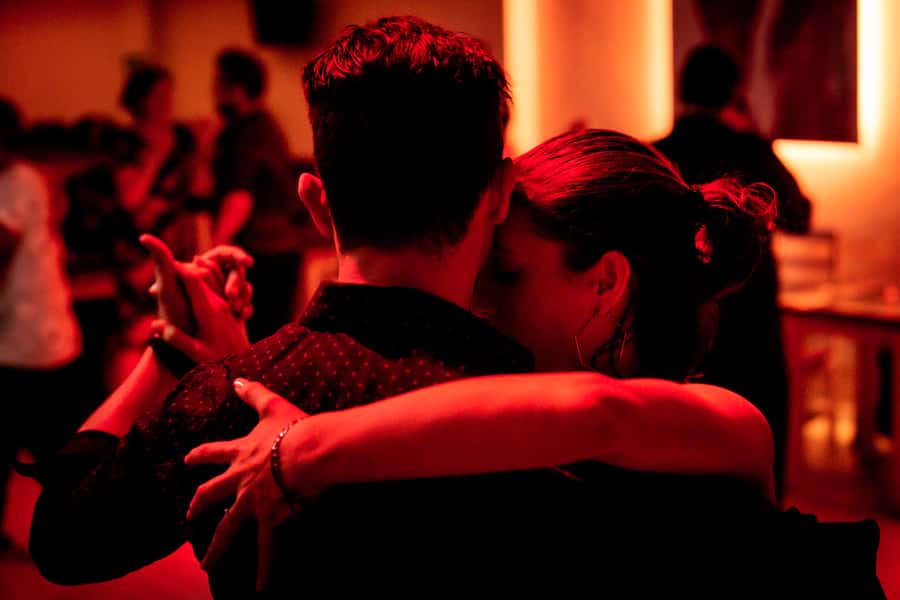
The instructor speaks Spanish and English. That’s a big deal in a beginner tango class, because you need real clarity, not just gestures.
From the feedback, a standout theme is teaching that adjusts to beginners. Names that come up again and again include Martin, Tina, Joshua, Gabriela (Gabriella in one review), Luciano, Veronica, and Beatriz. Across these comments, the recurring pattern is patient explanations and instructors helping students feel comfortable.
Some teachers also add a cultural layer. One instructor, Luciano, is mentioned sharing tango history and music samples of pioneers. Another instructor, Arts, is noted for explaining context and history and even different musical influences. One class includes mention of rules of “Molonga,” which tells you the instructor may weave in social dancing concepts too.
You should not expect one single script, but you can expect that the best instructors connect the steps to the reasons behind them. That’s what helps you remember what to do, not just how it looked in a demo.
Price and Value: Is $39 for Tango Actually Good?
At $39 per person for a private 1-hour lesson, this can be strong value if you want a coach who can correct your basics on the spot.
Here’s why the math often works:
- Tango basics are physical and timing-dependent. You usually learn faster with someone watching you, not only with a video.
- The class is private, so the instructor can slow down when you need it and speed up when you get it.
- You get a studio hour, not a rushed stop.
If you compare this to any option that provides only observation, or that gives you a limited amount of instructor attention, the private lesson is often the better use of time. If you have limited days in Buenos Aires, one hour where you actually learn something practical can beat a longer activity that leaves you feeling like you only watched tango happen.
What to Bring, What to Wear, and How to Make the Most of Your Hour
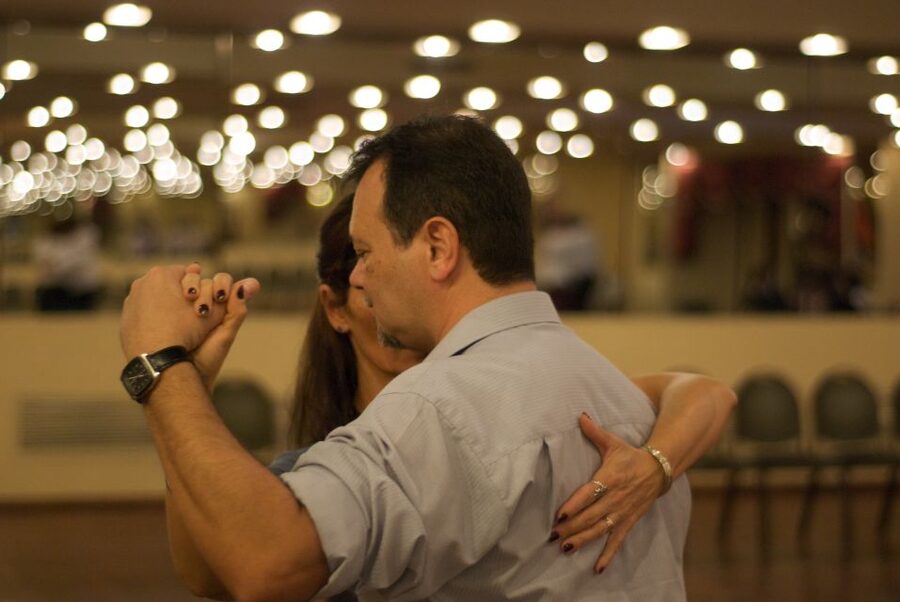
You don’t need special gear to start. But you do want to make sure your shoes and clothing let you move.
I recommend arriving ready to dance, not dressed for sightseeing photos. Tango requires foot articulation, balance, and leg control. Wear something comfortable and secure, especially if you’re switching from walking around Buenos Aires all day.
One more tip: bring a mindset of small wins. The goal of the hour is not to become a floor sensation. It is to leave with the embrace basics, the tango walk, the basic step, and the “ocho” so you can keep building when you find a milonga or a longer class.
Also, if you’re celebrating something or you’re dancing with friends, the private format can be a nice moment. People in the feedback mention anniversary trips and family visits, and that personal context often makes the class feel warmer and more relaxed.
Who This Private Tango Lesson Fits Best
This experience is a great match if you:
- Are a complete beginner who wants clear guidance fast
- Want private attention, not a crowded class
- Are traveling as a couple, solo, or in a small private group
- Want to learn real tango basics you can recognize in Buenos Aires later
It also makes sense if you dance another style already. Some feedback notes that tango steps can feel helpful even if your background is ballroom, because the lesson builds transferable skills like posture, timing, and weight shifts.
If you already feel like an intermediate dancer, you may still find value in having your basics corrected. Tango often improves when the fundamentals are clean, and a coach can spot issues quickly.
Should You Book This Private Tango Lesson in Buenos Aires?
I’d book it if you want the best chance of leaving with usable tango skills after just one hour. The format is beginner-friendly, private, and focused on the exact steps people most want when they think about tango: embrace, walk, basic step, and the “ocho.”
Skip it only if you hate planning around changing logistics. Because the studio address is emailed and you must not go to the Obelisc, you’ll want to pay attention to the location details. Also, if you’re aiming for Palermo on a weekend and your dates are tight, plan ahead because availability can be limited.
If you’re the type of traveler who likes doing one iconic thing with a real instructor, not just a performance, this is a smart use of time in Buenos Aires. Book early when you can, arrive with time to spare, and treat the hour like training your body to understand tango music.
FAQ
What is the duration of the tango lesson?
The lesson lasts 1 hour.
How much does the private tango lesson cost?
The price is $39 per person.
Is this lesson private or shared?
It is a private group experience. It can be for single students, couples, or private groups.
Where does the lesson take place?
The studio location can be in Palermo, Downtown, or other neighborhoods depending on availability.
Is the lesson at the Obelisc?
No. Lessons do not take place at the Obelisc. You will receive the studio location by email after you confirm the booking.
What will I learn during the lesson?
You’ll learn basic steps to dance Argentinian tango, including the embrace, how to walk, the basic step, the “ocho,” and additional moves.
What language is the instruction in?
The instructor speaks Spanish and English.
Does the price include transfers or transportation?
No. Transfers are not included.
Does the price include food or beverages?
No. Food and beverages are not included.
What is the cancellation policy?
You can cancel up to 24 hours in advance for a full refund.
Tour Reviews Around Buenos Aires



More Floors to Learn On

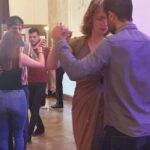

Just added in Buenos Aires
- Buenos Aires Tango Show and Dinner in El Querandi
★ 4.6 · 10 reviews - Buenos Aires: Classic Private City Tour
★ 4.7 · 11 reviews - Buenos Aires: Intimate Tango Experience
★ 5.0 · 11 reviews - Walking Tour: Buenos Aires bookstores
★ 4.3 · 12 reviews - 5hs Small Group City Tour of Buenos Aires with Street Food
★ 4.2 · 12 reviews
Workshops, compared.
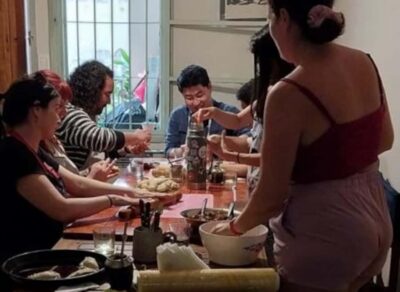 ★ 4.8Empanadas and Alfajores Guided Cooking ClassFrom $37486 reviews
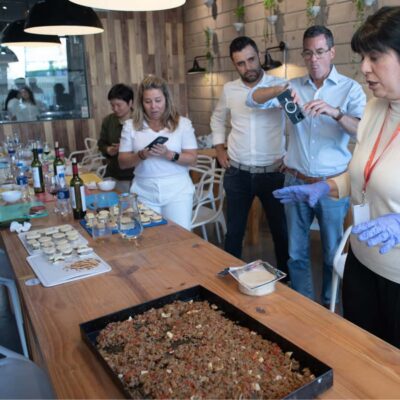 ★ 4.6Empanada & Alfajor Cooking Lesson in PalermoFrom $49186 reviews
 ★ 4.0Tango Porteño Show with Optional Dinner and Tango LessonFrom $3597 reviews
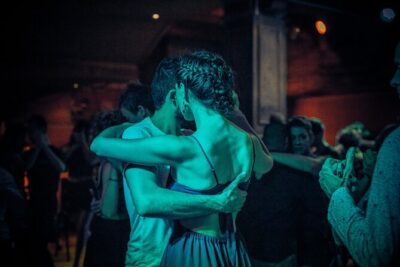 ★ 5.0Buenos Aires – Private Tango lessonFrom $3996 reviews
 ★ 5.0Spanish Group Course in Buenos Aires, Argentina: 20 LessonsFrom $27572 reviews
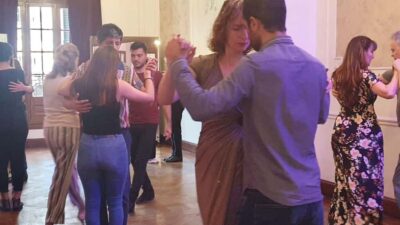 ★ 4.4Group tango class with mate and snacksFrom $2544 reviews
 ★ 5.0English Classes with Native TeachersFrom $2037 reviews
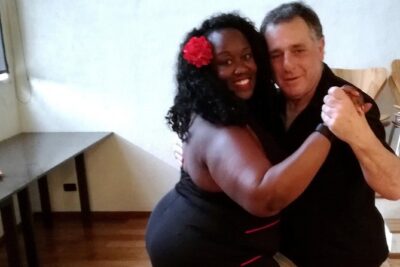 ★ 5.0Private Argentine Cooking Class and Tango Lesson in Buenos AiresFrom $18237 reviews
Where this tour also appears