
REVIEW · WALKING TOURS
Nazis in Buenos Aires: a historical walking tour
Buenos Aires has Nazis on the street-level history map. This is a tense, thought-driven walking tour through Recoleta, Retiro, and Microcentro, led in English by Max, a history teacher (University of Buenos Aires). You will connect Argentina after WWII to the Holocaust debate, the migration of Nazi war criminals, and the long political shadow of Juan Domingo Perón.
I love how the tour uses real places as evidence, not just talking points. Two big standouts for me are the stop tied to Adolf Eichmann, where he allegedly sat for a cup of coffee, and the fact that you also visit the site linked to the worst terrorist attack in Latin America. One drawback to consider is that the material is heavy, and the tour specifically recommends you have a basic grounding in WWII and the Holocaust.
Key Highlights You Will Feel on This Walk
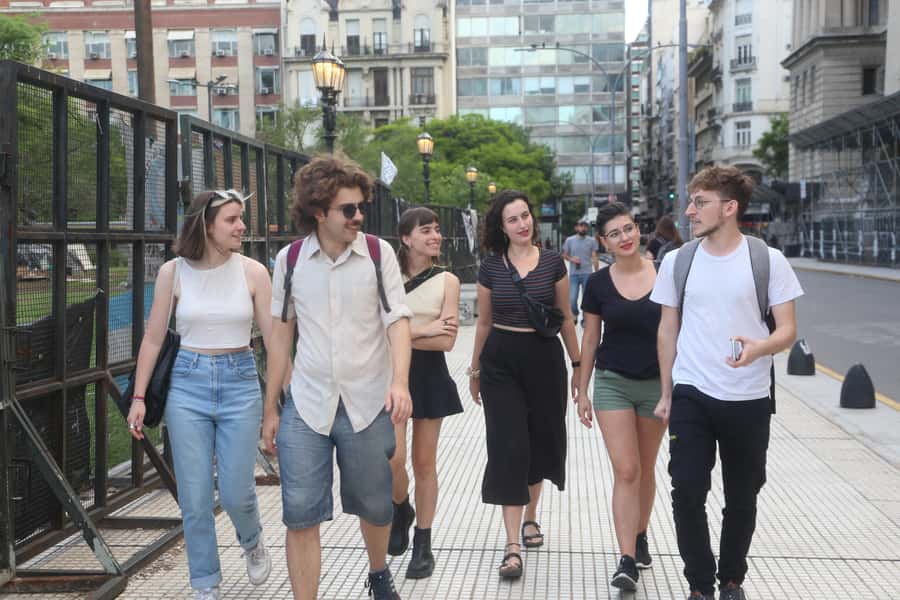
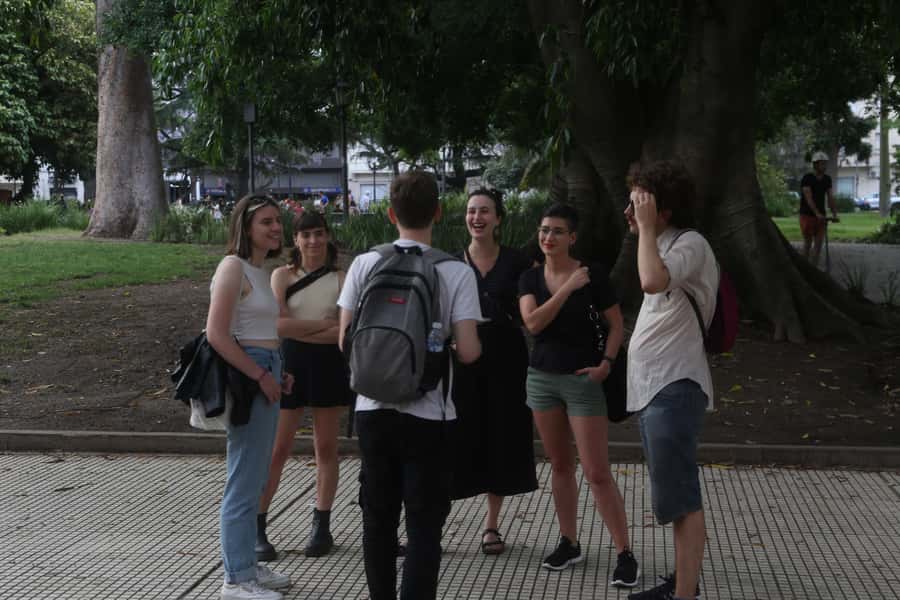
- A teacher-led debate, guided by Max (University of Buenos Aires), not a scripted monologue
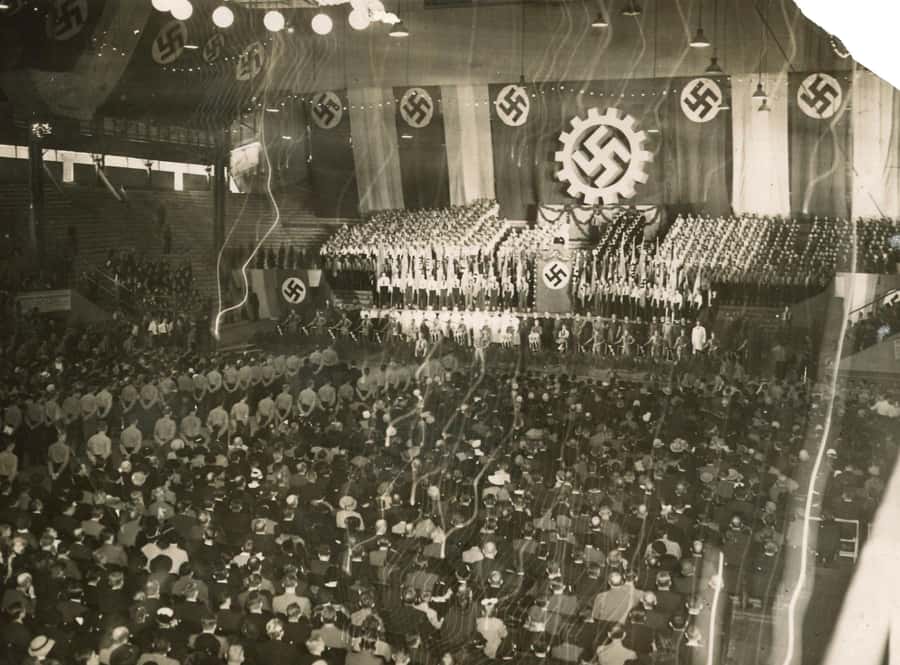
- Luna Park Stadium’s Nazi-era meeting, including the 15,000-seat scale at a still-working venue
- Eichmann’s coffee stop, told through a chain of identification and capture that raises hard sourcing questions
- Jewish community history in Buenos Aires, including the city’s role as the second largest Jewish community in the continent
- A 1960s neo-Nazi attack location, bringing the story past WWII and into later violence
- A finish at the former Israel embassy memorial, tied to major terror history
More of Buenos Aires on foot
- Buenos Aires Hop-On Hop-Off Bus, Free Walking Tours & Discounts★ 4.5 · 2,218 reviews
- Buenos Aires: La Boca Guided Walking Tour in English★ 4.8 · 1,587 reviews
- Nazis in Buenos Aires: a historical walking tour★ 4.9 · 193 reviews
- Buenos Aires: Personalized 2 to 8-Hour Private Walking Tour★ 4.7 · 149 reviews
Buenos Aires After 1945, The Part You Do Not See From Postcards
This tour tackles a difficult theme: was Argentina a refuge for Nazi war criminals after 1945, and how much was known or even encouraged by official power? The walk is not built for comfort. It is built for clarity, with an approach that keeps returning to the question of sources, timing, and responsibility.
What makes it especially useful is that you learn the local context as you walk. The story is not only about Europe. It is also about the politics of twentieth-century Argentina, and how debates around Perón can change the way people interpret everything that follows.
If you like history that makes you sit up, this is your kind of afternoon. You will be standing in front of recognizable Buenos Aires landmarks while the guide connects them to WW2, the Holocaust, and the postwar migration of alleged war criminals.
Starting at Monumento a Juana Azurduy, Where the Tour Sets Its Ground Rules
The walk begins at Monumento a Juana Azurduy, just outside the Palacio Libertad area (formerly known as the CCK). This is a good starting choice because it frames the whole city-center route, before you head into the denser history sites around Recoleta, Retiro, and Microcentro.
You will also spot Max easily. He wears a black cap by the benches facing the Libertad Palace. That matters because you want to start promptly, and the tour is paced for a 2.5-hour total experience with a short restroom break built in.
Before the first stop, the guide typically sets expectations clearly: this is a dispute-heavy topic, and you will get discussion without turning it into simplistic good-versus-bad storytelling. I also like that the guide is ready for questions about Nazism, Judaism, the Holocaust, and Argentine history, even if your background is not perfect.
Luna Park Stadium: Seeing the 15,000-Seat Nazi Meeting in a Venue That Still Works
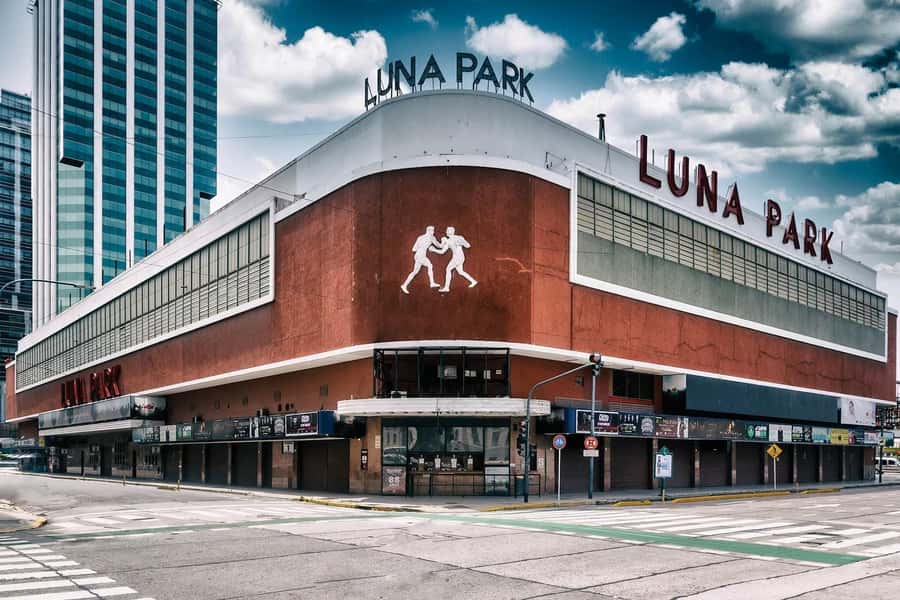
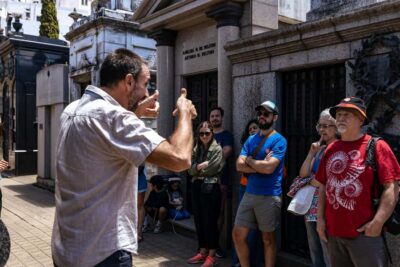
One of the tour’s most striking moments comes at Luna Park Stadium. You spend about 20 minutes here, and the point is bigger than the building itself. This is where the guide connects ideology to spectacle, showing how public venues can be used for propaganda.
The highlight is the scale: a Nazi meeting said to have drawn around 15,000 seats, yet you are visiting in a city where the venue still operates. Standing there, you get a gut-level sense of how easy it can be for propaganda to feel normal when it is wrapped in architecture and crowds.
Practical note: this is an outdoor stop with walking, so comfortable shoes matter. You will likely spend a decent chunk of time getting from one landmark to the next, and the guide keeps you moving.
More of the century that built Buenos Aires
ABC Restaurant: Eichmann’s Coffee and the Art of Questioning Sources
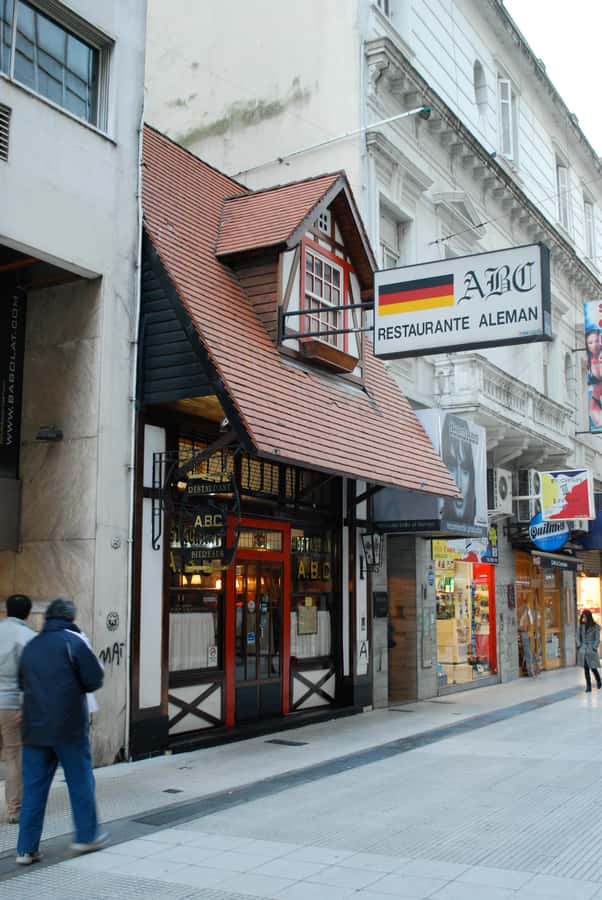
Next is ABC Restaurant (about 20 minutes). This is the stop tied to the story that Adolf Eichmann sat for a cup of coffee in Buenos Aires. That detail is both memorable and unsettling, and it is also why the tour works so well.
A lot of history tours toss out claims and move on. Here, the guide presses on something more valuable: how we know what we know. From what I learned in the way Max teaches, he is careful about evidence and willing to admit uncertainty when the record is not airtight.
You also get the larger arc that connects Eichmann’s identification and capture. The tour does not just say, Eichmann was here. It frames the investigation storyline as a spy-like process and ties it back to the broader WWII and Holocaust aftermath.
Museo de Armas de La Nación Tte. Gral. Pablo Riccheri: War Hardware Meets Postwar Reality
Then you head to Museo de Armas de La Nación Tte. Gral. Pablo Riccheri for roughly 20 minutes. This stop may sound like it is only about weapons, but it is really about how countries manage power after war ends.
In practice, this is where the discussion starts to connect dots between migration, political incentives, and security thinking. If Argentina’s postwar choices are part of the debate, a museum of arms is a natural place to talk about what those choices mean on the ground, not just in newspapers.
This stop is also a reminder that WWII did not end at the map’s edge. The ideology, networks, and influence often changed jobs and uniforms instead of disappearing.
Palacio San Martín: Where Perón Debates Become a Street-Level Explanation
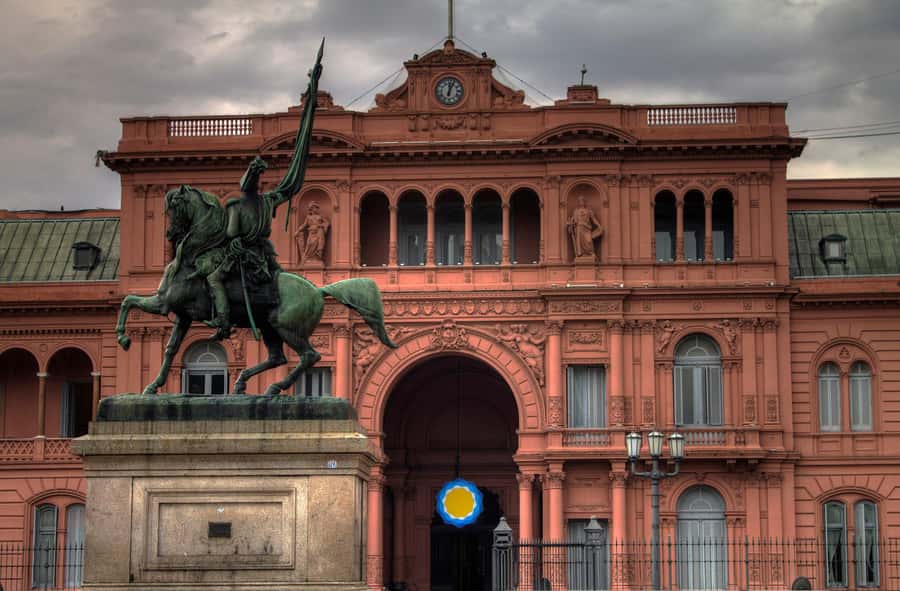
At Palacio San Martín (another 20-minute stop), the tour turns sharper toward Argentina’s own twentieth-century political story. You are not only learning about Nazis. You are learning why Argentine politics in the Perón era still shapes how people interpret the postwar period.
Juan Domingo Perón is described in the tour as arguably the most important political figure of Argentina’s 20th century, and the guide uses that to explain why the Nazi migration question is so disputed. In other words, the question is not only Who came here? It is also Who supported the system that let certain people move, and how different political factions understood the situation.
I like this part because it gives you a mental framework. When you later read about the topic on your own, you will know what the local arguments sound like.
Italian Circle of Buenos Aires: When 1960s Neo-Nazism Hits Close to Home
The next stop is the Italian Circle of Buenos Aires for about 20 minutes. This is where the tour goes beyond WWII. The highlight here is a neo-nazi attack in the sixties, which keeps the story from becoming a museum exhibit.
This is a crucial shift. If you only learn about Nazi war criminals during the immediate postwar years, the topic can feel frozen. But seeing a later attack connected to neo-nazi ideology makes it clear that extremist movements often survive through networks, communities, and political swings.
For you, the practical takeaway is that you leave with a better understanding of why these events still matter. The guide makes that connection without turning it into a lecture that forgets people lived through it.
Finishing at Plaza Embajada de Israel: Terror History and the Holocaust’s Aftermath in Buenos Aires
The tour ends at the Plaza Embajada de Israel memorial site, tied to the former embassy of Israel. This is the stop where the experience becomes even more emotionally direct.
The tour highlights that you will visit the location connected to what is described as the worst terrorist attack in the history of Latin America. Ending here gives the final segment a different weight: not only Nazi history, but the broader story of persecution and terror that continued to shape the city and its Jewish community.
You also get the guide’s framing of how the Jewish community in Buenos Aires was affected, including the fact that this community became the second largest in the whole continent. That detail matters because it helps you see the topic as a living social reality, not just a chapter from Europe.
Timing, Pace, and What to Bring So You Enjoy It
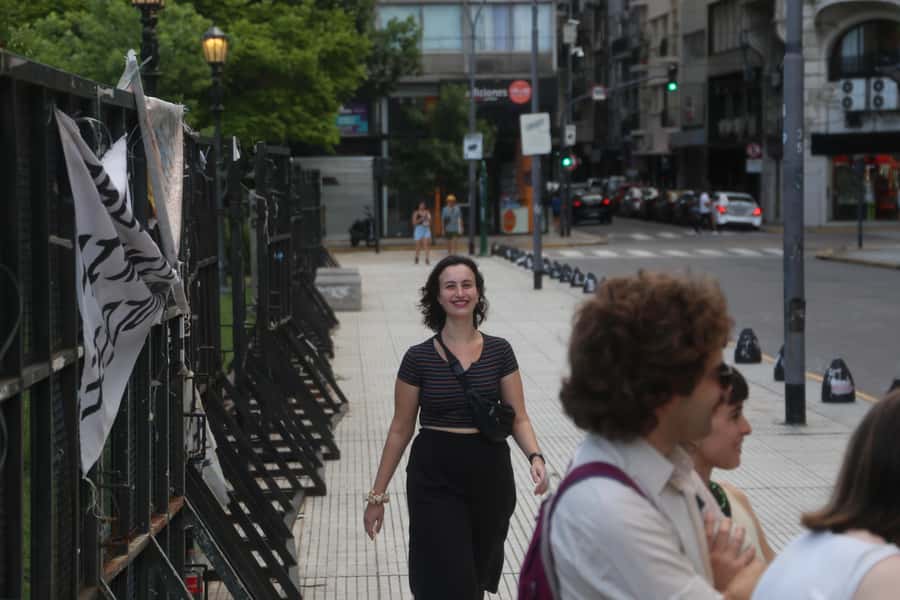
The tour runs about 2.5 hours total. It includes a 10-minute restroom pause, which is genuinely helpful given the walk through multiple central neighborhoods.
You will want comfortable shoes and water. This is a walking tour, and the stops are spread across a route that includes recognizable parts of Buenos Aires, so you will be on your feet more than you might expect from the time on the ticket.
If you prefer deep lectures, good. If you prefer quick photo stops, this might feel slower than the usual point-and-shoot sightseeing. The guide uses the street setting as a classroom, with explanations built step-by-step so the whole argument hangs together.
Price and Value: Why $25 Can Feel Like a Bargain Here
At $25 per person, this feels like strong value because you are paying for more than a route. You are paying for a guide who teaches like a history instructor, with answers that aim to be evidence-based and not just opinion.
The value jumps out for three reasons. First, you get a live English guide for about 2.5 hours. Second, the route targets specific, emotionally loaded sites tied to Nazi history, Eichmann, postwar debates, and later attacks. Third, you get a structured “walk and learn” pace that leaves time to ask questions instead of rushing you through.
Also, you are not just getting the highlights. You are getting the context for why the highlights are disputed and how the debate got shaped over time.
Who Should Book This Tour (and Who Might Want to Skip It)
This is a great fit if you care about WWII, the Holocaust, and how the story continues through political decisions in South America. The tour also calls for a basic knowledge of WWII and the Holocaust, so if you know the main terms and timeline, you will get more out of it.
It is also a strong choice if you like discussions where you can ask follow-up questions. Max is presented as someone who handles uncertainty responsibly and encourages engagement, which makes the experience feel more like a seminar than a script.
Two groups should be cautious:
- Children under 10 are not suitable for this tour.
- Wheelchair users are not suitable based on the tour setup.
If you want light, carefree sightseeing, save this for later. This walk is about uncomfortable truths and the politics around them.
Should You Book Nazis in Buenos Aires?
Yes, if you want a serious, street-level history tour in Buenos Aires that connects postwar migration debates, the story around Adolf Eichmann, the fate of the Jewish community, and the later wave of extremist violence.
Book it if you value a guide who teaches with care, sticks to a structured argument, and can handle questions without turning the topic into a one-note rant. At $25, the practical value is hard to beat for a 2.5-hour English tour with major sites and real historical framing.
Hold off if you are sensitive to heavy subject matter, or if you are not ready for a topic that centers on persecution, terror, and political controversy. But if you show up willing to learn, you will leave with a clearer understanding of how Buenos Aires fits into the uncomfortable parts of twentieth-century history.
FAQ
How long is the Nazis in Buenos Aires walking tour?
The tour lasts 2.5 hours total, with about two hours of walking.
What is the price per person?
It costs $25 per person.
Where does the tour start and end?
The tour starts at Monumento a Juana Azurduy, with the meeting area near the benches facing the Libertad Palace. It ends at Plaza Embajada de Israel (the former embassy of Israel memorial site).
Is the tour in English?
Yes, the tour is in English, with a live guide.
Are museum or attraction entries included?
No. Entry is not included for the Casa Rosada, the Libertad Synagogue, or Luna Park Stadium.
What should I bring?
Bring comfortable shoes and water.
Is it suitable for kids or wheelchair users?
It is not suitable for children under 10 and not suitable for wheelchair users.
Tours Around Buenos Aires
Tour Reviews Around Buenos Aires
Just added in Buenos Aires
- Buenos Aires Tango Show and Dinner in El Querandi
★ 4.6 · 10 reviews - Buenos Aires: Classic Private City Tour
★ 4.7 · 11 reviews - Buenos Aires: Intimate Tango Experience
★ 5.0 · 11 reviews - Walking Tour: Buenos Aires bookstores
★ 4.3 · 12 reviews - 5hs Small Group City Tour of Buenos Aires with Street Food
★ 4.2 · 12 reviews
Walking Tours, compared.
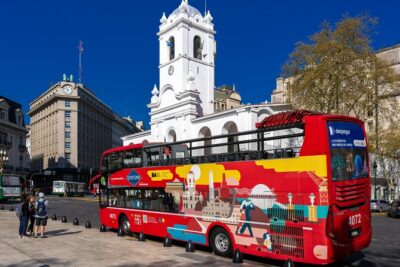 ★ 4.5Buenos Aires Hop-On Hop-Off Bus, Free Walking Tours & DiscountsFrom $392,218 reviews
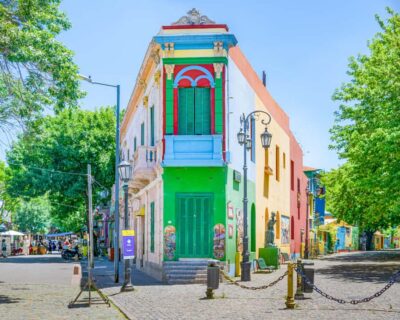 ★ 4.8La Boca Guided Walking Tour in EnglishFrom $131,587 reviews
 ★ 4.7Personalized 2 to 8-Hour Private Walking TourFrom $37149 reviews
 ★ 4.8San Telmo and Market Guided Walking TourFrom $13102 reviews
 ★ 4.5Buenos Aires Walking Tour with Local Guide and Optional RooftopFrom $11187 reviews
 ★ 4.5Best of Buenos Aires Private Walking TourFrom $10973 reviews
 ★ 5.0Full Day Private Walking Tour of Buenos Aires NeighborhoodsFrom $13555 reviews
 ★ 4.8La Boca Art and History Walking TourFrom $4655 reviews
Where this tour also appears