
REVIEW · BUENOS AIRES SIGHTSEEING BUSES
Buenos Aires: Panoramic Bus Tour
Buenos Aires looks good from a bus. This 3-hour panoramic loop gives you a quick hit of old and new neighborhoods without the stress of plotting routes. You sit back, learn as you go, and get guided context that helps the city make sense fast.
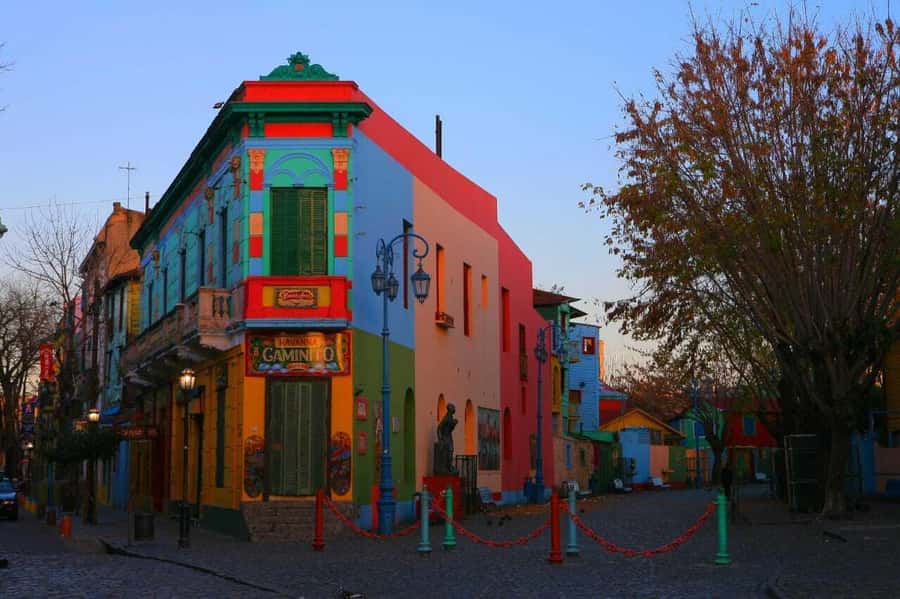
Two things I really like are the Plaza de Mayo and Caminito photo stops, which give you the best quick snapshots for first-timers. I also love how the tour includes both the big icons and the street-level color of La Boca, so you do not end up with only postcard views.
One possible drawback is the pace. This is a group coach tour with a tight time window, so you cannot linger like you would on a hop on hop off plan, and you may have to wait for everyone before moving on.
Key highlights worth planning for
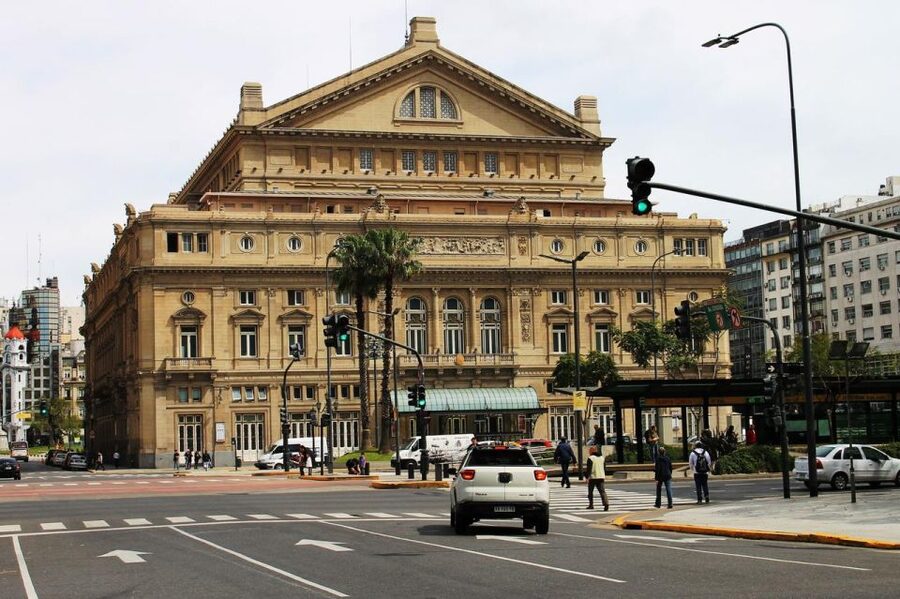
- Panoramic sightlines of the Obelisk and Colón Theatre from the city’s central corridor
- Photo stops at Plaza de Mayo and Caminito, timed into a short schedule
- Neighborhood sweep across Palermo, Recoleta, San Nicolás, Monserrat, San Telmo, La Boca, Puerto Madero, plus Retiro
- Bilingual live guidance in English, Portuguese, and Spanish
- La Boca walking time that connects the look of Caminito with the neighborhood’s immigrant roots
Other loops around Buenos Aires from the top deck
- Buenos Aires Hop-On Hop-Off Bus, Free Walking Tours & Discounts★ 4.5 · 2,218 reviews
- Buenos Aires: Hop-On Hop-Off City Bus Tour★ 4.2 · 1,855 reviews
- Buenos Aires Hop-On Hop-Off Bus and Exclusive Benefits★ 4.4 · 1,714 reviews
- Buenos Aires: Hop-On Hop-Off Bus and Football Museums★ 4.3 · 39 reviews
Getting Oriented Fast With A 3-Hour Panoramic Bus Loop
If Buenos Aires feels like it has too many choices on day one, this is a smart antidote. In about three hours, you cover a lot of ground across the city’s most recognized areas, with a guide to explain what you are seeing and why it matters. You do not need to understand Buenos Aires before you go, but you will after.
The big win is the format. A panoramic bus turns a messy first day into a clear overview, and the guide keeps you from staring at random buildings without context. This also makes it easier to decide what you want to revisit later, when you have more time to explore on your own.
You should also know the tour is not designed for slow wandering. It is built for efficient viewing and short stops, which can feel strict if you like to take your time.
Retiro And San Nicolás: The Central Part Of The City Hits First
The tour starts with pickup from your hotel or a nearby meeting point, then heads into Retiro and San Nicolás, the parts of the city that help you understand modern Buenos Aires. Retiro is described as a financial and residential center and, historically, a gateway for millions of immigrants between the nineteenth and twentieth centuries. That framing matters because it connects what you see now with the city’s human story.
From here, you move into San Nicolás, the most central neighborhood. This is where you get the Obelisk and Colón Theatre in the same visual sweep, plus Corrientes Avenue, often called the avenue that never sleeps for its theatrical and dining scene. Even if you do not plan to see a show today, it helps to know what street energy looks like.
San Nicolás is also a good place to get your bearings. Your guide points you toward nearby landmarks such as Plaza San Martín, the pedestrian street Florida, and the train station area. You are not trying to master the city map during this stop, you are learning what the center feels like so your later self-guided walks are easier.
Monserrat And Plaza de Mayo: Buenos Aires’ Old Core, With Photo Stop Time
Next up is Monserrat, the city’s oldest neighborhood, tied to the first Spanish settlers. This is where the story shifts from streets and skyline views to political and religious landmarks. You see the core institutions in one area, which is exactly why this stop works so well during a short tour.
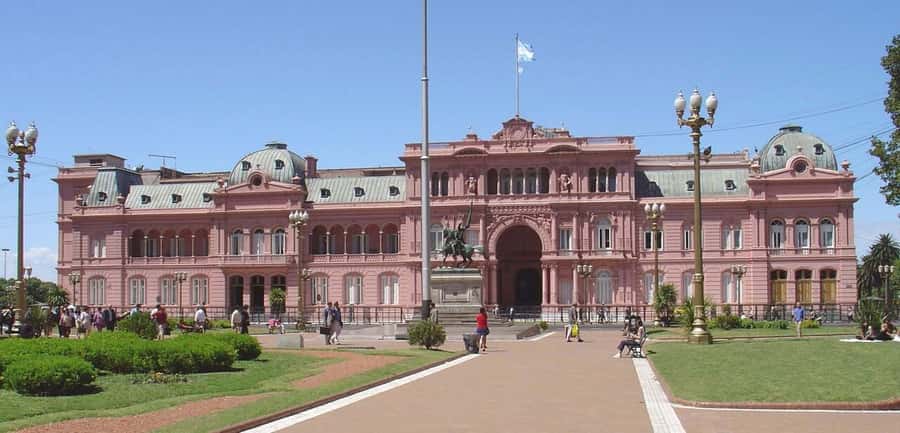
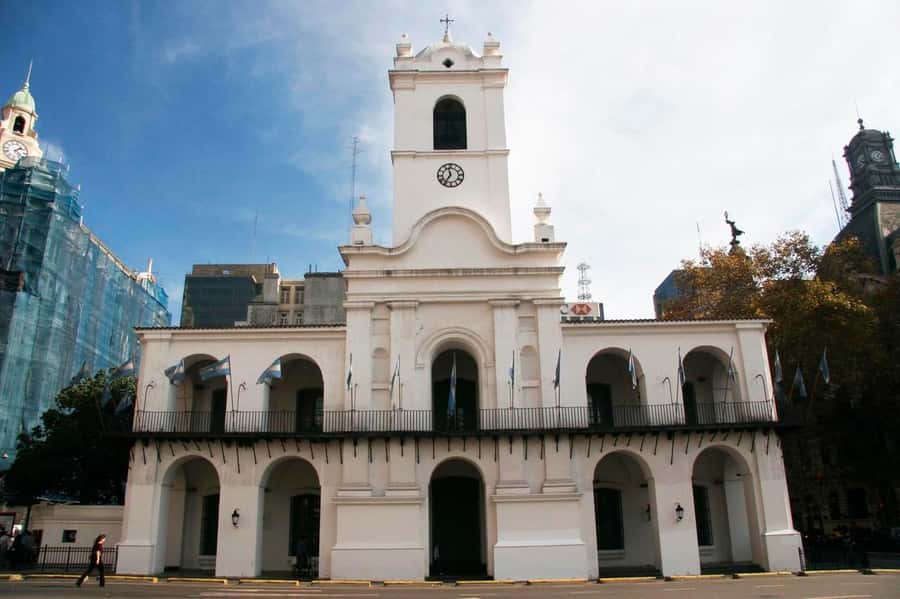
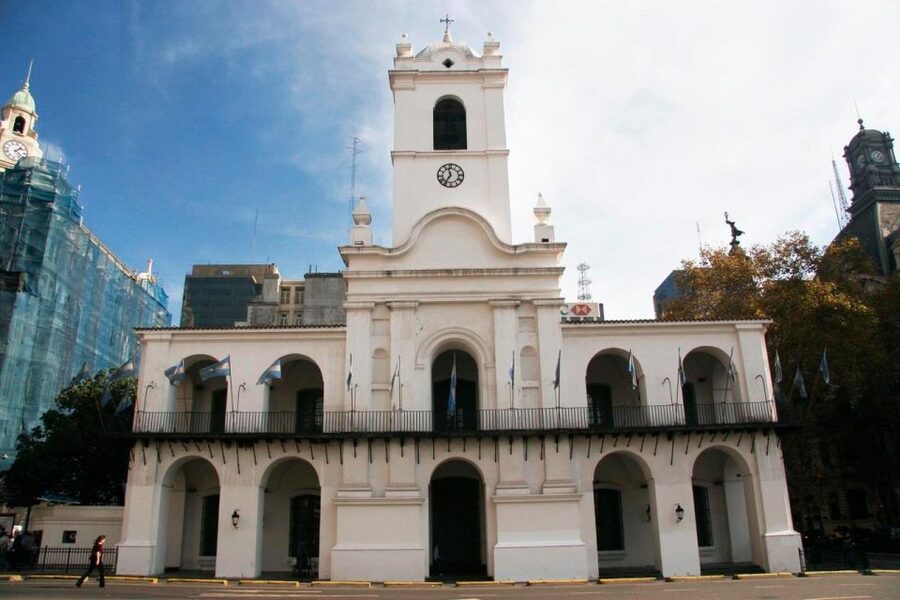
Monserrat is where Plaza de Mayo comes into the itinerary, and you also get a photo stop there. The tour then continues through the nearby cluster of famous buildings, including the Cabildo, Casa Rosada (Government House), and the Cathedral, plus Avenida de Mayo. Seeing these in sequence from a guided route helps you connect the city’s political heart to the geography around it.
The tradeoff is time. Your photo stop and guided time in Monserrat are relatively short, so think of it as a “get the landmark photo and understand the role” moment, not a “sit and study history for an hour” moment. If you want to go deeper later, Plaza de Mayo is one of the easiest places to return to independently.

San Telmo: Tango Streets And Historic Texture Without The Guesswork
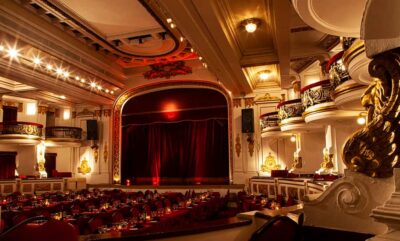
San Telmo is one of those neighborhoods where the vibe is the point. It is old, traditional, and packed with tanguerías, so even if tango is not your personal obsession, you will feel how the neighborhood earns its reputation. This part of the itinerary is guided, which helps because San Telmo has lots of small streets, and without context it can be hard to choose where to look.
In this area you have names to anchor your wandering: Defensa Street, Lezama Park, Casa Mínima, and the Casco Histórico. Knowing the landmarks ahead of time changes the experience. Instead of looking at architecture like a random collage, you can start noticing how the neighborhood’s layout and preserved character shape the atmosphere.
A good way to use your time here is to focus on contrasts. San Telmo gives you a softer, more historic feel than San Nicolás. That makes it a helpful middle stop, especially if you are trying to balance “big views” with “human scale streets.”
La Boca: Caminito Photos Plus The Neighborhood’s Immigrant Story
La Boca is the neighborhood people picture, and for good reason. Your tour includes both guided time and a photo stop at Caminito, which is built for memorable streetscape photos. This is also where the tour does something valuable: it ties the color and shapes to the neighborhood’s origins.
You learn how immigrants chose this area for work opportunities, then built homes from wood and sheet metal. The guide also explains how residents asked for leftover paint from shipyards to color the walls, which is a simple, practical detail that makes Caminito’s look feel less like a theme park and more like a history you can see.
You also get a sense of local passion around Boca Juniors, since soccer is woven into the identity here. The experience is designed to help you understand why people keep returning to La Boca long after the first photo.
One caution: walking time is limited in a short coach itinerary, so you may not cover every lane and corner. Still, for many first-timers, this is the best way to do La Boca without spending a whole day guessing where to start.
Puerto Madero: Modern Buenos Aires And The Photogenic Bridges
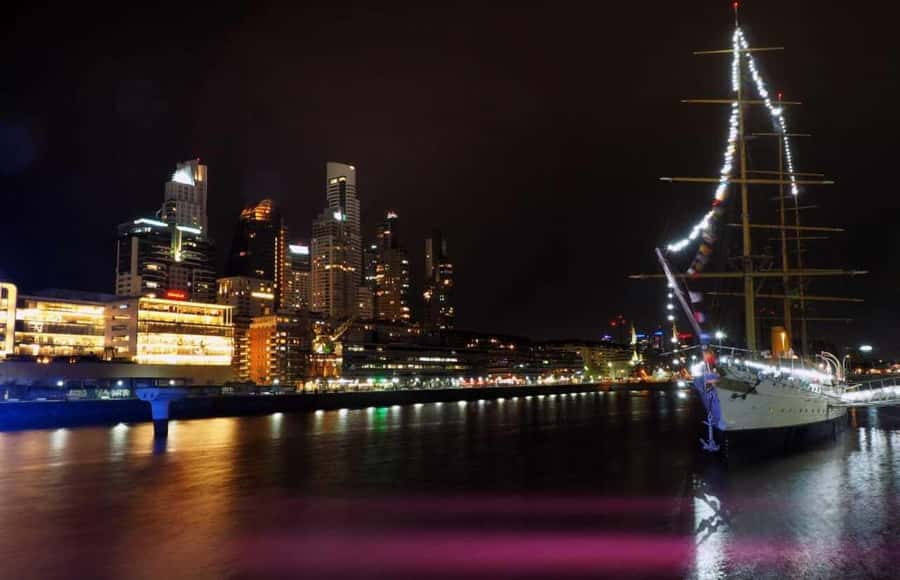
After the historic weight of Monserrat and the street character of San Telmo and La Boca, Puerto Madero feels like a reset button. This neighborhood is described as modern, and it is part of the reason the tour works as an overview, not just a history tour.
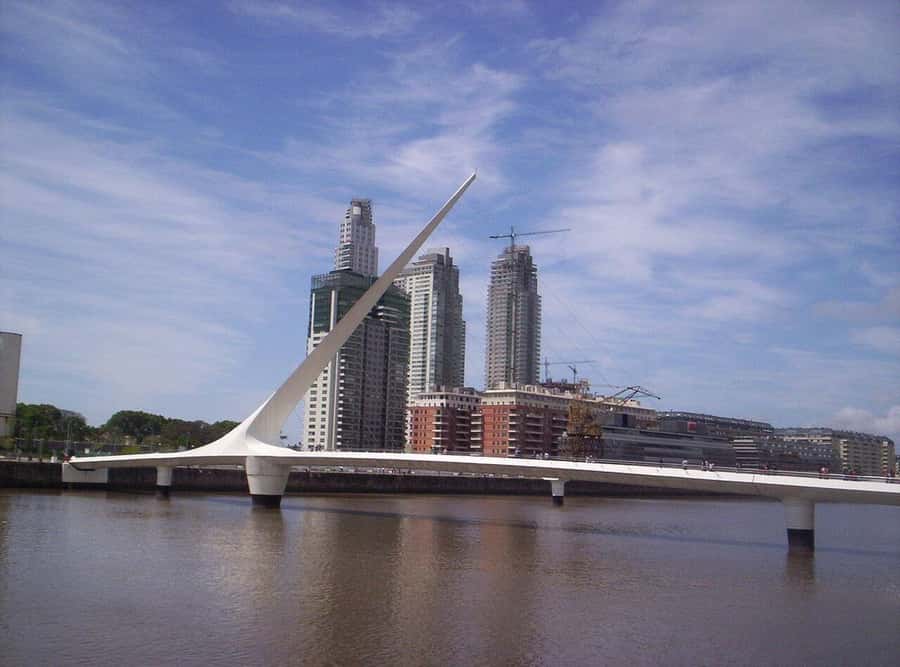
Your guide highlights landmarks such as Puente de la Mujer (Women’s Bridge) and the Tango Monument, plus the Costanera Sur Ecological Reserve. Even if you are not a big architecture person, Puerto Madero’s layout is a strong visual contrast. You see a cleaner, more contemporary side of Buenos Aires that helps you understand why people say the city has multiple faces.
This stop is also a nice pacing break. It is less about dense old streets and more about wide views and modern landmarks. That matters when you have only a half-day total.
Palermo And Recoleta: Parks, Museums, And Elegant Recoleta Cemetery Area
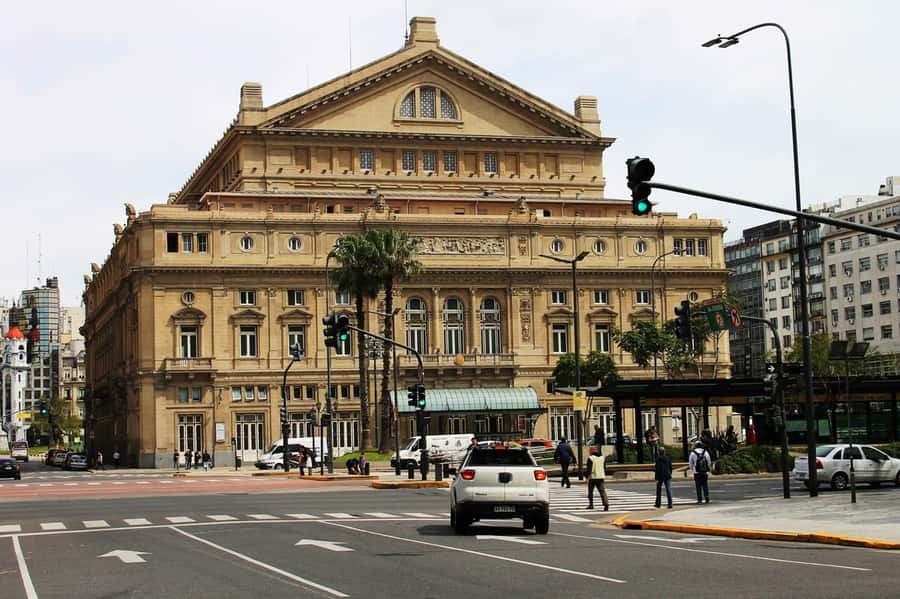
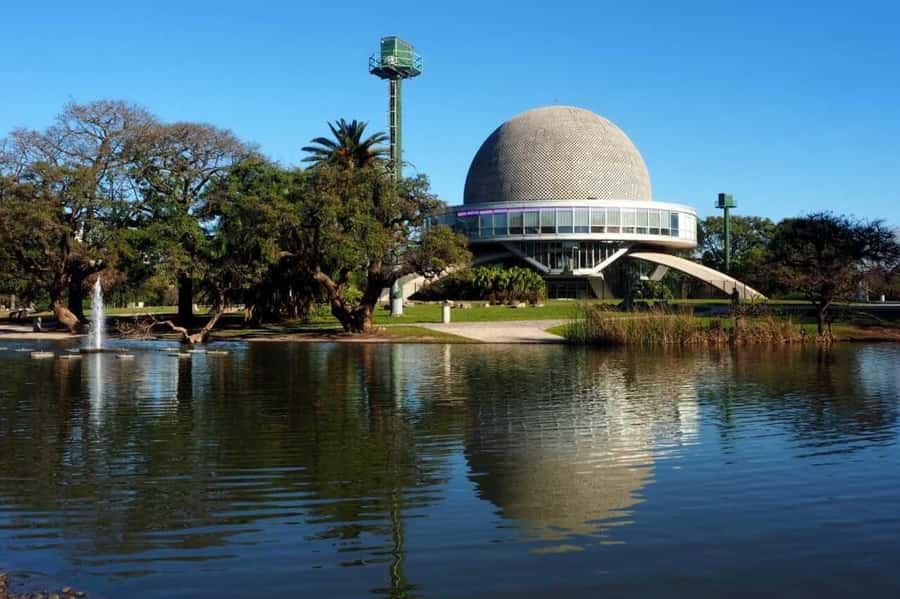
Then comes the upscale, open-space side of Buenos Aires. The itinerary includes Palermo, the largest neighborhood in the city, and it is packed with well-known spots your guide can point out from the route. In Palermo you may see Los Bosques de Palermo, the Galileo Galilei Planetarium, Plaza Italia, the Malba Latin American Art Museum, and the Hippodrome, depending on the exact timing and route.
Palermo works because it gives you a sense of how big the city can feel. It is not just historic blocks and iconic squares. It is also parks and culture institutions, which makes it a logical place to plan a return if you want a calmer day later.
After Palermo you head to Recoleta, known for elegant character. Your tour route includes the area around Recoleta Cemetery, the National Museum of Fine Arts, Carlos Thays Park, and the Law School. Even if you do not enter the cemetery today, the guided orientation helps you understand why Recoleta is a magnet for architecture and heritage fans.
Recoleta is also where a lot of first-time visitors start making choices. If you like stylish neighborhoods with big monuments and manicured parks, you will likely want to schedule a separate half-day return. If you prefer street life and older markets, you will still appreciate Recoleta for the contrast.
The Ending At Obelisco: A Convenient Finish Point
The tour ends at Obelisco. That is not random. It is a central landmark, easy to find again, and useful if you want to keep moving after the bus ride. You finish near one of the city’s most recognizable symbols, which is ideal if you are trying to build momentum after a three-hour intro.
If you are thinking about dinner or a late walk, finishing at Obelisco keeps options open. You do not end at the edge of town where you need extra planning to get back.
Price And Value: When $55 Works, And When You Might Want Different Options
At $55 per person for a roughly 3-hour panoramic bus tour, the value comes from efficiency plus guidance. You are paying for a guided overview that covers multiple neighborhoods, includes hotel or meeting-point pickup, and provides photo stops at two major locations.
This can be a strong deal if it is your first time in Buenos Aires or if you want to prioritize landmarks without doing a full day of navigating. The guide’s job is to connect the dots across neighborhoods, so you walk away with an internal map of what parts of the city you want to explore later.
But if you hate time limits, you might feel boxed in. One scheduling note to keep in mind is that this tour runs on a coach with a larger group size, and the stop windows are strict enough that you can end up waiting for everyone. If your ideal day is flexible and you like to hop into side streets whenever something grabs your attention, a different style tour, like hop on hop off, may feel more natural.
My advice is simple: treat this as your orientation day. Then plan a second day for the neighborhood you liked most, with more room to breathe.
Who This Tour Suits Best (And Who Should Skip It)
This tour is a good fit if you want an organized Buenos Aires introduction that hits several signature neighborhoods in a short time. It also suits you well if you prefer to learn as you go, rather than reading a guidebook and hoping the city clicks on your own.
It is also a smart option for groups or couples who want shared landmarks without arguing about where to start. The structure, photo stops, and central finish point make the day easy to manage.
It may not be ideal if you need mobility support. The tour is listed as not suitable for people with mobility impairments, so plan accordingly.
Should You Book This Buenos Aires Panoramic Tour?
Book it if you want a fast, guided overview with real landmarks and photo stops you can build on. You will likely appreciate the combination of big sights like the Obelisk and Colón Theatre with the colorful realism of La Boca and Caminito. The overall flow across Palermo, Recoleta, Monserrat, San Telmo, Puerto Madero, and Retiro is exactly what you want when time is limited.
Skip it if you want to linger for long periods, roam freely without time pressure, or you prefer a more self-paced format. In those cases, you will probably feel constrained by the group schedule.
If you do book, use the tour as a shortlist builder. When the bus drops you near Obelisco at the end, you are in a good position to choose your next move based on what truly clicked for you.
FAQ
How long is the Buenos Aires Panoramic Bus Tour?
The tour lasts about 3 hours.
How much does the tour cost?
The price is $55 per person.
Does the tour include pickup from my hotel?
Yes. Pickup is included from your hotel or from designated meeting points, depending on the option you select.
Where does the tour start and where does it end?
Pickup depends on your selected option and your location. The tour finishes at Obelisco.
What photo stops are included?
Photo stops are included at Plaza de Mayo and Caminito.
What neighborhoods are part of the itinerary?
The tour includes guided sightseeing in San Nicolás, Monserrat, San Telmo, La Boca, Puerto Madero, Retiro, Palermo, and Recoleta.
What languages is the live guide available in?
The live tour guide is available in English, Portuguese, and Spanish.
What should I bring for the tour?
You should bring a passport or an ID card. A copy is accepted.
Can I cancel and get a full refund?
Yes. You can cancel up to 24 hours in advance for a full refund.
Is the tour suitable for people with mobility impairments?
No. The tour is listed as not suitable for people with mobility impairments.
Tour Reviews Around Buenos Aires


Other Loops From the Top Deck


Just added in Buenos Aires
- Buenos Aires: Gala Lírica Tickets at Palacio Paz.
★ 4.3 · 8 reviews - Buenos Aires: Football Match Experience with a Local
★ 5.0 · 8 reviews - Buenos Aires: Panoramic Bus Tour
★ 4.8 · 8 reviews - SAN TELMO + CAMINITO THE LOCAL WALKING TOUR!
★ 5.0 · 8 reviews - Buenos Aires : Highlights Walking Tour With A Guide
★ 5.0 · 8 reviews
Buenos Aires Sightseeing Buses, compared.
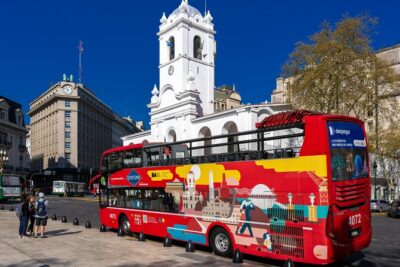 ★ 4.5Buenos Aires Hop-On Hop-Off Bus, Free Walking Tours & DiscountsFrom $392,218 reviews
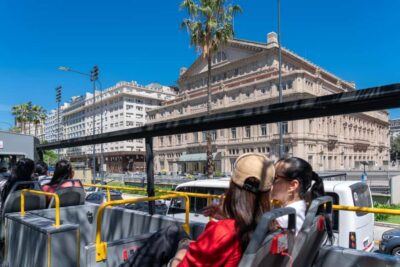 ★ 4.2Hop-On Hop-Off City Bus TourFrom $351,855 reviews
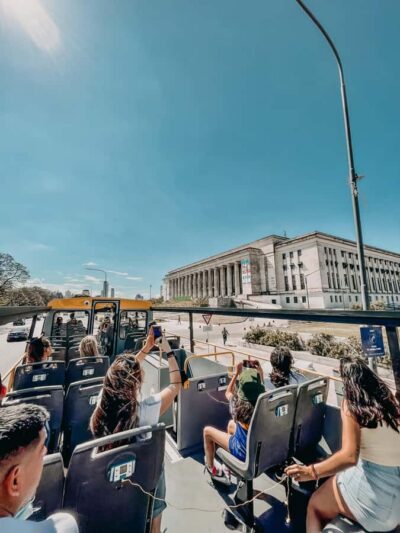 ★ 4.4Buenos Aires Hop-On Hop-Off Bus and Exclusive BenefitsFrom $351,714 reviews
 ★ 4.3Hop-On Hop-Off Bus and Football MuseumsFrom $10539 reviews
Where this tour also appears