
Matchday in Buenos Aires hits fast. This is a small-group football outing led by local guide David that gets you into the real rhythm of Argentinian football with public transport and a live match at a local stadium.
I love how the guide builds the match context first, then you learn simple fan chants so you are not just standing there watching. I also love that the tour includes a choripan sandwich and a drink, so you get fed like locals instead of hunting for a snack halfway through the drama.
One drawback: expect a standing terrace. The stadium experience is not like Europe or North America, and you will watch the game standing, with no seats in the terrace areas.
Key things I would bank on before you book
- Local guide David helps you understand teams, supporters, and safety before you reach the pitch.
- Public transport with other fans is part of the experience, not an afterthought.
- Chants plus a standing terrace makes you feel included, even if you do not know the words yet.
- Choripan and one drink keep the tour comfortable during the 4-hour match loop.
- Stadium choice depends on schedule, with options like Vélez Sarsfield, Argentinos Juniors, Banfield, Lanús, Tigre, and Huracán.
Other football days in Buenos Aires
- Buenos Aires: Tickets to Boca Juniors Museum & Stadium★ 4.5 · 581 reviews
- Soccer Match in Buenos Aires with Transfers and Local Guide★ 5.0 · 103 reviews
- Buenos Aires: Boca Juniors and River Plate Football Tour★ 4.3 · 82 reviews
- La Boca, a collective creation: Port, immigrants, arts and football★ 5.0 · 58 reviews
Why a Buenos Aires football match feels like a cultural moment
If you only want the match, you can buy a ticket and go on your own. But this kind of Buenos Aires football experience is about the lead-up, the crowd logic, and the way supporters treat a game like something personal.
What makes it work is the timing and the guidance. You start with a prearranged meeting point in the city, then you move to the stadium by public transport with local fans. That matters because you are not dropped off at a front gate like a tourist package. You are flowing with the city, grabbing your bearings fast, and picking up the basic match energy before you ever see the stands.
Also, this is a small group, capped at 8 people. That keeps the vibe easier to manage, and it usually means you get more direct help if you have questions. On matchday, that practical support is gold.
Meeting up and getting to the stadium like you belong
The meeting point depends on which stadium you are attending. The local partner contacts you the day before with the exact location and time, and the group heads to the venue together using public transportation.
Here is why I like that plan for visitors. Buenos Aires is a big city, and stadiums are scattered. A guided arrival saves you from the “Which bus, which stop, which line?” stress when your mind should be on the game.
You also get safety info from the guide after you meet. Then you travel with other local fans, which helps the whole thing feel normal. You will hear the chant rhythms and see how people dress for the match, even before you reach the stadium.
One practical tip: bring a charged smartphone. You will want it for quick confirmations and navigation, especially since the meeting point changes by stadium.
Inside the stadium: terraces, chants, and the standing-only reality
Once you arrive, the guide talks through the stadium and the surrounding neighborhood, plus the kinds of fans who turn up for that specific club. It is not just facts for their own sake. It helps you understand why the crowd behaves the way it does.
Then comes the part that turns a ticket into a memory: choosing your stand or terrace area where the most enthusiastic supporters sit. You are not hidden in the quiet corners. You are placed with energy.
And yes, you will stand. The terraces in these Argentinian stadiums typically have no seats, so you watch the match from a standing area. If you have trouble standing for an extended period, plan carefully.
During the match, you learn football chants with the guide, and you are encouraged to join in as much as you can. Even if you only pick up a few phrases, you will feel the difference. It is the fastest way to turn “I am watching” into “I am part of it.”
One note that is explicitly part of the real setting: smoking is allowed in the stadiums. That is not optional if you are sensitive to smoke, so think about it before you go.
Matchday food: choripan and a drink that keep you steady
The tour includes an Argentinian choripan sandwich and one drink. This is not a tiny throw-in. It helps you last through the whole 4-hour format without turning the evening into a food scavenger hunt.
I like that it is included because matchday timing can get weird. Getting food on your own means you are choosing between missing a pre-match moment or wasting time finding a place that stays convenient during crowds. With choripan handled, you keep your focus where it belongs: the match atmosphere.
If you have dietary needs, the tour data only confirms choripan and one drink. So you should consider that when deciding.
Which teams and stadiums you might see in Buenos Aires
Stadiums can include places like Vélez Sarsfield, Argentinos Juniors, Banfield, Lanús, Tigre, Huracán, and more depending on match schedules.
That scheduling dependency is important. The tour experience stays consistent, but the details shift based on what is happening in the league at the time you book. So you are not just buying a generic “football match” label, you are buying access to a real game with a guide who ties the day to local context.
If you are traveling in early March, the tour information lists these scheduled fixtures:
- March 7: Banfield vs Huracán at 6:00 PM
- March 8: San Lorenzo vs Lanús at 5:35 PM
One more reality check: games are subject to change in dates and starting times. If that happens, you will be contacted and given the chance to cancel if you cannot make the new date.
The guide factor: why David-style hosting matters
The most highly praised part of the experience is the guide. In the reviews tied to this tour, David comes up again and again for being organized, friendly, and easy to communicate with.
That shows in small but important ways. David communicates the day before to confirm where to meet, and he even provides a direct phone number so you can reach him if something is unclear. On matchday, that kind of reliability reduces stress fast.
The guide also does more than recite match stats. You get context for teams and supporters, plus safety information before you enter the stadium environment. That is one of the best reasons to do the tour instead of going solo, especially if you want the atmosphere but do not want to figure everything out on the fly.
Price and value: what $90 buys you (and what it does not)
At $90 per person, you are paying for more than an admission ticket. Included in the price:
- Admission ticket to the match
- Public transportation to and from the stadium (from the meeting point)
- Choripan sandwich and one drink
- A live tour guide (Spanish and English)
- Small group size limited to 8 participants
What is not included:
- Hotel pickup and drop-off
So the value equation depends on what you want to avoid. If you want someone to handle match-day logistics, stadium entry, and crowd navigation, $90 is easier to justify. You also get an extra layer: learning chants and understanding why the crowd behaves the way it does.
If you are the type who loves researching transit routes and going fully independent, you might find cheaper ticket options. But you will likely lose the guide context, the chanting interaction, and the built-in “arrive with local fans” flow.
Who this experience suits best
This tour fits best if you:
- Want an authentic Buenos Aires football match atmosphere, not just a photo stop
- Enjoy learning how locals support their teams, including chants and fan culture
- Are comfortable standing in a terrace with no seats
- Prefer a small group and clear guidance, especially for transport and stadium arrival
It may not be a good fit if you:
- Need hotel pickup, since it is not offered
- Are sensitive to smoke in the stadium
- Have mobility challenges, since it is not suitable for people with mobility impairments, wheelchair users, or people with epilepsy
- Are pregnant, since it is listed as not suitable for pregnant women
If you are unsure, focus on the standing-only terrace reality. That one factor affects the experience more than almost anything else.
Practical matchday checklist so you are not scrambling
Here is the simple prep list based on what the tour asks you to bring:
- Passport or ID card
- Comfortable shoes
- Comfortable clothes
- Charged smartphone
And here is what you should leave behind:
- No luggage or large bags
That all sounds basic, but it matters a lot in stadium settings. Plan for faster movement, and keep your essentials easy to access.
Also, remember games can change dates and start times. So keep an eye on your messages after the partner contacts you, especially the day before your match.
Should you book this Buenos Aires football match experience?
If you want more than the score, I think it is a strong booking. The guide-led context, the chanting practice, and the public transport arrival with local fans are the three things that transform a ticket into a lived matchday.
Book it if you are okay with a standing terrace, and if you want that “I am with the crowd” feeling. Skip it if standing for a while will be uncomfortable, or if stadium smoke is a concern for you.
For the right traveler, this is the kind of Buenos Aires activity that turns into a story you keep telling long after the match is over. The best part is that you do not just watch the culture, you join in with it.
FAQ
Where does the tour start?
The meeting point depends on the stadium where the match is taking place. The local partner contacts you the day before to share the exact location and time.
How long is the experience?
The duration is 4 hours.
What is included in the $90 price?
You get the match admission ticket, public transportation to and from the meeting point and stadium, an Argentinian choripan sandwich, and one drink, plus a live tour guide.
Is hotel pickup included?
No, hotel pickup and drop-off are not included.
What language is the guide?
The live tour guide speaks Spanish and English.
How do we get to the stadium?
The group travels via public transportation with other local fans.
What should I bring?
Bring a passport or ID card, comfortable shoes, comfortable clothes, and a charged smartphone.
Are there bag or luggage restrictions?
Yes. Luggage or large bags are not allowed.
Is smoking allowed in the stadium?
Smoking is allowed in the stadiums.
Is the tour suitable for wheelchair users or people with mobility impairments?
No. The tour is not suitable for wheelchair users or people with mobility impairments. It is also listed as not suitable for pregnant women and for people with epilepsy.
Tour Reviews Around Buenos Aires



Match Days in Buenos Aires

Just added in Buenos Aires
- Buenos Aires: Gala Lírica Tickets at Palacio Paz.
★ 4.3 · 8 reviews - Buenos Aires: Football Match Experience with a Local
★ 5.0 · 8 reviews - Buenos Aires: Panoramic Bus Tour
★ 4.8 · 8 reviews - SAN TELMO + CAMINITO THE LOCAL WALKING TOUR!
★ 5.0 · 8 reviews - Buenos Aires : Highlights Walking Tour With A Guide
★ 5.0 · 8 reviews
Boca Juniors and River Plate Trips, compared.
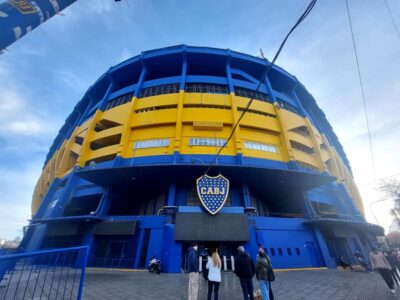 ★ 4.5Tickets to Boca Juniors Museum & StadiumFrom $38581 reviews
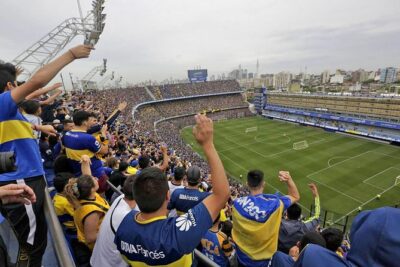 ★ 5.0Soccer Match in Buenos Aires with Transfers and Local GuideFrom $172103 reviews
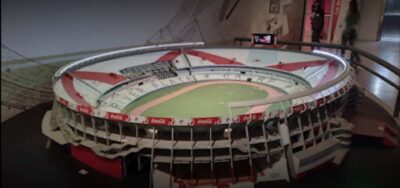 ★ 4.3Boca Juniors and River Plate Football TourFrom $8982 reviews
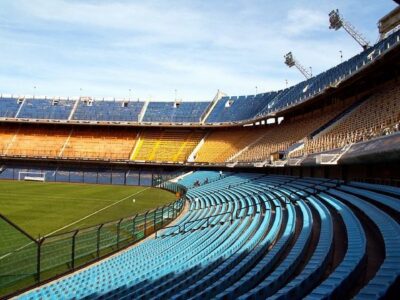 ★ 5.0La Boca, a collective creation: Port, immigrants, arts and footballFrom $6558 reviews
 ★ 4.8Tickets to Soccer MatchesFrom $16258 reviews
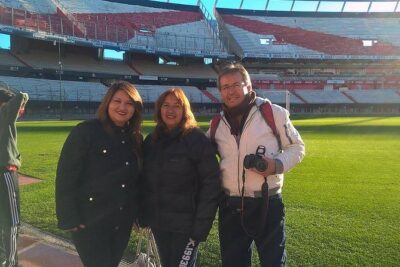 ★ 4.5River Plate Monumental Stadium and Museum Guided TourFrom $8239 reviews
 ★ 4.3Hop-On Hop-Off Bus and Football MuseumsFrom $10539 reviews
 ★ 4.5Boca Juniors Game at La Bombonera with Local & TransportFrom $52733 reviews
Where this tour also appears