
REVIEW · WORKSHOPS
English Classes with Native Teachers
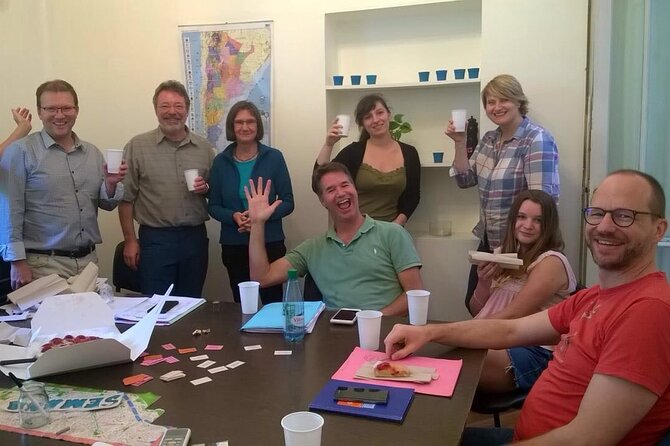
One hour, one clear goal: better English. At Vamos English Academy in Buenos Aires, you meet native teachers and jump into a class that runs fully in English, with programs set up for all levels from beginner to advanced.
What I like most is the way these lessons are built around your needs, not a generic script. You can plan the focus with your teacher, whether that’s conversation, vocabulary, grammar, or exam skills. I also like the teacher variety people talk about, including names like Maria, Camila, Frederick, Ty, Taine, Linda, and Cortland, which can help you get comfortable with different native accents.
A possible drawback to consider is simple: because the class is taught entirely in English, absolute beginners may feel stretched at first until they’re properly placed and the teacher adjusts fast. Progress also depends on how often you go, since it’s an hour-long format.
Key things to know before your class
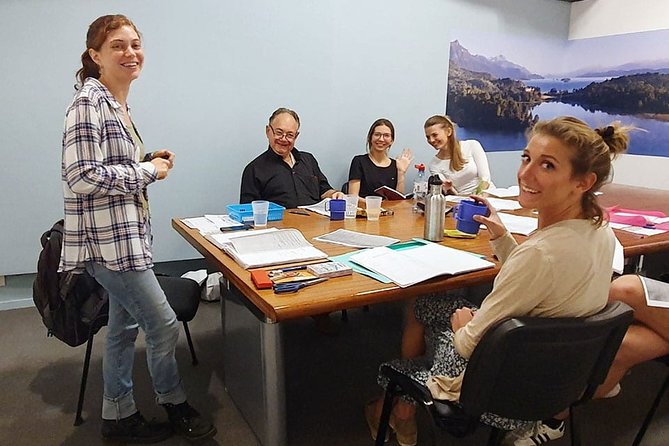
- Six levels plus Higher (C2): A1 through C1, with C2 often handled through individual classes or private groups.
- Your teacher sets the agenda: conversation, vocabulary, grammar, or skills for a specific goal.
- English-only lessons: you practice listening and speaking in real time, the whole session.
- Native teachers, multiple accents: students have named several teachers, which can make practice more realistic.
- One hour per session: an easy fit when you want improvement without giving up a full day.
- Central meeting point: Vamos Academy is at Viamonte 1516, near public transport.
More hands-on afternoons in Buenos Aires
- Buenos Aires: Empanadas and Alfajores Guided Cooking Class★ 4.8 · 486 reviews
- Buenos Aires: Private Tango Lesson★ 4.9 · 244 reviews
- Buenos Aires: Empanada & Alfajor Cooking Lesson in Palermo★ 4.6 · 186 reviews
- Tango Porteño Show with Optional Dinner and Tango Lesson★ 4.0 · 97 reviews
Entering Vamos Academy: where your lesson starts
Your session starts at Vamos Academy Spanish School and English Classes, at Viamonte 1516 (C1055ABD), Buenos Aires. The fact that it’s in a set location matters. It makes these classes feel more like regular training than a random appointment, so you can build consistency.
The academy’s hours are Monday to Friday, 9:00 AM to 9:00 PM. That wide window is useful if you’re juggling sightseeing, tango lessons, or a work schedule. Also, it’s described as near public transportation, which is exactly what you want in a city like Buenos Aires, where the “best” route is often the one that saves time and walking.
You’ll have a mobile ticket, and you should receive confirmation at booking time. Expect the activity to end back at the meeting point, so you’re not dealing with a long, scattered day plan. It’s just: show up, do the class, go.
Choosing your level: A1 through Advanced (and C2)
One of the most practical parts of this setup is that English courses are organized into six levels:
- Beginner (A1)
- Elementary (A2)
- Pre-Intermediate (B1)
- Intermediate (B1+)
- Upper-Intermediate (B2)
- Advanced (C1)
Then there’s Higher (C2), which is typically handled through individual classes or private groups, especially if you’re working toward a specific exam or moving to an English-speaking country.
What I think is smart here is how the levels are described. They’re based mainly on what you can do with English in communication, and where you need to improve. That means the goal is functional progress, not just “finish grammar chapters.” In a one-hour class, you don’t have time to waste energy. This system aims to get you working on the right type of communication, at the right difficulty.
When you book, be honest about your current level. If you’re between levels, it’s worth leaning toward the one where you’ll feel challenged but not lost. The English-only format rewards students who start where they can actually participate.
Inside the class: what happens in your 60 minutes
This is a private tour/activity, meaning only your group participates. That matters even if you’re taking a lesson on your own, because it reduces “performing for the group” energy and makes it easier to get direct feedback.
Each class runs about one hour and is taught entirely in English. That sounds intense, but it’s also the main reason these sessions can move your speaking confidence. You’re not waiting for translation. You’re building the habit of thinking in English fast enough to respond.
Here’s how your hour is designed to work:
- Start with your needs: your teacher discusses what you want to improve.
- Work on targeted skills: conversation practice, vocabulary building, grammar points, or whichever theme you chose.
- Practice in context: the goal is communication, not isolated exercises.
- Get feedback: the teacher provides guidance so the next time you speak, you sound clearer and more natural.
The academy also emphasizes tips from professors and academic staff so you can make the most of your time studying. In plain terms, that means don’t just show up and hope magic happens. Ask for small, doable adjustments during the lesson, like:
- how to phrase common situations more naturally
- what word choices sound more natural in conversation
- how to fix frequent grammar mistakes in your speech



Tailor the lesson: conversation, vocab, grammar, and real goals
One of the best value parts of this experience is that you can tailor lessons to what you actually want. The info lists options like conversation, language, vocabulary, and grammar. That gives you flexibility, whether you’re traveling, working, or trying to pass a test.
If your priority is conversation, you’ll want to use the hour to speak as much as possible. Don’t treat it like a lecture where you listen politely. Ask your teacher to correct you while you talk, and to push you slightly past comfort when you’re replying.
If you want vocabulary, ask for words you can reuse in real Buenos Aires situations. You’ll get more value from words linked to actions and scenarios, like ordering food, asking directions, planning a night out, or talking about daily routines.
If grammar is your focus, use the hour for the exact structure you keep getting wrong. Grammar lessons become useful when they connect to your mistakes. Otherwise, they turn into “studying” rather than “improving.”
This is also where working with different native teachers can help. Different teachers often emphasize different strengths. Some may push speaking speed, others may focus on clarity and structure, and that variety can help you become more adaptable.
Native teachers and accent reality: why it helps
You’re not just learning English from a script. You’re learning it from native teachers, and that changes the feel of the practice right away. Pronunciation, rhythm, and everyday phrasing come naturally through how your teacher models speaking.
Some people have specifically mentioned practicing with teachers like Frederick and Ty, plus others such as Cortland and Taine. Even if you don’t get the same mix, the big idea is that you’re training to understand real native speech, not a slow classroom version.
This matters if you’re planning to use English beyond class time. When you travel, you don’t get subtitles and you don’t get to pause for grammar. You need to understand spoken English that includes normal speed, normal hesitation, and natural word choices.
So if you want a class that prepares you for the English you’ll actually hear on the street or at a restaurant, this format makes sense.
Exam preparation when you have a deadline
If you’re preparing for an international exam, the academy says exam preparation can be arranged. That’s important because exam training is not the same as general English conversation.
General English practice helps you communicate, but exam prep often needs targeted work, such as:
- understanding what the test asks you to do
- working on specific speaking or writing formats
- practicing how to handle common question types
Since Higher (C2) students often take individual classes or private groups, the academy seems geared toward more personalized support when the stakes are higher or goals are specific.
If exam prep is your reason for booking, come prepared with the exam name (if you know it) and what date you’re aiming for. Even without details given, you’ll get more from the session when you and the teacher align quickly on the objective.
How much value is $20 for an hour
The price listed is $20.00 per person, for about one hour. On paper, that’s a simple number. In real value terms, the question becomes: do you get enough speaking time and enough feedback to justify that cost?
This experience gives you two value levers:
- Native teachers and English-only instruction, which usually means more active language use per minute.
- Personal planning with your teacher, so the hour can target your weak spots instead of repeating generic content.
Because the class is one hour, you’ll want to treat it like training, not entertainment. Show up with questions. Bring one or two situations you want to handle in English. Ask your teacher to correct you where it counts. If you do that, the hour is likely to feel worth the money.
If you show up with no goals and no willingness to speak, any language class becomes expensive. The lesson plan flexibility helps, but you still get what you put into it.
Best for who: the situations where this fits perfectly
This is a great fit if you:
- want native-speaker practice without a long, multi-day commitment
- like structure but want it aligned to real communication
- need to improve speaking confidence for travel or daily life
- want a clear level system (A1 to C1) so you’re not guessing
- may need exam preparation arranged with a teacher
It might not be ideal if you:
- need full beginner support where you rely on your first language heavily, because the class is taught entirely in English
- want a multi-activity itinerary with multiple stops and sightseeing moments, since this is a focused class experience
If you’re already in Buenos Aires and your schedule is packed, the flexible Mon to Fri 9:00 AM to 9:00 PM window makes it easier to slot in a session.
Practical tips for getting more out of each session
You’ll get better results if you treat the hour like a small project. Here are tactics that match how this program is described:
- Arrive with one goal for the day. Examples: ordering confidently, small talk, or explaining a plan you have.
- Ask for corrections while speaking, not after. You want instant learning while your ideas are fresh.
- Switch between conversation and grammar only when needed. If grammar is holding you back, target it for a few minutes, then return to speaking.
- Repeat your teacher’s model phrases. Native teachers can give you wording that sounds natural, and repetition is the fastest way to make it usable.
- Bring a short list of topics you care about. The academy supports tailoring, so your topics should reflect your real life.
Also, the academy offers English and Spanish related programming, and some students describe doing Spanish in the morning while studying English later. If you’re working on both languages, you can use that schedule to your advantage. Just don’t let the languages compete in your head during class time.
Should you book these English classes?
Book it if you want native-teacher practice, a structured A1 to C1 level system, and the ability to shape the class around your real goals, like speaking confidence or exam preparation. The one-hour format is also ideal when you’re in Buenos Aires and want improvement without sacrificing your schedule.
Hold off or ask more questions if you’re a very early beginner and you need extra support in your first language, since the class is taught entirely in English. And if you’re expecting a “magic one lesson” outcome, manage that expectation. This kind of course gets good when you repeat it.
If you’re ready to speak, this is a solid value way to train your English while you’re living the language in Buenos Aires.
FAQ
How long are the English classes?
Each class is about one hour.
What English levels are available?
There are six levels: Beginner (A1), Elementary (A2), Pre-Intermediate (B1), Intermediate (B1+), Upper-Intermediate (B2), and Advanced (C1). Higher (C2) students often take individual classes or private groups.
Are the classes taught in English?
Yes. The courses are held entirely in English for full immersion.
Can I tailor the lesson to what I want to learn?
Yes. You can plan the lessons with your teacher based on your needs, such as conversation, vocabulary, and grammar.
Is exam preparation available?
Yes. Special exam preparation can be arranged.
Where is the meeting point, and when can I attend?
The meeting point is Vamos Academy Spanish School and English Classes, Viamonte 1516, C1055ABD, Buenos Aires. The academy lists hours Monday to Friday from 9:00 AM to 9:00 PM.
Is this experience refundable if I cancel?
No. The experience is non-refundable and cannot be changed for any reason. If you cancel or ask for an amendment, the amount you paid will not be refunded.
More Hands-On Hours in Buenos Aires




Tour Reviews Around Buenos Aires



Just added in Buenos Aires
- Buenos Aires Tango Show and Dinner in El Querandi
★ 4.6 · 10 reviews - Buenos Aires: Classic Private City Tour
★ 4.7 · 11 reviews - Buenos Aires: Intimate Tango Experience
★ 5.0 · 11 reviews - Walking Tour: Buenos Aires bookstores
★ 4.3 · 12 reviews - 5hs Small Group City Tour of Buenos Aires with Street Food
★ 4.2 · 12 reviews
Workshops, compared.
 ★ 4.8Empanadas and Alfajores Guided Cooking ClassFrom $37486 reviews
 ★ 4.9Private Tango LessonFrom $39244 reviews
 ★ 4.6Empanada & Alfajor Cooking Lesson in PalermoFrom $49186 reviews
 ★ 4.0Tango Porteño Show with Optional Dinner and Tango LessonFrom $3597 reviews
★ 5.0Buenos Aires – Private Tango lessonFrom $3996 reviews
★ 4.0Tango Porteño Show with Optional Dinner and Tango LessonFrom $3597 reviews
★ 5.0Buenos Aires – Private Tango lessonFrom $3996 reviews
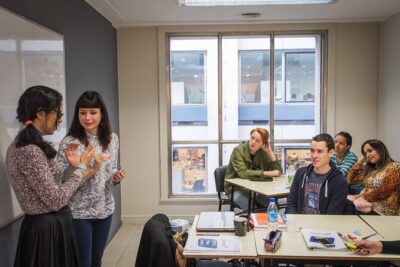 ★ 5.0Spanish Group Course in Buenos Aires, Argentina: 20 LessonsFrom $27572 reviews
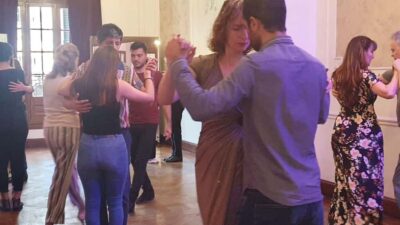 ★ 4.4Group tango class with mate and snacksFrom $2544 reviews
 ★ 5.0Private Argentine Cooking Class and Tango Lesson in Buenos AiresFrom $18237 reviews
Where this tour also appears