
REVIEW · RECOLETA AND CHACARITA CEMETERIES
Buenos Aires: Chacarita, The Largest Cemetery In Argentina
A cemetery tour in Buenos Aires sounds odd, until it’s this one. Chacarita Cemetery mixes famous Argentine names with surprising architecture and art, and it’s paced as a real walking story, not a rushed checklist. You’ll spend about 3 hours with a live guide, including key stops like Carlos Gardel’s tomb.
My favorite part is how the tour turns pop culture into place. You see Gustavo Cerati and tango legends in the same walking route, and it makes you look at their music and fame in a new, human way. I also like the small-group format, limited to 6 people, which keeps the pace calm and the questions coming.
One consideration: this is still a walking tour inside a cemetery, so it is not suitable for mobility impairments or wheelchair users. Even if you’re generally fine on your feet, wear comfortable shoes and expect uneven ground and standing time at stops.
Key highlights you should not miss
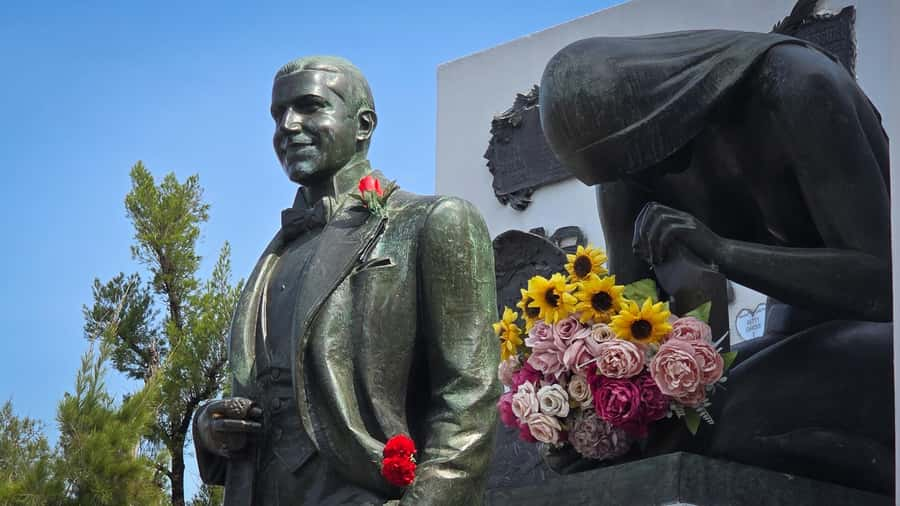
- Carlos Gardel’s mausoleum and the tango connection that shapes the whole visit
- Gustavo Cerati’s tomb (a modern Argentine music stop that feels fresh)
- German cemetery sections and the British-related Commonwealth War Graves area
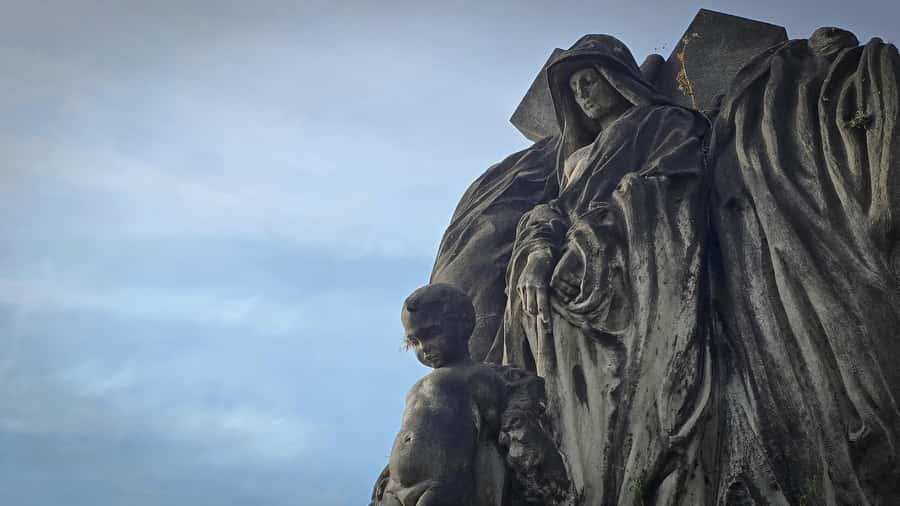
- Architectural variety: capillas, mausoleums, and a long Panteón VI stop
- Guide Miguel’s patient explanations, including slowing down Spanish for learners
More marble and mausoleums in Buenos Aires
- Buenos Aires Bike Tour: North Districts, Recoleta and Palermo★ 4.5 · 91 reviews
- Recoleta Cemetery – Small Group Tour of History & Secrets★ 5.0 · 53 reviews
- Buenos Aires: Recoleta and Retiro Tip Based Walking Tour★ 4.7 · 50 reviews
- Cultural Experience by Bike around Palermo and Recoleta Max 6 ppl★ 5.0 · 44 reviews
Why Chacarita Cemetery feels more like Argentine culture
Chacarita Cemetery is huge, but what makes it worth your time is that it reads like a map of Argentine identity. You’re not just looking at surnames. You’re walking past people tied to tango, film, literature, and music, plus historical communities that left their mark through cemetery design.
I like that the tour keeps the tone grounded. It’s respectful, but not gloomy. You’ll learn why these places matter to Argentines, and how different sections reflect different traditions and aesthetics. The result is a cemetery visit that feels practical and real, not overly dramatic.
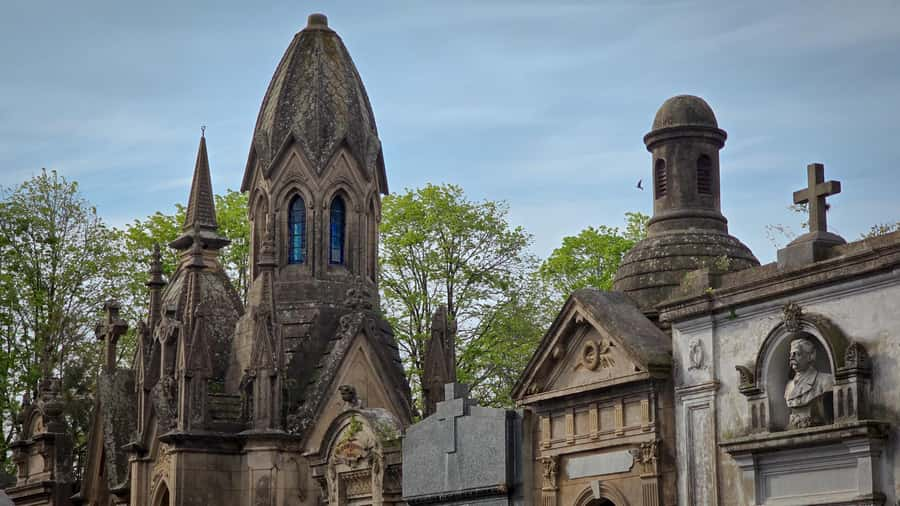
Also, you get the contrast right away. Even early on, you’ll see that Chacarita isn’t one single style. You’re moving among mausoleums, capellas, and monuments that look like Argentina’s story written in stone.
Meeting at the main door, then walking with guide Miguel
You meet at the main door of Chacarita Cemetery, then start walking immediately. The experience is built around short photo stops and guided explanations at each point, so you’re never standing there wondering what you’re supposed to be looking at.
A big reason this works is the guide. The live tour guide is Spanish speaking, and the guide, Miguel, is known for being patient and attentive. If you’re learning Spanish, this matters, because he can slow things down and keep it understandable. You’ll also notice a steady rhythm, where the group isn’t rushed and you get time to absorb what you see.
The tour includes a short restroom break, about 10 minutes, so you’re not forced to power through the whole 3 hours. Bring water and plan on comfortable footwear, because you’re doing real walking in a place where you’ll want to stop often.
Tango starts with Carlos Gardel, then you widen the circle
The tour’s most famous anchor is Carlos Gardel, Argentina’s tango icon. You’ll visit his mausoleum as a main stop, with time for photos and a guided look. What I appreciate here is that the stop is not only about the fame. It’s about the way Gardel’s legacy is treated in stone and symbolism, and how deeply tango is woven into everyday Argentine culture.
From there, the route keeps tango close, while expanding beyond one artist. The tour also covers resting places of other tango figures, including Osvaldo Pugliese and performers tied to the stage. You’ll also encounter Luis Sandrini, a major figure in classic Argentine comedy and acting, plus Alfonsina Storni, whose life and writing are remembered in a very personal way.
Even if you only know tango from the basics, you’ll leave with context. This is the kind of tour that helps you connect the music and performance to a physical place, so the cemetery becomes part of the story, not just the endpoint.

Gustavo Cerati and Gilda: modern fame, old stone

One of the smartest parts of this tour is that it doesn’t freeze Argentina in the past. You’ll visit Gustavo Cerati’s mausoleum, with guided time set aside so you can actually take in the details instead of just snapping a picture and moving on.
Then there’s Gilda, whose tomb stop gives the visit a different flavor. It’s a reminder that Argentine cultural icons are not only opera-house types or classic composers. Pop culture, media fame, and the people who shaped emotional lives also earn their place here.
What I like about these stops is the balance. You’re not only chasing international names. You’re learning how Argentines remember different kinds of artists, and how public affection shows up in how graves and monuments are presented.
This also changes your pacing mentally. A tango-focused cemetery can feel like one lane. The Cerati and Gilda stops broaden that, so the whole walk stays interesting.
Other notable mausoleums, capillas, and a long architectural pause
Along the way, the tour adds several stops that are valuable even if you’re not chasing celebrity names. You’ll visit Mausoleo Jorge Newbery, then also see Mausoleo Loredo de Subiza María Salomé, and several additional cemetery structures that help you understand how Chacarita “reads” visually.
You’ll also stop at the Capilla Cementerio Chacarita, which gives you a different architectural feel. Capillas change the mood of a space. They often feel more enclosed and devotional, and they help explain how religious and community practices shaped cemetery design.
One of the longer stops is Panteón VI, where you’ll get about half an hour. That time is important because big family or institution-sized monuments are where the eye needs time. You can compare surfaces, materials, and how different tributes are arranged. If you only spend a couple minutes at a mausoleum, it’s easy to miss what makes it distinct. This stop gives you room to look properly.
The tour also includes time near Elcano Park inside the cemetery area. Think of it as a brief breather within the walk, a place to reset your brain while still staying in the Chacarita context.
German and British cemetery areas, plus Commonwealth War Graves
Chacarita isn’t just Argentine. It includes sections connected to immigrant communities and older historical ties. The tour includes Cementerio Alemán for a German-cemetery look, with time set aside to see how that section differs in style and presentation.
Then there’s the Commonwealth War Graves Buenos Aires stop, where you’ll visit guided and spend time observing the war graves area. This is where the “British” connection comes through most clearly, tied to the Commonwealth cemetery tradition rather than one single famous tomb.
I appreciate this part because it changes how you think about a cemetery tour. It stops being only about individual famous people and becomes about history and community. You’ll see a different kind of monument language: the kind that often focuses on collective remembrance rather than personal tribute.
The guided explanations here matter, because the design cues can be subtle if you don’t know what you’re looking for. With the guide, it’s easier to understand what these spaces communicate.
Price and value for a $20, 3-hour guided walk
At around $20 per person for a 3-hour guided walking tour, this is strong value if you like context. You’re paying for a guide who knows what to point at, what to explain, and how to keep the pace readable. A self-guided cemetery walk is fine if you already know the names and architectural styles. If you do not, you’ll likely spend more time “guessing” than learning.
The small group size, limited to 6 participants, helps with that value. In a cemetery setting, you don’t want a loud crowd blocking each stop. With fewer people, you get more of the guide’s attention and better chances to ask questions.
The practical win is the structure: short segments, photo opportunities, and guided time that adds up. You also get the 10-minute restroom pause built into the experience, which keeps the overall pace comfortable.
Practical tips so you enjoy it (not just endure it)
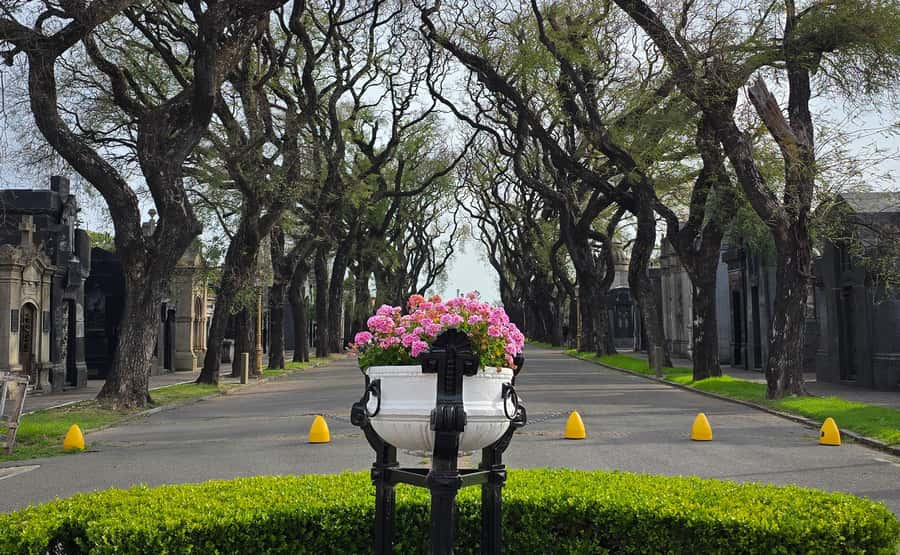
This is a walking tour inside an outdoor cemetery. That means planning beats optimism. Bring comfortable shoes, plus a hat, sunscreen, and water. Even if you’re sure you’ll be fine, you’ll thank yourself when the heat or sun hits between stops.
The tour is Spanish guided, so it helps if you understand some basic Spanish. That said, Miguel is described as patient, including speaking Spanish slowly for learners. If you’re not fully fluent, you can still get a lot out of the experience by following the key names and listening for the guided points.
Weather is another practical factor. One review noted that even with some rain, the tour didn’t lose quality. Still, wear shoes that handle damp ground, and be ready for a damp, slightly slick surface.
Finally, this is not suitable for wheelchairs or people with mobility impairments. If that’s your situation, you’ll want to choose a different kind of Buenos Aires experience.
Who should book this Chacarita walk, and who should skip it
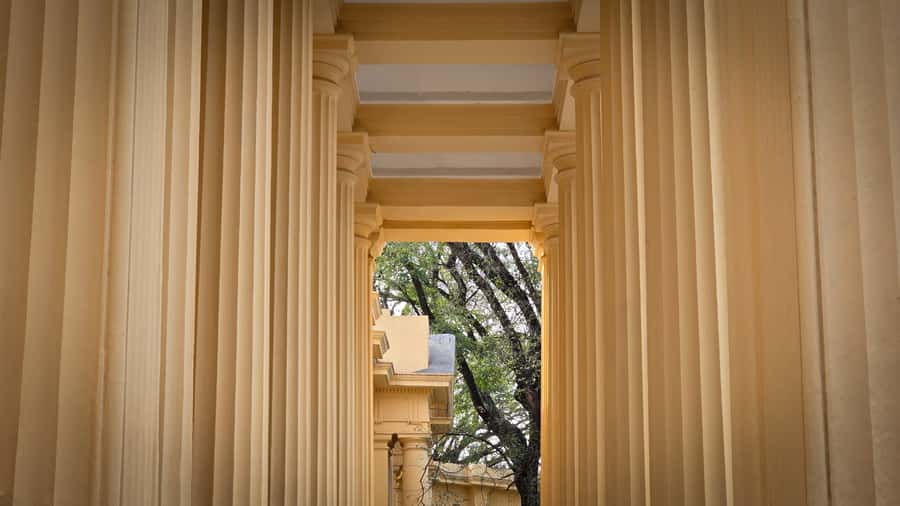
I’d book it if you like Buenos Aires culture and you want an angle beyond museums and neighborhoods. You’ll get tango, film, literature, and modern music in one place, and you’ll see how community and immigrant traditions appear through the cemetery’s sections.
It also suits you if you appreciate architecture, because the tour includes capillas and monument styles, not only graves. If you like learning through guided context, the pacing and the guide’s explanations are the core value.
I would skip it if you want a quiet, self-paced stroll with no explanations. This is guided, so you’ll be listening and stopping on the schedule. Also skip if walking is hard for you, since it’s not built for mobility aids.
If you’re the type who gets bored by “lists,” don’t worry. The tour isn’t only about names. The German and British-related sections and the Commonwealth war graves add a broader story line.
Should you book this Chacarita Cemetery tour?
Yes, if you want a smart, human Buenos Aires experience that’s unusual in the best way. This is the rare guided tour where the setting could be off-putting, but the content keeps it engaging and understandable.
Book it if you care about cultural icons like Carlos Gardel, Gustavo Cerati, and Luis Sandrini, and if you want to see how Chacarita’s different sections reflect immigrant history too. The guide, Miguel, seems to be the real engine here, with patient explanations and a calm group dynamic.
Skip it only if walking is an issue for you, or if you’d rather explore on your own. Otherwise, this is a thoughtful way to spend a half-day slot, learning how Argentina remembers people and how that memory gets shaped in stone.
FAQ
Where is the meeting point for the tour?
You meet at the main door of the Chacarita Cemetery.
How long is the tour?
The tour lasts about 3 hours.
How much does the tour cost?
The price is listed as $20 per person.
Is the tour guided, or self-paced?
It’s a three-hour guided walking tour with a live tour guide.
What language is the guide speaking?
The live tour guide speaks Spanish.
Which famous people will we visit?
The tour includes visits to the tombs or mausoleums of Carlos Gardel and Gustavo Cerati, plus additional notable figures such as Luis Sandrini, Osvaldo Pugliese, and Alfonsina Storni. You’ll also visit other stops like Jorge Newbery and Gilda.
Will there be a break during the tour?
Yes. The tour includes a 10-minute pause for using the restroom.
What should I bring?
Bring comfortable shoes, a hat, sunscreen, and water.
Is the tour wheelchair-friendly?
No. It is not suitable for people with mobility impairments or wheelchair users.
Tour Reviews Around Buenos Aires




More of Recoleta and Chacarita



Just added in Buenos Aires
- Velez Sarsfield Football Match
★ 5.0 · 3 reviews - Tango Show at El Querandi with optional Dinner
★ 4.2 · 3 reviews - Guided tour Boca Juniors Museum & Stadium + Caminito
★ 3.3 · 3 reviews - Tango Show at: MichelAngelo
★ 4.5 · 3 reviews - Buenos Aires: Rojo Tango Show with Optional Dinner
★ 3.4 · 3 reviews
Recoleta and Chacarita Cemeteries, compared.
 ★ 4.5Buenos Aires Bike Tour: North Districts, Recoleta and PalermoFrom $4591 reviews
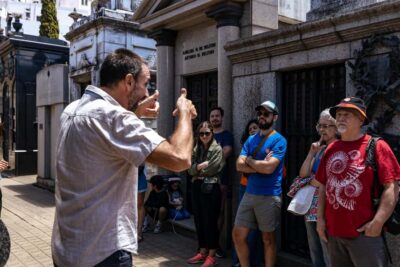 ★ 5.0Recoleta Cemetery – Small Group Tour of History & SecretsFrom $4953 reviews
 ★ 4.7Recoleta and Retiro Tip Based Walking TourFrom $150 reviews
 ★ 5.0Cultural Experience by Bike around Palermo and Recoleta Max 6 pplFrom $5444 reviews
 ★ 4.7Recoleta Neighborhood Walking TourFrom $9337 reviews
 ★ 4.6Discover Recoleta, Buenos Aires’ Little ParisFrom $5733 reviews
 ★ 4.9Recoleta & Cemetery for curious peopleFrom $3424 reviews
 ★ 4.5Full Day City Tour Buenos Aires, Recoleta Cemetery and TigreFrom $28515 reviews
Where this tour also appears