
REVIEW · WALKING TOURS
Jewish Sites Buenos Aires Private Walking and Car Tour
History has a street in Buenos Aires. This private Jewish heritage tour connects major sites like Templo Libertad, the Holocaust Memorial, and the AMIA bombing story with a licensed guide in your language. I like how the pacing feels tailored, not scripted.
Two things I really value here are the guide and the way the stops build in meaning. You also get the option to add the Salvador Kibrick Jewish Museum, where entry is included on the 3-hour and 4-hour tours, so you are not just looking at buildings.
One consideration: you should not plan on going inside synagogues. Entry to synagogues is not included, so you will focus on landmark exteriors and the surrounding stories instead.
Key highlights and what they mean in real life
- Templo Libertad on Libertad Street: Argentina’s first synagogue, seen up close from the sidewalk with clear context.
- Holocaust Memorial stop: a guide-led explanation of Argentina’s role during and after WWII, with survivors’ rebuilding stories.
- AMIA (Asociación Mutual Israelita Argentina): the 1994 bombing is framed through remembrance and its long impact.
- Salvador Kibrick Museum access (3- and 4-hour options): ritual objects, photos, and documents that explain Jewish life through objects.
- 4-hour car option city loop: Plaza Libertad, 9 de Julio Avenue, the Israeli Embassy Memorial, and Plaza General San Martín, with comfort added.
- Small private group style: limited group size (1 to 25 per guide) so questions land and you can hear commentary clearly.
More of Buenos Aires on foot
- Buenos Aires Hop-On Hop-Off Bus, Free Walking Tours & Discounts★ 4.5 · 2,218 reviews
- Buenos Aires: La Boca Guided Walking Tour in English★ 4.8 · 1,587 reviews
- Nazis in Buenos Aires: a historical walking tour★ 4.9 · 193 reviews
- Buenos Aires: Personalized 2 to 8-Hour Private Walking Tour★ 4.7 · 149 reviews
Walking the Jewish Buenos Aires story, site by site
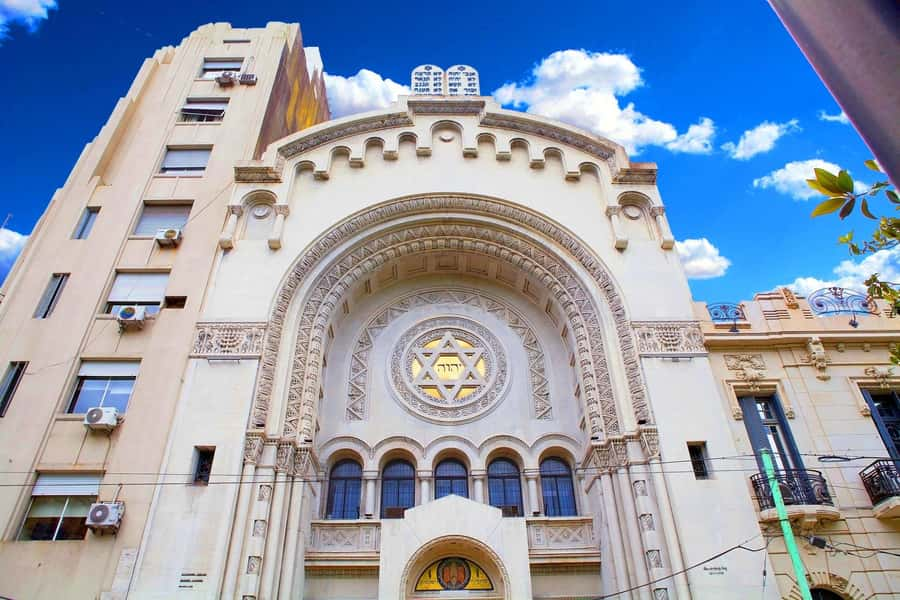
Buenos Aires can feel endlessly changeable, but this tour keeps one throughline: Jewish life, community identity, and how remembrance shapes the present. You are moving through old neighborhoods and key public spaces, guided by someone who explains why these places matter.
I like that it is not a “random sights” loop. The itinerary is built around turning points, from early community roots to WWII-era memory and on to later tragedies and public commemoration.
Because it is private, you do not have to guess what to ask. If you are curious about cultural life, history, or the modern political backdrop, the guide has room to answer in plain language.
And there is a practical perk: you can choose your level of walking and how much museum time you want, which is handy in a big city.
Templo Libertad and Libertad Street: the first stop that sets the tone
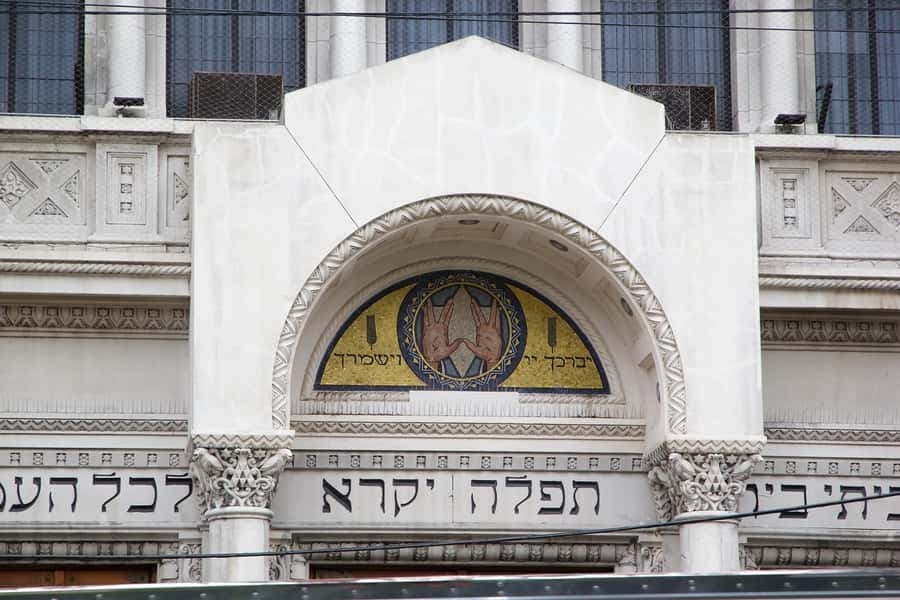
Libertad Street is where the tour starts to make sense fast. You will see Templo Libertad, described as Argentina’s first synagogue, and you will get the story of its early role in the Jewish diaspora’s roots in Argentina.
Even if you are not going inside (synagogue entry is not included), the exterior view matters. The façade gives you a visual anchor, so when your guide talks about community pride and early settlement patterns, you have something solid to look at.
I also like the way this first stop steers you toward “why this building looks like this” rather than just “what year it is from.” When someone connects architecture to identity, the street stops feeling like background scenery.
Museo Judío de Buenos Aires: how immigration and integration show up in everyday objects
From Templo Libertad, the route continues past the Museo Judío de Buenos Aires. You will learn how immigration and integration played out, and you will see how the museum itself uses architecture and collections to tell that story.
This is one of those stops where the guide’s explanation helps you read the city. Instead of treating the neighborhood like a static exhibit, you understand it as a place where people built institutions, navigated change, and kept traditions alive.
If you are the kind of person who likes cause-and-effect history, pay attention here. Early settlement patterns are what make later events, like WWII memory and postwar rebuilding, feel connected rather than separate chapters.
Other private days in Buenos Aires
The Holocaust Memorial: Argentina’s WWII role, explained with survivor rebuilding in mind

The tour moves to the Buenos Aires Holocaust Museum. Your guide shares Argentina’s role during and after WWII, and the emphasis includes survivors and how they rebuilt their lives in the city.
This stop can be emotionally heavy, but the format is practical: you are guided through meaning, not left to interpret everything alone. A private guide matters here because you can ask for clarifications, like how events in Europe translated into choices, policies, and community life in Argentina.
Also, remember this is still a walking and street-based experience. You are learning while moving, so you will likely appreciate a guide who can keep the tone clear and focused.
AMIA and the 1994 bombing: remembrance that ties to present-day identity

The tour culminates at AMIA (Asociación Mutual Israelita Argentina), and it is one of the most important places to visit if you want to understand modern Argentine-Jewish history. The 1994 bombing is covered with a guide-led reflection on what it changed for the community and for the nation.
This is not presented like a distant newspaper headline. You are shown how remembrance operates in public space, and how institutions like AMIA stand for both unity and mourning.
If you prefer tours that explain consequences, this part works well. You learn how a tragedy becomes part of public memory, and how a community continues to organize itself afterward.
I also appreciate that the guide can connect the story to the wider context you see across the city. That kind of link helps you avoid feeling like you walked through history in a vacuum.
Salvador Kibrick Jewish Museum: what you get in the 3-hour and 4-hour options
If you choose the 3-hour or 4-hour tour, you can add entry to the Salvador Kibrick Jewish Museum (Museo Judío Dr. Salvador Kibrick). This is where the tour shifts from street landmarks to interior objects.
Inside, you focus on rare artifacts and collections such as ritual objects, photographs, and historical documents. That mix matters because it shows Jewish life through more than one lens. Objects and images can communicate identity in a way that dates and headlines sometimes cannot.
There is also a real-world logistics point you should plan for. For security reasons, visitors must present the original passport if you are a foreigner, or the national identity card if you are Argentinian.
So if you are traveling light, make sure your ID is not buried in a bag you will not want to unpack. This museum stop is worth the effort, but you want to get through security smoothly.
4-hour car option: more landmarks, more comfort, and a wider picture
The 4-hour option is the best fit if you want a bigger city loop and less pavement time. It includes private transport with pickup and drop-off at your accommodation in Buenos Aires, so you are not managing transit between scattered points.
This extension adds several stops that help you place Jewish heritage inside the wider urban map:
- Plaza Libertad: a quiet square that gives architectural context to the neighborhood.
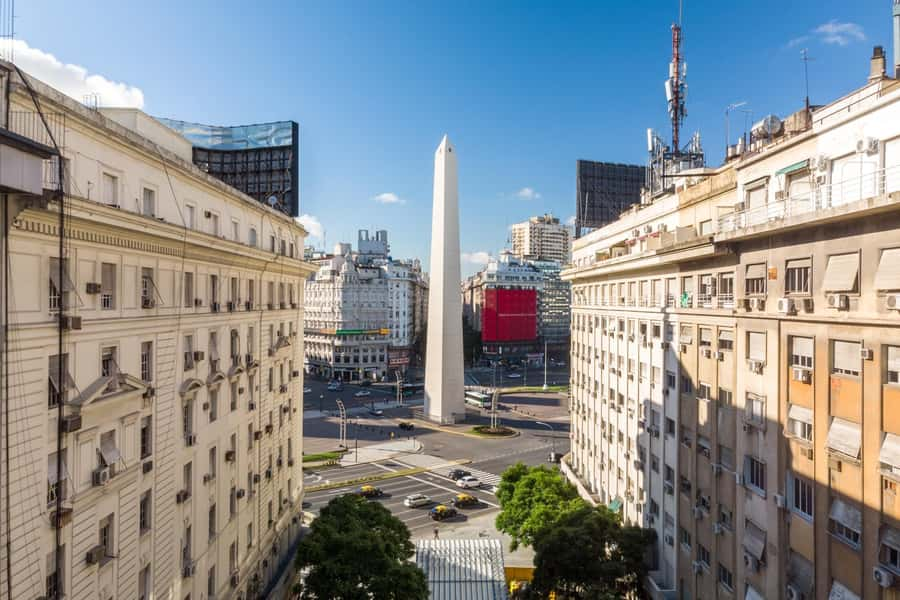
- 9 de Julio Avenue: you will see the iconic, wide boulevard and connect Jewish history to a major Buenos Aires axis.
- Israeli Embassy Memorial: a solemn site marking the 1992 attack.
- Plaza General San Martín: a stately public space tied to Argentina’s military and immigrant history.
The practical benefit is straightforward: you get more stops without feeling like your day turns into endless walking. The storytelling also gains scope because you see how memory shows up in multiple types of public locations, not only within the old Jewish quarter.
Your guide makes the difference, especially when history meets today
This tour is designed around a licensed private guide, fluent in your chosen language (English, Spanish, French, Italian, Portuguese). That is not a small detail. In a topic like this, good guidance is what turns a set of sites into a coherent understanding.
One guide name that comes up in positive feedback is Richard Shpuntoff. When he is the one leading, people highlight his warm, friendly approach and his willingness to share personal and familial stories alongside the historical timeline. There is also mention of him clarifying the historical and current political climate in a way that adds perspective rather than confusion.
Even if you get a different guide, the format is the same: you have room to ask questions, and the pace can be adjusted for your group.
Because it is a private group experience, you also avoid that awkward moment where you cannot hear the explanation because the crowd moved on. Here, the size is limited to 1 to 25 guests per guide, which supports clearer commentary.
Pace and comfort: what the walking part really feels like
The 2-hour and 3-hour options are described as moderately paced, with about 25 to 30 minutes on foot. You should expect some uneven surfaces or steps, and the tour runs rain or shine.
That means your shoe choice is not a fashion decision. Wear comfortable footwear with grip and expect a bit of stepping around.
Also, even if you are not walking nonstop, you will still be outside for the key landmark moments. Buenos Aires weather can shift quickly, so having a light layer or rain protection helps.
Food and drinks are not included, so plan water. In a tour with solemn moments, comfort matters more than you might think.
Price and value: is $129 per person a good deal for this format?
At $129 per person, the best way to judge value is by what you get that is hard to replicate on your own. You are not just paying for someone to point at buildings.
You are paying for:
- a private licensed guide who can connect sites into a clear narrative
- language support in one of five languages
- a museum entry option on 3-hour and 4-hour tours
- and, in the 4-hour version, private transportation plus pickup and drop-off
If you go for the 2-hour option, the value is strongest if you want a focused introduction and you are comfortable doing city walking. If you add the museum in the 3-hour option, you extend the learning with interior collections like ritual objects and documents, which is usually where the story becomes more personal and tangible.
If you choose the 4-hour option, the value is strongest if you want more stops without the stress of transit. Private car rides in Buenos Aires are not usually cheap, so having that bundled with the expanded itinerary can make the day feel easier.
Who should book this tour, and who should pick a different one
This works best if you want Jewish heritage explained in a thoughtful, guided way and you like learning on your feet, or at least close to it. It is also a good pick for people who want both major landmark sites and the deeper museum entry option.
It is not the right match if your top priority is inside-the-synagogue visits, because synagogue entry is not included. You will still see significant places and learn their meaning, but the experience leans more toward remembrance and context than on-site worship access.
It also fits travelers who appreciate careful pacing. The guide adjusts to your group, and the tour aims to keep commentary clear for up to 25 guests per guide.
Should you book this Buenos Aires Jewish Heritage Tour?
I think it is worth booking if you want a structured, private way to understand Jewish Buenos Aires across time, from early community roots to WWII memory and modern remembrance. The museum option is a big reason to consider the 3-hour or 4-hour tour, especially if you like learning through objects.
Choose the 2-hour version if you want a shorter, focused orientation and you are comfortable with a moderate walking segment. Choose the 3-hour version if you want museum entry without committing to the full city car loop. Choose the 4-hour version if you want more landmarks plus private pickup and drop-off, and you want to see memorials and major boulevards without stressing over transit.
If this is a topic you care about, this tour’s strength is simple: a licensed guide turns important locations into a clear story you can actually carry with you after the walk ends.
FAQ
How long is the Jewish Sites Buenos Aires Private Walking and Car Tour?
The tour runs for 2 to 4 hours, depending on the option you choose. You can check available starting times for your selected duration.
What is included in the 2-hour, 3-hour, and 4-hour options?
The private experience includes a walking tour of the old Jewish quarter and a licensed guide throughout. Entry to the Salvador Kibrick Jewish Museum is included only in the 3-hour and 4-hour options, and private transfer with pickup and drop-off at your accommodation is included only in the 4-hour option.
Is entry to synagogues included?
No. Entry to synagogues is not included.
Which languages are available for the guide?
The guide is available in English, Spanish, French, Italian, and Portuguese.
Is there walking, and does the tour run in bad weather?
Yes, for the 2-hour and 3-hour options there is about 25 to 30 minutes of walking on uneven surfaces or steps. The tour runs rain or shine, so you should wear comfortable shoes.
Do I need to bring my passport for the museum?
Yes. For security reasons, visitors must present their original passport if they are foreign, or their national identity card if they are Argentinian, for the Salvador Kibrick Jewish Museum.
Where do we meet the guide in Buenos Aires?
Meet your guide in front of Hotel Presidente, Cerrito 850, C1010 Cdad. Autónoma de Buenos Aires, Argentina. Please do not enter the hotel, it is only a meeting point.
Tours Around Buenos Aires
Tour Reviews Around Buenos Aires
Just added in Buenos Aires
- Velez Sarsfield Football Match
★ 5.0 · 3 reviews - Tango Show at El Querandi with optional Dinner
★ 4.2 · 3 reviews - Guided tour Boca Juniors Museum & Stadium + Caminito
★ 3.3 · 3 reviews - Tango Show at: MichelAngelo
★ 4.5 · 3 reviews - Buenos Aires: Rojo Tango Show with Optional Dinner
★ 3.4 · 3 reviews
Walking Tours, compared.
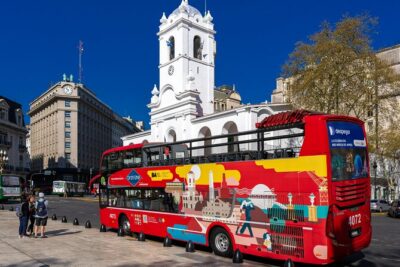 ★ 4.5Buenos Aires Hop-On Hop-Off Bus, Free Walking Tours & DiscountsFrom $392,218 reviews
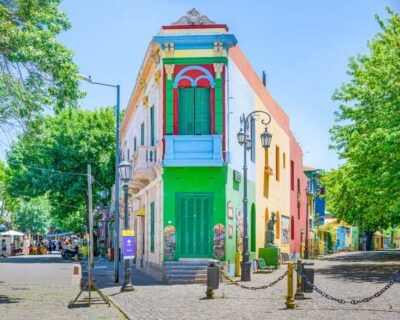 ★ 4.8La Boca Guided Walking Tour in EnglishFrom $131,587 reviews
 ★ 4.9Nazis in Buenos Aires: a historical walking tourFrom $25193 reviews
 ★ 4.7Personalized 2 to 8-Hour Private Walking TourFrom $37149 reviews
 ★ 4.8San Telmo and Market Guided Walking TourFrom $13102 reviews
 ★ 4.5Buenos Aires Walking Tour with Local Guide and Optional RooftopFrom $11187 reviews
 ★ 4.5Best of Buenos Aires Private Walking TourFrom $10973 reviews
 ★ 4.8La Boca Art and History Walking TourFrom $4655 reviews
Where this tour also appears