
REVIEW · WALKING TOURS
Buenos Aires in One Day Private Walking Tour
Buenos Aires makes more sense on foot. This private one-day route connects street scenes to real stories, with stops many people miss, and guides like Carlos and Clemencia bring the city’s architecture and politics down to human scale. I especially loved the street-level explanations and the way the tour handles Recoleta and its cemetery monuments without turning it into a checklist. The main consideration is that it is a long day of walking, plus you get a taxi hop between some areas.
You’ll start near Florida Garden and end around Plaza Dorrego, so you can keep wandering after the tour is done. Expect a planned coffee and lunch break (paid by you), and know it runs rain or shine. This is a smart fit if you want a neighborhood-by-neighborhood Buenos Aires view rather than a fast drive past highlights.
Key reasons this tour works
- Street explanations that make the buildings make sense (from Kavanagh-style architecture to church details)
- Recoleta Cemetery stop with included admission and clear context for major tombs
- San Telmo and Plaza Dorrego where you get both the charm and the hard history
- A wide loop through Central, Palermo, and Puerto Madero so you grasp how different Buenos Aires feels
- Private format so you can ask questions and move at a human pace
- A logical ending in San Telmo that keeps your evening options easy
More of Buenos Aires on foot
- Buenos Aires Hop-On Hop-Off Bus, Free Walking Tours & Discounts★ 4.5 · 2,218 reviews
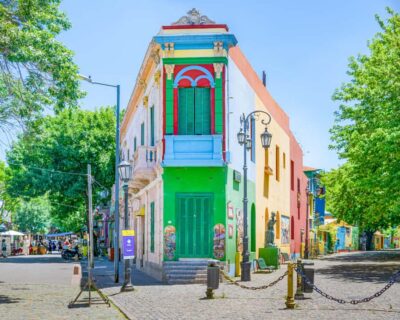
- Buenos Aires: La Boca Guided Walking Tour in English★ 4.8 · 1,587 reviews
- Nazis in Buenos Aires: a historical walking tour★ 4.9 · 193 reviews
- Buenos Aires: Personalized 2 to 8-Hour Private Walking Tour★ 4.7 · 149 reviews
From Florida Garden to Calle Florida, this tour starts with the city’s rhythm
Most first-time Buenos Aires tours sprint. This one warms up. You meet outside the Buenos Aires Walking Tours storefront, at the corner near Paraguay St, and you’re aiming to arrive no later than 10:00 am. The guide holds a small BA Walking Tours sign, so you should be able to spot them quickly.
The first big walking moment is Calle Florida, a classic, central pedestrian stretch where the city shows its commercial face. The tour’s value here is not the street itself, it is what your guide points out as you walk. You’ll get historical building context and a sense of how Buenos Aires layers new fashion over older foundations.
If you’re the type who likes to understand what you’re looking at before you go shopping or photo hunting, you’ll feel right at home. Even if you already walked Florida on your own, the tour language helps you read it differently.
Retiro monuments and the British fingerprints you would miss
After Calle Florida, the route shifts toward Retiro, with major landmarks and an emphasis on architecture and meaning. Plaza San Martin is one of the anchors here. Your guide ties it to the area’s earlier role in the city, including references to bullfighting and a slave-market connection tied to Buenos Aires’ past.
Then you move through a string of impressive, story-heavy stops:
- Paz Palace and its belle-epoque styling, where old-world grandeur still reads clearly
- Kavanagh Building, a go-to example for understanding how Buenos Aires learned to build upward and show ambition
- Santísimo Sacramento Church, the kind of place you often walk past without realizing why it matters
- The British Clock Tower and the nearby railroad terminal stations, which help explain the long, unexpected English presence in Argentina
- General San Martin’s Monument, used to talk about the birth of the nation and how public monuments shape memory
This section is ideal for you if you want more than skyline photos. The tour’s approach is practical: you learn what to notice, then you keep noticing it even after the guide moves on.
The only tradeoff is pacing. Retiro has lots to look at, and some of it is best seen slowly, so you’ll walk for real rather than stand for quick soundbites.
Avenida Alvear and Barrio Norte, where palaces map immigration
Next is Avenida Alvear, and the neighborhood feel changes fast. Barrio Norte shows a Buenos Aires that turns streets into statements. The guide connects the look of the area to outside influences, including French and Italian influence, plus the effects of Catholicism, Judaism, and immigration.
What makes this stretch worthwhile is the way the stops link together:
- Mihanovich and Strugamou buildings for architectural comparison
- Arroyo Street for art gallery culture
- Grand streets and palaces that make the city’s wealth and identity visible
You also get a diplomatic and institutional flavor with addresses and styles that make Buenos Aires feel international without leaving Argentina. Expect to see or be pointed out:
- Palacio Ortiz-Basualdo (French Embassy)
- Alzaga-Unzue Manor, tied to the 4 Seasons name and grand historical framing
- Nunciature (Vatican Embassy) and a cluster of embassy or palace-like buildings associated with prominent families
- Duhau Mansion (Hyatt) and other manor-scale landmarks
This is one of the most enjoyable sections for design lovers. Even if you do not care about every detail, you’ll still come away with a better sense of why these neighborhoods look the way they do.
Other private days in Buenos Aires

Recoleta Cemetery, the tango-adjacent streets, and why time here matters
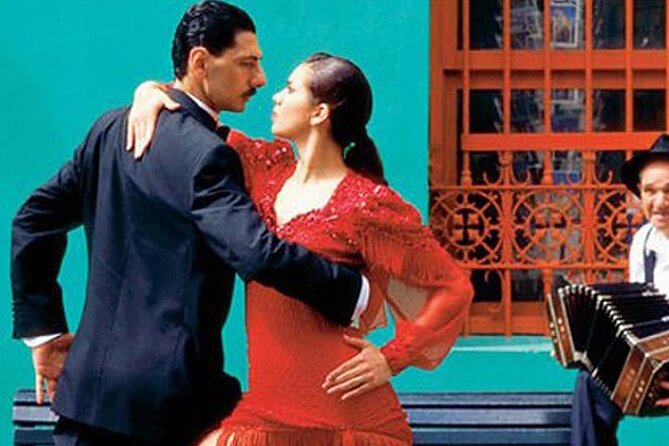
Recoleta is where the tour becomes very real. You’ll pass through Recoleta neighborhood stops like Nuestra Señora del Pilar Church, and you’ll also encounter cultural venues such as BA Exhibition Center and Palais de Glace, where tango’s coming-of-age is discussed.
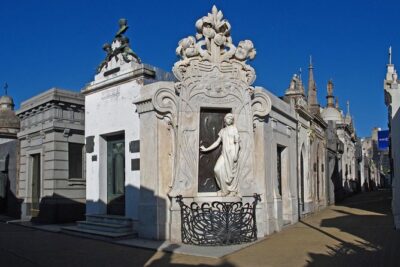
Then comes the main event: La Recoleta Cemetery, with admission included. This is a major, focused block, and you should treat it as such. Your guide tells stories tied to monuments and famous names, including Eva Peron, plus other notable Argentinians laid to rest there.
I like this part because it is not just dates and headstones. Your guide uses the cemetery as a lens for how Buenos Aires remembers power, celebrity, and family legacy.
Still, here is the consideration: the cemetery takes time, and on a day that already includes a lot of walking, it can feel like the heaviest emotional stop. If you know you want more movement and fewer long explanations, you should mentally budget extra patience here.
Palermo’s art-and-memorial mix, from Floralis to Evita’s monument
After Recoleta, you shift toward Palermo, which gives the day a more modern, open feel. The tour’s Palermo portion leans into visual culture and public monuments.
You’ll be shown the National Gallery of Art and the National Library building, plus standout public pieces like:
- Peynot’s Grand Monument, tied to a centennial gift from France to Argentina
- Floralis, the Giant Flower sculpture that has become a recognizable part of the city’s public art identity
- Evita Peron’s Monument, described as a place associated with where she died
There’s also overlap with design-focused stops, including the BA Design Center area. If you like art that sits in public space, this is a strong moment in the loop because it balances memorial with everyday street reality.
One practical note: Palermo is spread out. The tour keeps it manageable, but you are still walking. Bring water, wear shoes you trust, and plan for photos that turn into extra minutes.
El Centro, Teatro Colón, the Obelisk, and the city’s power center
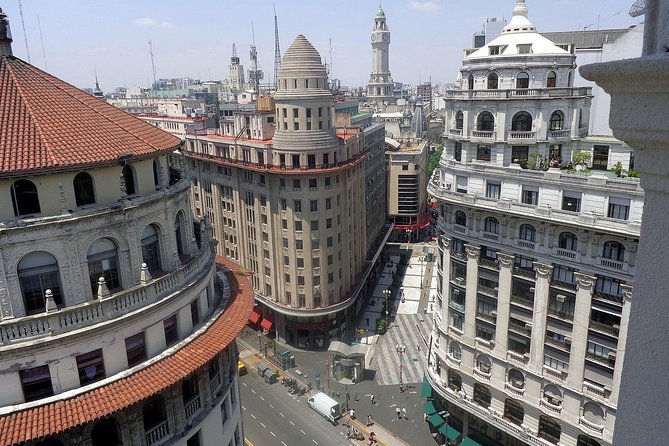
El Centro is your classic Buenos Aires core, and the tour treats it like a living archive. You’ll walk Florida Street, described as one of the city’s oldest streets and used as a way to explain how Buenos Aires evolved.
Then you hit buildings that represent different foreign and commercial eras:
- Harrods and Galerías Pacífico, including the building’s mural identity and its British railroad-office origins
- Centro Naval, framed through Argentina’s past wealth linked to ranchers and military
- Teatro Colón, where opera and public culture become part of political and social life
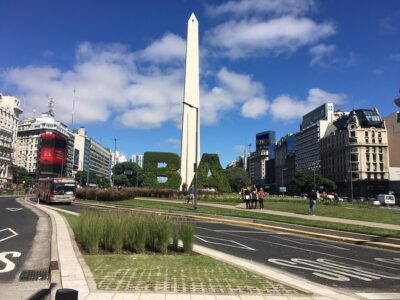
- El Obelisco, discussed as a symbol with meaning worth knowing before you stand there and shoot pictures
You also get a cultural history stop at Mariquita Sanchez’s house, connected to Argentina’s National Anthem story. Finally, the tour moves toward the bank and finance district, using it to explain more recent economic context.
This is the section that helps you feel oriented. When people say Buenos Aires is a city you can walk and read, this is where you start seeing the pattern.
San Telmo streets and Plaza Dorrego, including the hard part of the story
San Telmo and Monserrat-style downtown lanes come next, and the feel changes again. This is the oldest neighborhood vibe you came for, with colonial-style houses and churches, plus market energy around Plaza Dorrego.
Key stops here include:
- Cabildo (old City Hall), used to talk about early governance
- The Cathedral area, framed through religious and public influence
- General San Martin’s Mausoleum, used to explain nation-building
- Government buildings and ministry areas where the tour points to lingering signs tied to political upheaval
- Piramide de Mayo and the Walk of the Mothers of the Disappeared, which grounds modern human rights memory in a physical place
- Manzana de las Luces on Bolívar St, described as an Enlightenment Square tied to schooling origins
- Smaller but meaningful survivals like an oldest preserved shop, church, and house
The tour also names places connected to earlier British presence, including Defensa St and the Saint Domingo Convent, plus stories tied to viceroys and old city limits like Chile St.
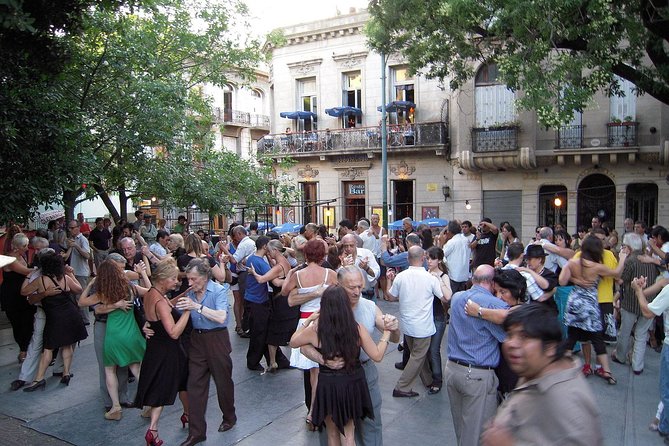
Then comes the standout street moment: Plaza Dorrego itself, described as the heart of the San Telmo Antiques Fair. Your guide also explains a dark piece of the neighborhood past connected to the open-air slave market history tied to Dorrego Square.
If you want San Telmo only as a pretty walking district, you might feel surprised by how direct the tour becomes about slavery and its imprint. I think that is the point. You leave with a fuller San Telmo, not just a postcard version.
Puerto Madero and Plaza de Mayo, modern water glamour meets political memory
Before the day ends, you loop toward Puerto Madero and the waterfront. The tour frames it as a newer neighborhood built by extending the city over old British dockyards, into the water. Even if you do not linger, you’ll understand why Puerto Madero looks like a different city from San Telmo.
Then you land at Plaza de Mayo, which is the real politics hub of the walk. Your guide highlights:
- Historic downtown and the square itself
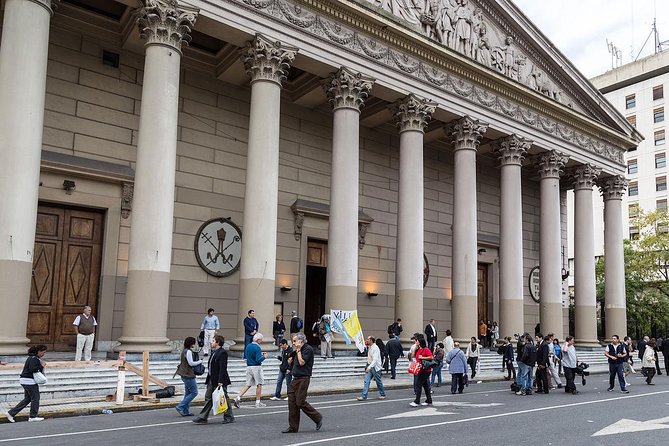
- Metropolitan Cathedral
- Cabildo
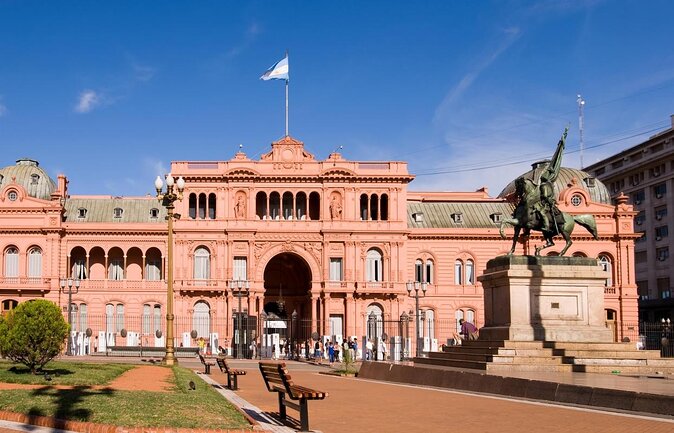
- Casa Rosada, the presidential office
- The Piramide de Mayo
- The Mothers of the Disappeared memorial theme
A separate stop at Catedral Primada focuses on General San Martin’s tomb and other major Catholic significance, tied to how the cathedral functions as both religious center and national memory site.
You also walk by Casa Rosada and additional downtown streets like Calle Defensa, described as tied to Buenos Aires defenses against British invaders in 1806 and 1807. There’s even a story stop about a very narrow historic house connected to slavery in Buenos Aires, which gives this political zone a human scale beyond flags and façades.
This section is not about rushing through icons. It’s about seeing how Buenos Aires uses plazas and institutions to tell people what to remember.
Walking time, the taxi hop, and how to stay comfortable
This is a private walking tour with a set loop, not an all-foot hike. You should plan for one taxi ride during the tour to connect attractions, with an estimated cost around USD $5 to $7, not included.
That taxi detail matters because it tells you how the operator handles distance without turning the day into a full marathon. Still, the overall walking load is real. Reviews also reinforce the sense that the day can stretch near 7 hours depending on timing and conditions, so pack like it is a long day.
Rain or shine also means you should have a light rain layer, not just a hoodie and hope.
Price and value for a private six-hour city sweep
At $199 per person, the price feels steep until you break down what you’re actually buying. You get:
- A local English speaking guide
- Cemetery admission tickets included
- A structured, neighborhood-spanning loop that covers many major landmarks and story stops in one go
You are also paying for time efficiency. One day in Buenos Aires is not long, and the tour is designed to teach you how the city fits together, not just what to photograph.
Is it great value for everyone? Not automatically. If you hate walking, want lots of indoor museum time, or prefer to wander with no guidance, you might feel the day is too structured. But if you want guidance that turns streets into context, it often earns its cost.
Where the tour ends in San Telmo, and how to keep the momentum
The tour wraps around Plaza Dorrego. That’s a smart ending because you’re right in the area with cafés and antiques energy, with the fair area as a nearby reference point for continued exploring.
If you want a clean plan after the guide leaves, do this: decide in advance whether you want dinner in San Telmo or to continue toward La Boca. There is also an optional extension to La Boca, described as a 45-minute taxi hop to see the colorful old port neighborhood tied to Italian immigrants and sailors. It is not included, so you would pay separately.
Should you book this Buenos Aires one-day walking tour?
Book it if you are:
- A first-timer who wants to understand the city fast, not just collect photos
- Someone who enjoys architecture details and history that shows up in everyday streets
- Interested in both glamorous Buenos Aires zones like Retiro and Barrio Norte, and the older, grittier feel of San Telmo
Skip it or be cautious if you:
- Want more inside-time at museums and buildings, because this is still a walking day with mostly street-facing stops
- Have very limited mobility or do not enjoy long walking blocks, especially with the taxi hop and the big cemetery focus
- Prefer a more casual pace, because the day is planned to cover a lot of ground
If your goal is to leave Buenos Aires with a real mental map, this tour delivers. Just go in expecting a full, story-heavy day, with Recoleta and San Telmo as the emotional and historical centers.
FAQ
How long is the Buenos Aires in One Day Private Walking Tour?
It is about 6 hours.
What time does the tour start?
The start time is 10:00 am.
Where do we meet the guide?
You meet at Buenos Aires Walking Tours at Florida 899, and you should look for the BA Walking Tours sign. The meeting is outside the cafe corner door (corner with Paraguay St.).
Is the tour private?
Yes, it is private, and only your group will participate.
What is included in the price?
The local English speaking guide is included, and cemetery admission tickets are included.
What is not included?
Hotel pickup and drop-off are not included, meals are not included, and transportation during the tour is not included.
Do I need to pay for a taxi during the tour?
The tour notes that it is necessary to take a one taxi ride to get to one attraction to another, and the taxi cost is not included (approximately USD $5 to $7).
Does the tour run in bad weather?
The tour operates rain or shine.
Is La Boca included?
La Boca is optional and not included. The note says you can extend the walk with a taxi for about 45 minutes.
Tours Around Buenos Aires
Tour Reviews Around Buenos Aires
Just added in Buenos Aires
- Buenos Aires Tango Show and Dinner in El Querandi
★ 4.6 · 10 reviews - Buenos Aires: Classic Private City Tour
★ 4.7 · 11 reviews - Buenos Aires: Intimate Tango Experience
★ 5.0 · 11 reviews - Walking Tour: Buenos Aires bookstores
★ 4.3 · 12 reviews - 5hs Small Group City Tour of Buenos Aires with Street Food
★ 4.2 · 12 reviews
Walking Tours, compared.
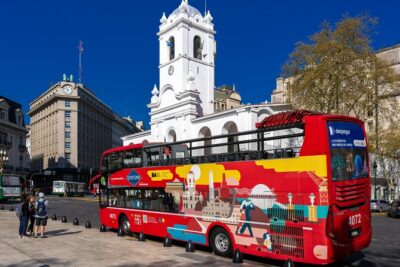 ★ 4.5Buenos Aires Hop-On Hop-Off Bus, Free Walking Tours & DiscountsFrom $392,218 reviews
 ★ 4.8La Boca Guided Walking Tour in EnglishFrom $131,587 reviews
 ★ 4.9Nazis in Buenos Aires: a historical walking tourFrom $25193 reviews
 ★ 4.7Personalized 2 to 8-Hour Private Walking TourFrom $37149 reviews
 ★ 4.8San Telmo and Market Guided Walking TourFrom $13102 reviews
 ★ 4.5Buenos Aires Walking Tour with Local Guide and Optional RooftopFrom $11187 reviews
 ★ 4.5Best of Buenos Aires Private Walking TourFrom $10973 reviews
 ★ 4.8La Boca Art and History Walking TourFrom $4655 reviews
Where this tour also appears