
REVIEW · WALKING TOURS
Buenos Aires: 7 Hour Small Group “BA 101” Walk
Buenos Aires makes sense on foot. This 7-hour small-group walk strings together iconic sights and everyday streets, from El Ateneo Grand Splendid to Plaza de Mayo, with an expert English guide. I especially like the way the tour uses public transit (you actually ride the metro) instead of forcing everything to be on foot. I also like that lunch and morning coffee are built in, so you can keep the pace without hunting for food mid-walk. The only real catch, wear comfortable shoes, because you’ll cover a lot of streets over the day.
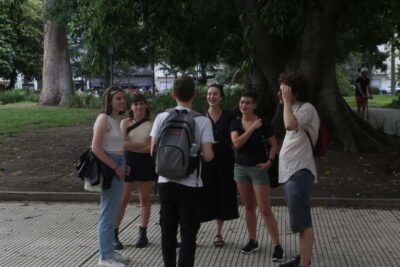
You’ll start at 10am in the Recoleta/Barrio Norte area near Av. Santa Fe and Av. Callao, and you’ll finish at 5pm in San Telmo near plenty of places to eat and shop. With a maximum of 7 participants, the guide can handle questions as you go, and entrance fees are included for key stops like Recoleta Cemetery. If you want a day that’s part sightseeing, part orientation, and part local food breaks, this route is a strong way to do it.
Key things I’d plan around
- Small group size (up to 7) so questions stay real, not rushed.
- Recoleta Cemetery stop with entry included plus time to understand what you’re looking at.
- Metro ride during the day which helps you connect neighborhoods efficiently.
- Included lunch and beverage so you’re not scrambling for a sit-down meal.
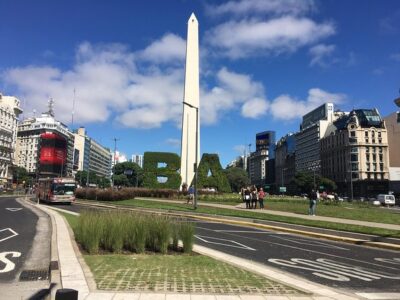
- Big-photo moments like Avenida 9 de Julio and the green BA sign.
- San Telmo Indoor Market and Plaza Dorrego for antiques, food stalls, and classic street atmosphere.
More of Buenos Aires on foot
- Buenos Aires Hop-On Hop-Off Bus, Free Walking Tours & Discounts★ 4.5 · 2,218 reviews
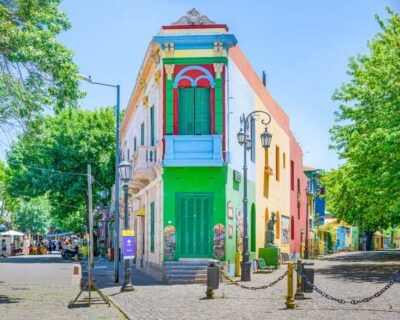
- Buenos Aires: La Boca Guided Walking Tour in English★ 4.8 · 1,587 reviews
- Nazis in Buenos Aires: a historical walking tour★ 4.9 · 193 reviews
- Buenos Aires: Personalized 2 to 8-Hour Private Walking Tour★ 4.7 · 149 reviews
The BA 101 pacing: why this route feels efficient
This tour is designed as an all-day connection game: start in Barrio Norte, swing through Recoleta and the historic center, then end in San Telmo. The value is not just that you see famous places, it’s that you see how they relate to each other across neighborhoods.
A 7-hour walking format can sound like a “just keep moving” plan. Here, the pace feels more manageable because the day includes built-in pauses for coffee and a local lunch, plus short transit segments. The end result is that you come away with a mental map of Buenos Aires, not a memory of random landmarks.
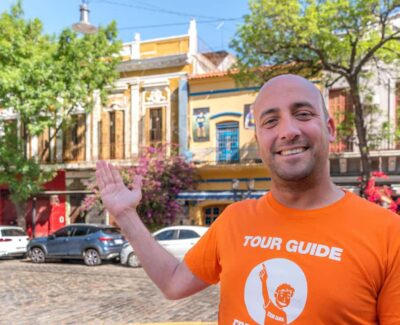
You’ll also be traveling with an English live guide from BuenosTours. Guides seen on this route include Tracy and Chris, and both are praised for knowing the city’s story and being able to explain details clearly, including the kind of context that makes buildings feel less like backdrops and more like chapters.
Starting in Barrio Norte: El Ateneo and Plaza Rodriguez Peña
Your morning kicks off at 10am near Av. Santa Fe and Av. Callao in the Recoleta/Barrio Norte side of town. This is a smart starting point because it puts you near the city’s polished streets and landmark architecture before you hit the older, more layered areas later.
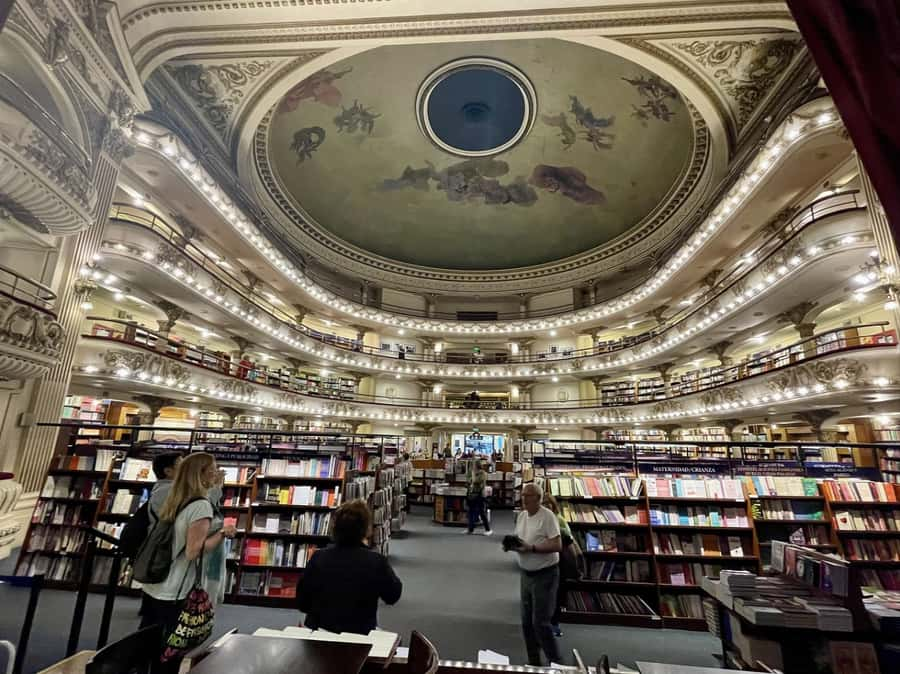
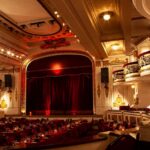
One of the first headliners is El Ateneo Grand Splendid, commonly described as one of the world’s most beautiful bookstores. Even if you’re not a book person, the appeal here is the setting: you’re looking at a grand interior where the former theater feel still shapes how the space moves. For me, that’s the kind of stop that makes a walking tour worthwhile, because it shows you something you might not notice if you walked by fast.
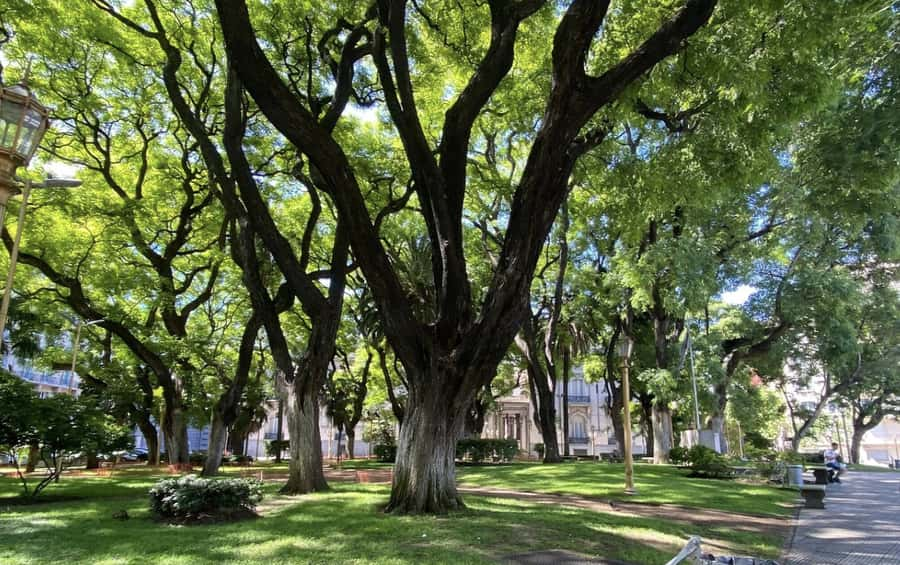
Next you’ll stroll through Plaza Rodriguez Peña, a leafy pocket with history tied to the Palacio Sarmiento, Argentina’s Ministry of Education. The plaza is small enough that you can actually slow down and watch the rhythm of the street around it. It’s also a good breather before the tour shifts into larger landmarks and museums.
Palacio Sarmiento’s cousin: Palacio de Aguas Corrientes
After you settle in, the tour takes you to Palacio de Aguas Corrientes. This is the kind of building that surprises people, because it doesn’t scream tourist draw from the sidewalk. Up close, it helps you understand how Buenos Aires’ infrastructure projects became works of architecture, not just engineering.
In practical terms, the timing works well. You’re still in the morning energy zone, so you can appreciate details without feeling rushed. And since the guide is an expert who can explain the story behind what you’re seeing, you’re less likely to treat the building like a quick photo and move on.
If you’re the type who likes your sightseeing with a side of context, this is a strong example of why a guided format matters.
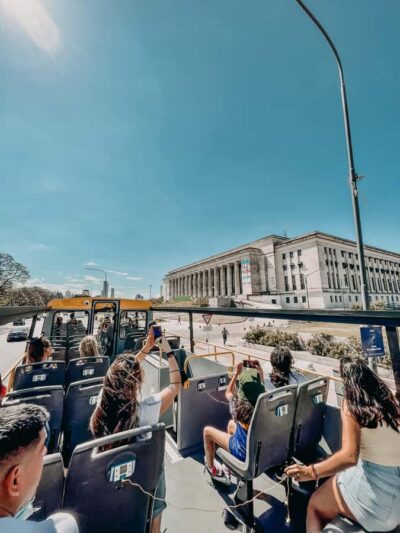
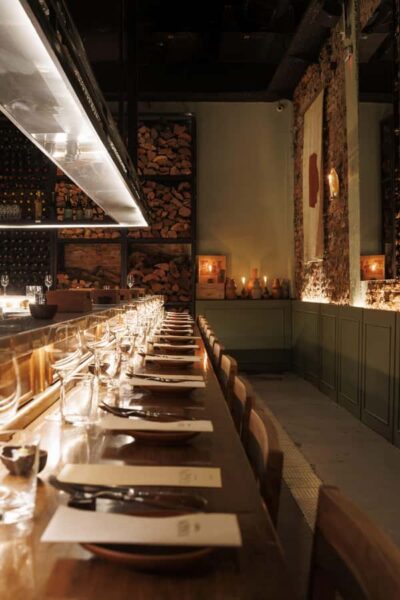
Recoleta Cemetery: Evita’s resting place and the feeling of place
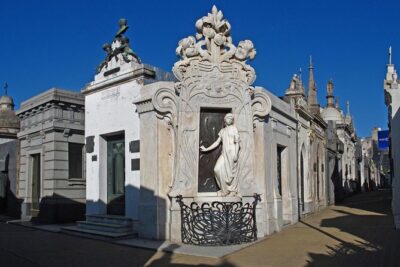
Recoleta Cemetery is the centerpiece stop most people plan around, and entrance is included. It can feel like a city inside the city because of the scale and how family tombs turn into their own mini-landscapes.
You’ll spend time here looking at elaborate mausoleums and learning how Argentina’s notable families are memorialized. The tour specifically highlights the last resting place of Eva Perón, better known as Evita, which is a major reason many visitors care about the cemetery. The guide also helps connect the personal story to the wider cultural role Evita played in the public imagination.
Then there’s the visual side: the cemetery walls contain a lot of scenes that look hauntingly beautiful in different ways, from ornate sculptures to tightly designed tomb spaces. The practical takeaway for you is simple: give yourself enough time to slow down, because this is not a “walk through in five minutes” stop.
If you’re not a cemetery person, it can still be worth it because it doubles as a history lesson. You’re not just seeing graves, you’re seeing how Buenos Aires handles memory, status, and identity in stone.
From Plaza Francia to the colonial highlights
After Recoleta Cemetery, the route heads toward Plaza Francia. This square is tied to the Our Lady of Pilar Church, noted as one of the best-preserved colonial architecture examples in the city.
This segment works as a palate cleanser after the dense, dramatic cemetery atmosphere. You get open space in the plaza, then a chance to compare architectural styles. For me, the key value is how the guide points out what to look for, so you understand why one building feels colonial while another feels modern or institutional.
It’s also a nice point in the day to reset your feet before you move toward major civic and entertainment landmarks later.
Teatro Colón and Plaza Lavalle: civic power and opera prestige
Next you head to the San Nicolas neighborhood and see Teatro Colon. It’s one of the most famous opera houses in the world, and even outside of a performance, the building signals status. You’re also helped by context, since the guide can explain why it matters in Buenos Aires culture.
From there, you walk through Plaza Lavalle and see the Palacio de Justicia de la Nación, home to Argentina’s Supreme Court. This stop adds a different flavor to the day: you shift from performance culture to the structure of government and law.
These two sights, together, help you see Buenos Aires as more than neighborhoods and photos. You get a sense of how power and culture share the same urban stage, side by side.
Avenida 9 de Julio: the world’s widest avenue and the Obelisco
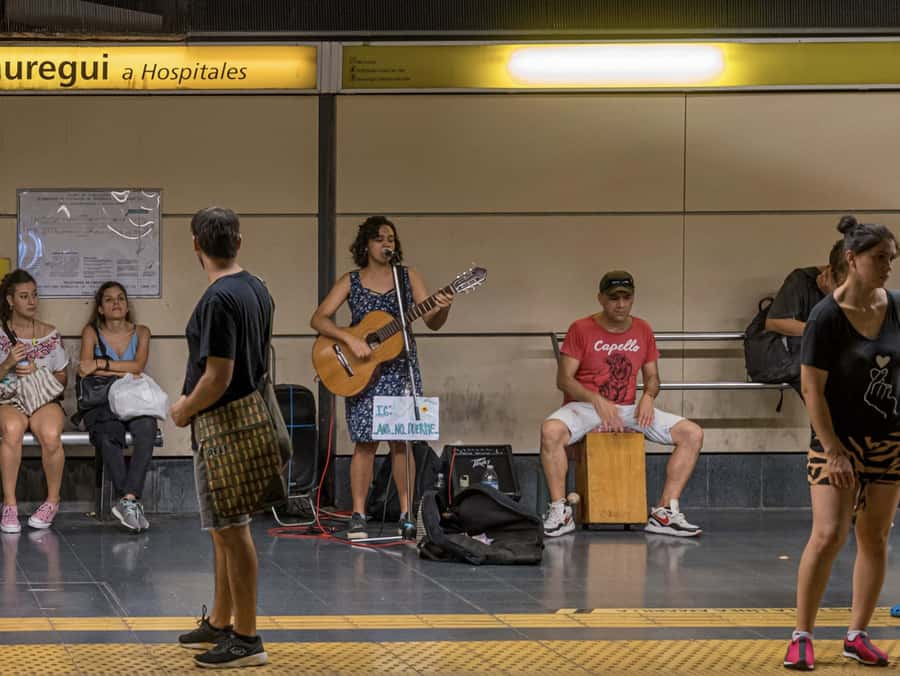
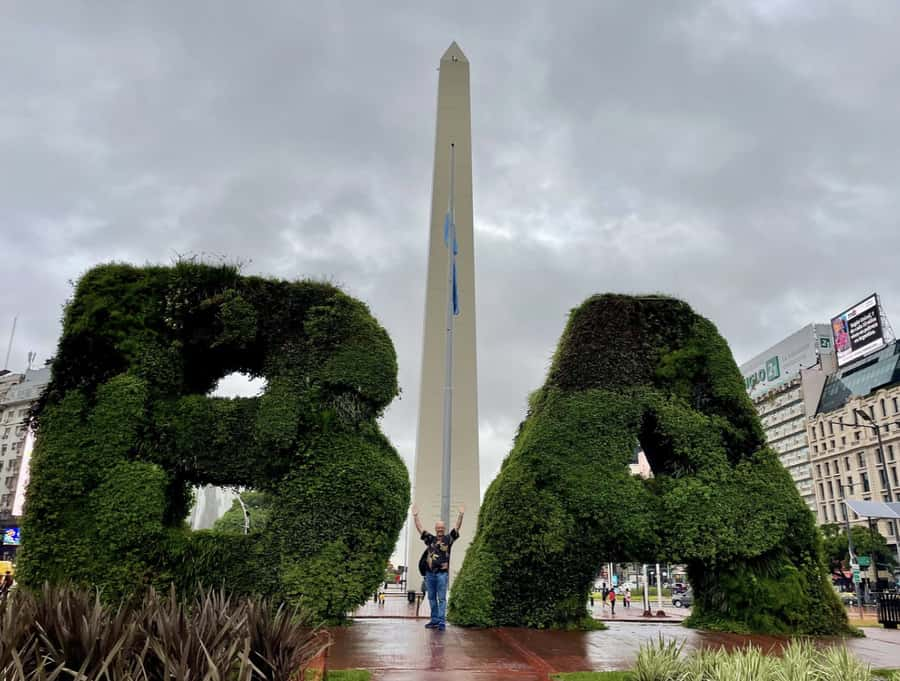
Then you get the big skyline moment. You’ll head to Avenida 9 de Julio, known as the widest avenue in the world, with the Buenos Aires Obelisco monument as the star.
You’ll also be taken to a photo stop with the green BA sign. If you’ve got even a modest interest in getting a good snapshot, this is one of the easiest “yes, I want that photo” moments on the entire itinerary.
This is also a practical stop. By now, you’ve walked through plazas and smaller streets, so stepping into the scale of Avenida 9 de Julio can help you recalibrate. It’s wide, loud in energy, and it gives you an instant landmark reference for where you are in the city.
Avenida Corrientes and Florida Street: old cafés and the shopping spine
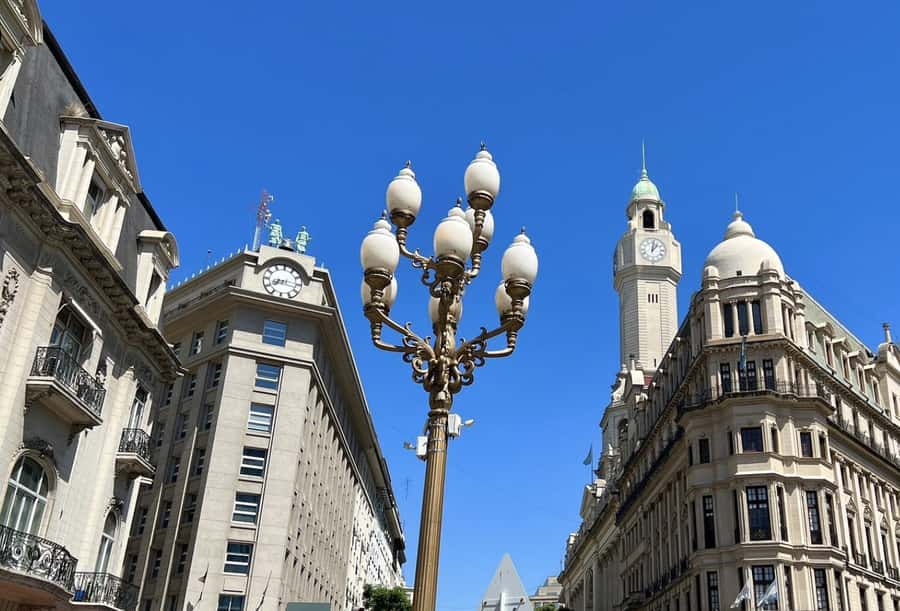
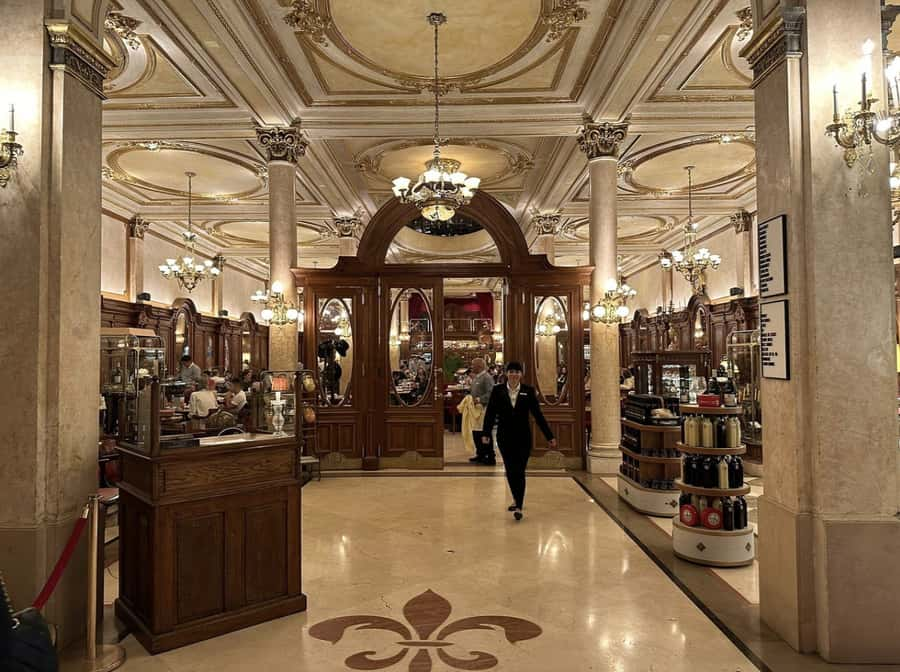
From the avenue, the route moves to Avenida Corrientes, often described as the street that never sleeps. As you stroll, you’ll see Confiteria La Ideal, a beautifully restored old café.
Even if you don’t stop for a long sit-down, it’s a great example of how Buenos Aires preserves its past while keeping the city moving. The café setting also helps you understand why people like to linger in public spaces here.
Next comes Florida Street, the main pedestrian shopping area, with Galería Güemes. This part of the walk is less about a single monument and more about atmosphere. You’re moving through a rhythm of shops, arcades, and human scale.
If you’re planning future return visits, this is where you often decide what kind of Buenos Aires you like: theatrical and civic, café culture, or shopping streets with a historic shell.
Plaza de Mayo and Casa Rosada: the founding square and the balcony
The tour then moves into the historical city center, specifically part of Monserrat. You’ll see Plaza de Mayo, the main square where the city was founded in 1580 and where it began to grow.
This is not just a dramatic plaza to photograph. With a guide, you learn the why behind the space. You’re seeing the stage of power and public life, and the guide explains how the city’s story took shape here.
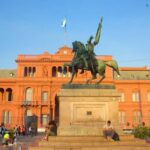
Next you’ll see Casa Rosada, the Pink House, home to the executive government branch. The tour highlights the famous balcony where President Perón and first lady Evita used to address crowds. That balcony stop makes people realize how this location isn’t frozen in time. It’s tied to speeches, politics, and the idea of the public square as a communication tool.
Buenos Aires Cathedral: independence hero and Pope Francis mass connection
From Casa Rosada, the route includes a stop at Buenos Aires Cathedral. The tour notes it as the last resting place of Argentina’s independence hero and also mentions Pope Francis used to give mass here.
That mix matters. It positions the cathedral as both national symbolism and religious history. You’ll likely spend a little time looking and listening, then move on before the tour needs to keep flowing.
This part of the day is where the walking tour starts feeling like a guided story you can follow in order. You’re not just collecting sights, you’re connecting themes: nation building, civic authority, and spiritual life.
San Telmo afternoon: Plaza Dorrego and the 1897 Indoor Market
You finish in San Telmo near an area full of fun spots to eat, drink, and shop. That ending time, 5pm, is practical. San Telmo is often at its best later, when the streets pick up and the market atmosphere feels fully alive.
Your first big San Telmo stop is Plaza Dorrego, one of the city’s oldest and most popular squares. You’ll see atmospheric bars and restaurants, plus handicraft sellers. Even if you don’t buy anything, it’s a great place to feel the neighborhood’s character.
Then you’ll visit the San Telmo Indoor Market, an impressive iron structure built in 1897. It’s filled with antiques, souvenirs, and restaurants, and it also includes local market vendors selling fresh food and produce.
This is a strong value stop because it’s not just shopping. It’s a place where you can snack, browse, and understand how markets function in Buenos Aires. The guide’s explanations help you separate tourist-style souvenirs from items with real local context.
Finally, you’ll walk down Defensa Street, a cobblestone road known for antique dealers and original Spanish and Italian architecture. Cobblestones can slow you down, which is good here because it makes the street feel historic in a physical way.
Lunch, coffee, and metro time: what the included breaks do for you
Food breaks matter on walking tours. Here, you get morning coffee and a local lunch with main plus beverage included. That means you’re less likely to lose an hour waiting in line or changing plans because you’re hungry.
You also ride public transport during the tour. That’s more than a convenience. It helps you move between neighborhoods without turning the day into a leg-burning marathon. It also helps you experience Buenos Aires in the way locals move through it, not just in the way tourists hop between taxis.
Add in a bottle of water, and the day feels built for real people, not sightseeing robots.
Price and value: is $160 a good deal for 7 hours?
At $160 per person for 7 hours, the price lands in the midrange for a guided small-group day. The value comes from what’s included, not just the guide time.
Here’s what you get:
- Entrance fees to historical sites, including Recoleta Cemetery (listed as US$15-plus per person value)
- A tasty local lunch (main plus beverage)
- Coffee (or an equivalent-priced drink)
- All public transport used during the tour
- Bottle of water
- An English-speaking expert guide
When you add up an entrance fee, lunch with a beverage, transit, and guided time, the amount starts to look more reasonable. The small-group cap of 7 also matters, because it usually means you get more personal attention and less standing in silence while the group moves.
If you’re comparing options, treat this as a “guided day with built-in meals and transit,” not just a checklist tour. You’re paying for continuity, context, and logistics handled for you.
Who this walk is best for, and who should choose another plan
This is a good fit if you:
- Want a structured overview of Buenos Aires in one day
- Like architecture, plazas, and civic landmarks as much as markets
- Prefer getting orientation fast, so you can decide where to return later
- Are comfortable walking and enjoy stopping for photos and explanations
It’s likely less ideal if you:
- Don’t want a lot of walking, since you’ll be on streets through multiple neighborhoods
- Need wheelchair access, because the tour isn’t suitable for wheelchair users
- Are traveling with children under 10 years, since it’s not suitable for them
- Are dealing with an illness like a cold, since the tour notes it isn’t suitable in that case
Also consider the end point. You finish in San Telmo around 5pm, so if you need to be elsewhere at that exact time, plan your schedule accordingly.
Should you book BA 101?
Book it if you want your first Buenos Aires day to do three jobs at once: show you the top sights, teach you what you’re looking at, and feed you without derailing the schedule. This route is especially good when you’re short on time and still want more than selfies.
Skip it if you hate walking or want a totally flexible, wander-at-your-own-speed day. The tour is structured, and the value comes from sticking to the flow.
If your goal is to get your bearings fast, then decide where you want to go deeper, BA 101 is a smart use of a day in the city.
Buenos Aires on Foot

Tour Reviews Around Buenos Aires
Just added in Buenos Aires
- Velez Sarsfield Football Match
★ 5.0 · 3 reviews - Tango Show at El Querandi with optional Dinner
★ 4.2 · 3 reviews - Guided tour Boca Juniors Museum & Stadium + Caminito
★ 3.3 · 3 reviews - Tango Show at: MichelAngelo
★ 4.5 · 3 reviews - Buenos Aires: Rojo Tango Show with Optional Dinner
★ 3.4 · 3 reviews
Walking Tours, compared.
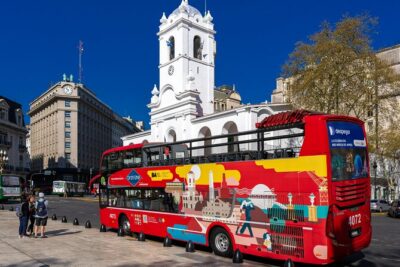 ★ 4.5Buenos Aires Hop-On Hop-Off Bus, Free Walking Tours & DiscountsFrom $392,218 reviews
 ★ 4.8La Boca Guided Walking Tour in EnglishFrom $131,587 reviews
 ★ 4.9Nazis in Buenos Aires: a historical walking tourFrom $25193 reviews
 ★ 4.7Personalized 2 to 8-Hour Private Walking TourFrom $37149 reviews
 ★ 4.8San Telmo and Market Guided Walking TourFrom $13102 reviews
 ★ 4.5Buenos Aires Walking Tour with Local Guide and Optional RooftopFrom $11187 reviews
 ★ 4.5Best of Buenos Aires Private Walking TourFrom $10973 reviews
 ★ 5.0Full Day Private Walking Tour of Buenos Aires NeighborhoodsFrom $13555 reviews
Where this tour also appears